8 Surprising Facts About the Turkish Van Cat Breed You Need to Know
Only about 100 Turkish Van kittens are registered in the United States each year — making this ancient, water-loving breed one of the rarest pedigreed cats on the planet. Yet despite its rarity, the Turkish Van carries a history so rich, so genetically complex, and so full of misconceptions that even devoted cat enthusiasts are often stunned by what they don’t know.
In this article, I’m sharing the 8 surprising facts about the Turkish Van cat breed you need to know — from its disputed geographic origins to its one-of-a-kind coat genetics. Whether you’re a prospective owner, a cat show enthusiast, or simply a curious reader, these facts will completely change the way you look at this magnificent breed.
Key Takeaways
- 🐱 The Turkish Van was developed in the UK in the 1950s, not in Turkey as most people assume.
- 🧬 Genetic research points to Armenian highland origins, not the Lake Van region.
- 💧 The breed is famously called the “Swimming Cat” due to its unusual love of water.
- 👁️ Turkish Vans can have two amber eyes, two blue eyes, or one of each — all due to the same gene.
- 🇺🇸 The breed didn’t reach the United States until 1982, and remains rare to this day.
The History Behind the 8 Surprising Facts About the Turkish Van Cat Breed You Need to Know
Before we dive into each fact, it helps to understand why this breed is so misunderstood. The Turkish Van sits at a crossroads of history, genetics, and geography — and almost every “common knowledge” claim about it turns out to be at least partly wrong. Let’s set the record straight.
8 Surprising Facts About the Turkish Van Cat Breed You Need to Know
1. The Breed Was Created in Britain, Not Turkey
Most people assume that a cat called the “Turkish Van” was bred and standardized in Turkey. The reality is far more interesting.
In 1955, two British photographers — Laura Lushington and Sonia Halliday — were on assignment in Turkey when they were gifted two unrelated cats. These cats made the journey back to the United Kingdom, and their offspring became the genetic foundation for the entire breed as we know it today [1].
Lushington spent years selectively breeding these cats in Britain, working to establish consistent traits before the breed was officially recognized. So while the cats themselves had Turkish roots, the standardized breed was entirely a British creation.
💡 Pull Quote: “The Turkish Van as a pedigreed breed is, in many ways, a British invention built on a Turkish foundation.”
This distinction matters — it explains why the breed’s physical standards were shaped by Western cat fancy organizations rather than Turkish breeders.
2. Its Name Was Changed to Avoid Confusion
Here’s a fact that surprises even seasoned cat lovers: the Turkish Van wasn’t always called the Turkish Van.
When the Governing Council of the Cat Fancy (GCCF) in the United Kingdom first officially registered the breed in 1969, it was listed simply as the “Turkish cat.” The name worked fine at first — until the Turkish Angora began gaining recognition in the West around the same time [1].
With two distinct breeds both going by “Turkish,” confusion was inevitable. To clearly differentiate the two, the GCCF renamed the breed the Turkish Van — a nod to the Lake Van region of eastern Turkey, where the foundation cats were believed to have originated.
| Year | Event |
|---|---|
| 1955 | Foundation cats brought to the UK by British photographers |
| 1969 | Breed registered as “Turkish cat” by the GCCF |
| 1969 | Renamed “Turkish Van” to distinguish from Turkish Angora |
| 1982 | Breed introduced to the United States |
3. The Cats May Not Actually Be From Lake Van
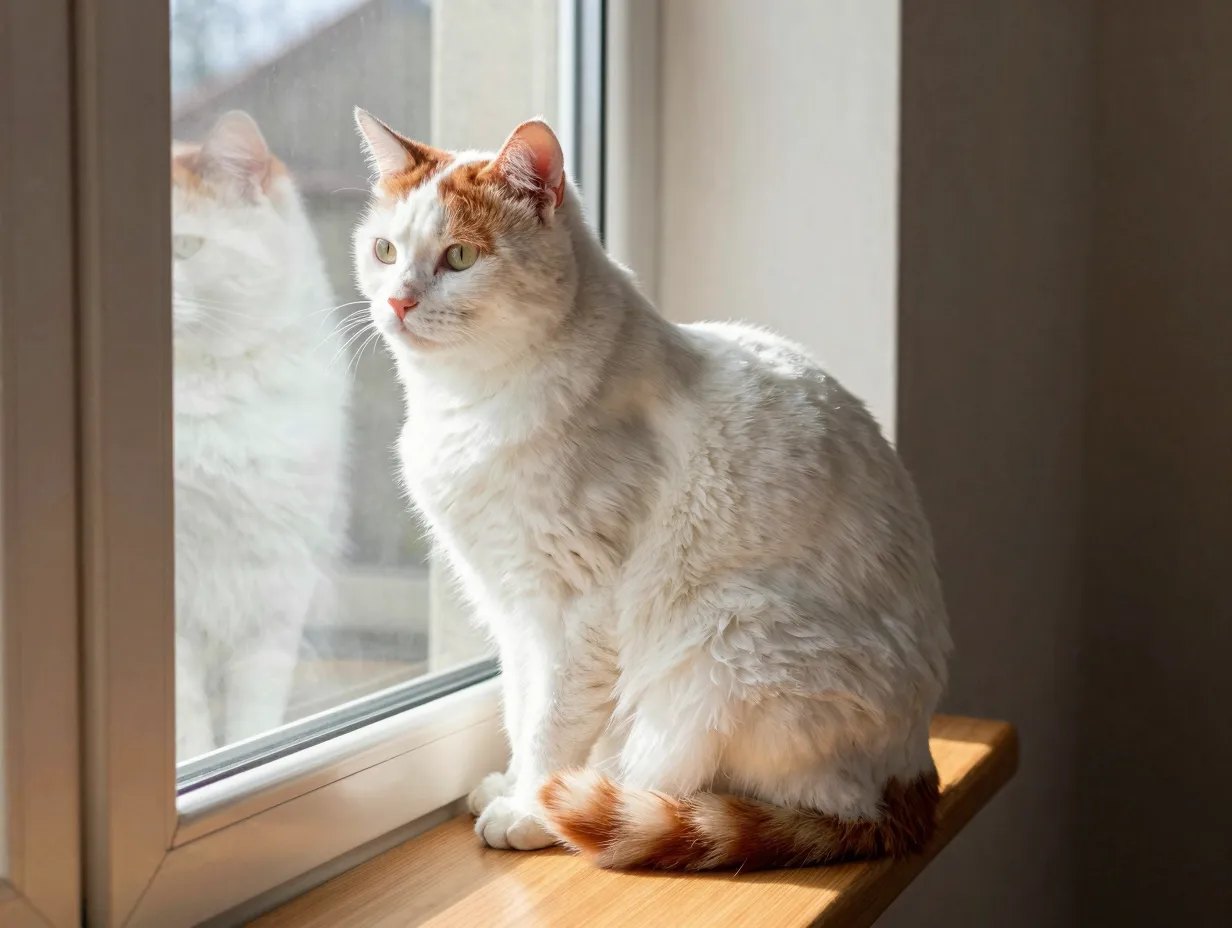
This is perhaps the most surprising entry in our list of 8 surprising facts about the Turkish Van cat breed you need to know — and it’s one that challenges the breed’s very identity.
Despite being named after Lake Van in eastern Turkey, one of the original breeders’ own writings suggests that none of the foundation cats actually came from the Van area [1]. The breed’s geographic claim has always been tied to the lake’s surrounding region, but the historical record is murky at best.
What we do know is that the cats were acquired in Turkey — but the exact location remains disputed. The breed has been associated with landrace white cats found near Lake Van, and that regional connection stuck hard enough to name the entire breed. But the paper trail tells a more complicated story.
Why does this matter? Because it affects how we understand the breed’s true ancestry — which brings us to our next fact.
4. Genetic Research Points to Armenian Origins
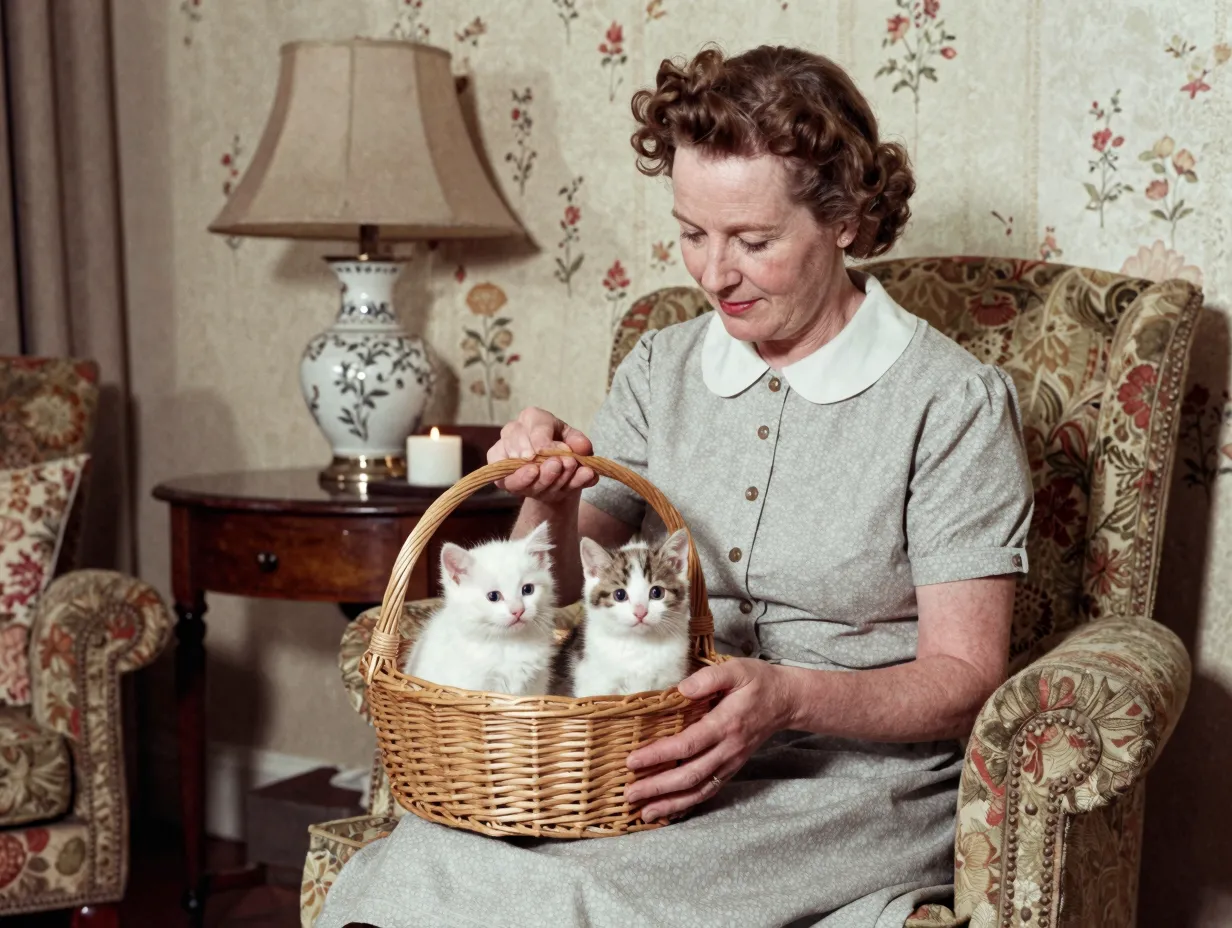
If the Lake Van origin story is shaky, where did the Turkish Van actually come from?
Scientists from the University of California, Davis conducted genetic research that produced a stunning finding: the Turkish Van carries a very ancient mitochondrial DNA lineage that is exclusive to Armenia [4]. This suggests the breed — or its ancestors — were present in the Armenian highlands long before Turkish tribes arrived in the region.
🧬 This is a significant discovery for several reasons:
- It places the breed’s true origins in a different country entirely.
- It suggests the cats may be thousands of years older than previously thought.
- It adds a layer of political and cultural complexity to the breed’s identity.
The Armenian highlands and the Lake Van region are geographically close — Lake Van itself sits near the historical Armenian heartland — so the connection is not geographically absurd. But genetically, the data points east of where the breed’s name suggests.
💡 Pull Quote: “The DNA doesn’t lie — and in the Turkish Van’s case, it tells a story that predates the Ottoman Empire entirely.”
5. The “Van Pattern” Is Named After the Breed Itself

The Van pattern — a coat style where color appears only on the head and tail while the rest of the body is white — is now used to describe cats of any breed that display this look. But did you know the pattern is named after the Turkish Van itself?
This distinctive look is caused by the white spotting gene, which restricts pigmentation to specific areas of the body. In Turkish Vans, this represents a form of partial leucism — a condition where pigment cells fail to migrate to certain areas of the skin during development [1].
The breed standard is quite specific about how much color is acceptable:
- ✅ Color on the head and tail: required
- ✅ Additional body markings: allowed, but must not exceed 15–20% of the total body area (excluding head and tail) [2]
- ❌ Full-body color: disqualifying
This precise genetic expression is what makes the Turkish Van so visually striking — and so difficult to breed consistently.
6. Their Eye Color Is Genuinely Unpredictable
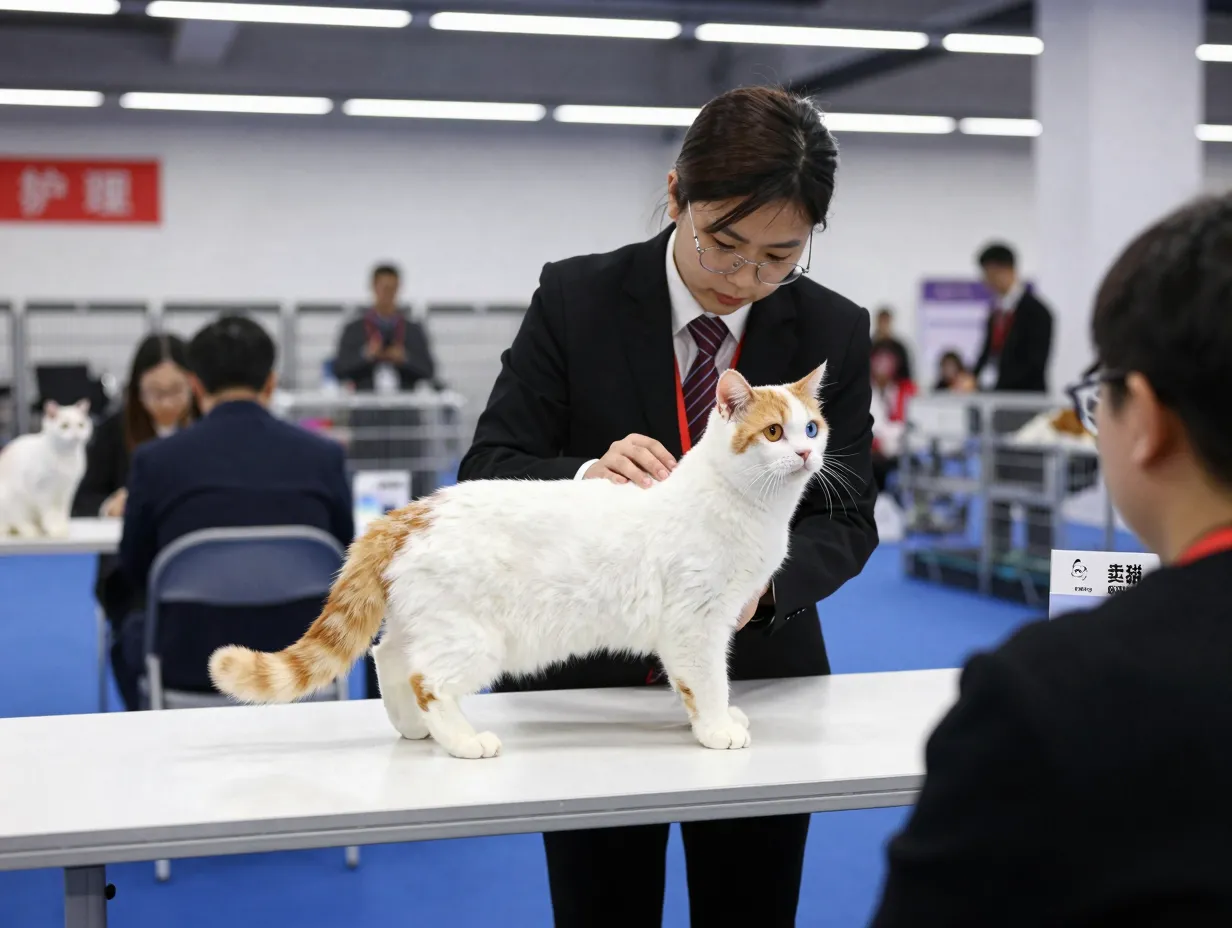
One of the most visually stunning features of the Turkish Van is its eye color — and the genetics behind it are fascinating.
Turkish Van cats can display:
- 👁️ Two amber eyes
- 👁️ Two blue eyes
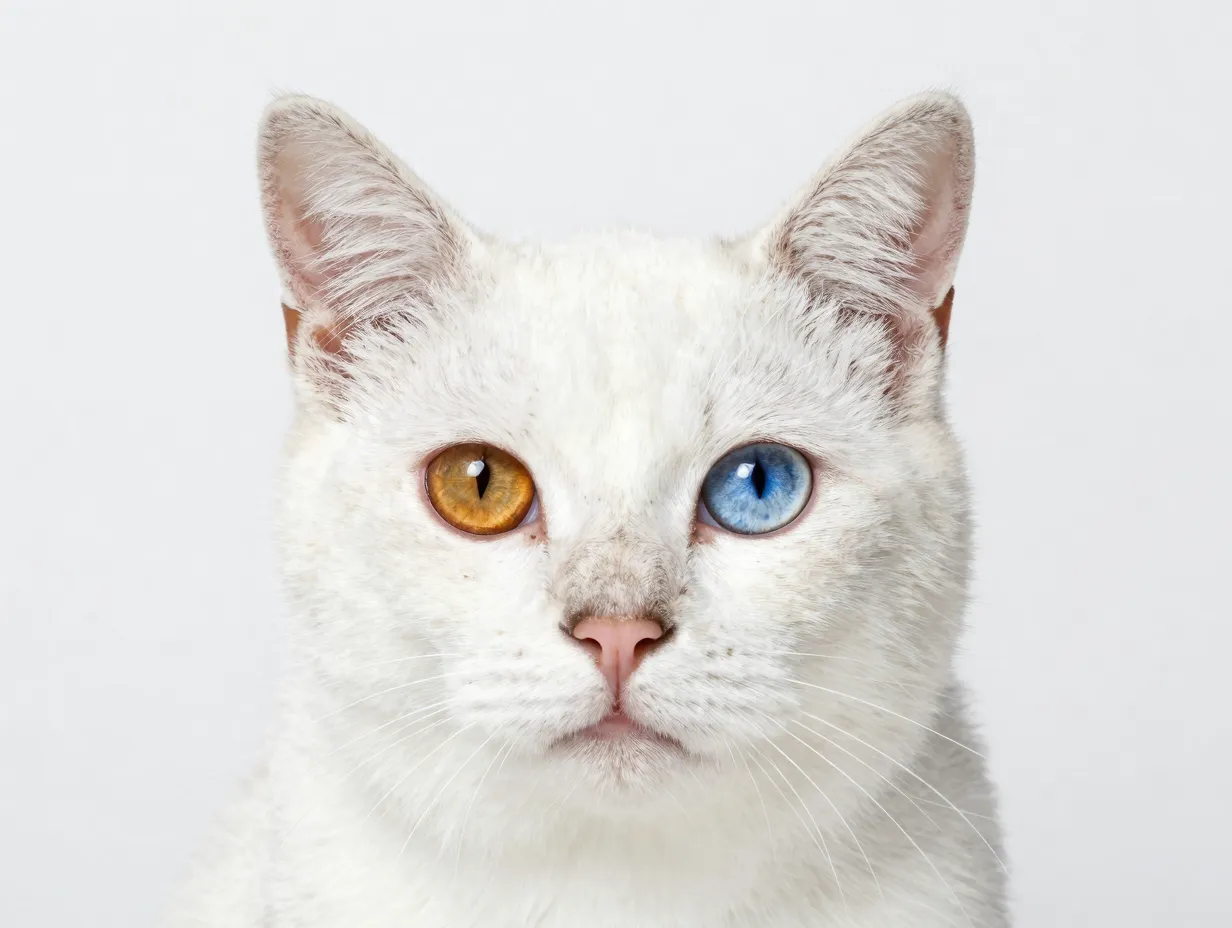
- 👁️ One amber eye and one blue eye (known as “odd-eyed”)
All three variations are caused by the variable expression of the white spotting factor — the same gene responsible for the Van coat pattern [1] [5]. The degree to which this gene suppresses melanin in the iris determines eye color, and because gene expression varies from cat to cat, you genuinely cannot predict which eye color a kitten will have until it develops.
Odd-eyed Turkish Vans are particularly prized in the show world and are considered especially lucky in Turkish folklore. In Turkey, an odd-eyed white cat is sometimes called a “Van kedisi” (Van cat) and is treated as a national treasure.
7. They Are Known as the “Swimming Cat” — and It’s Not a Myth
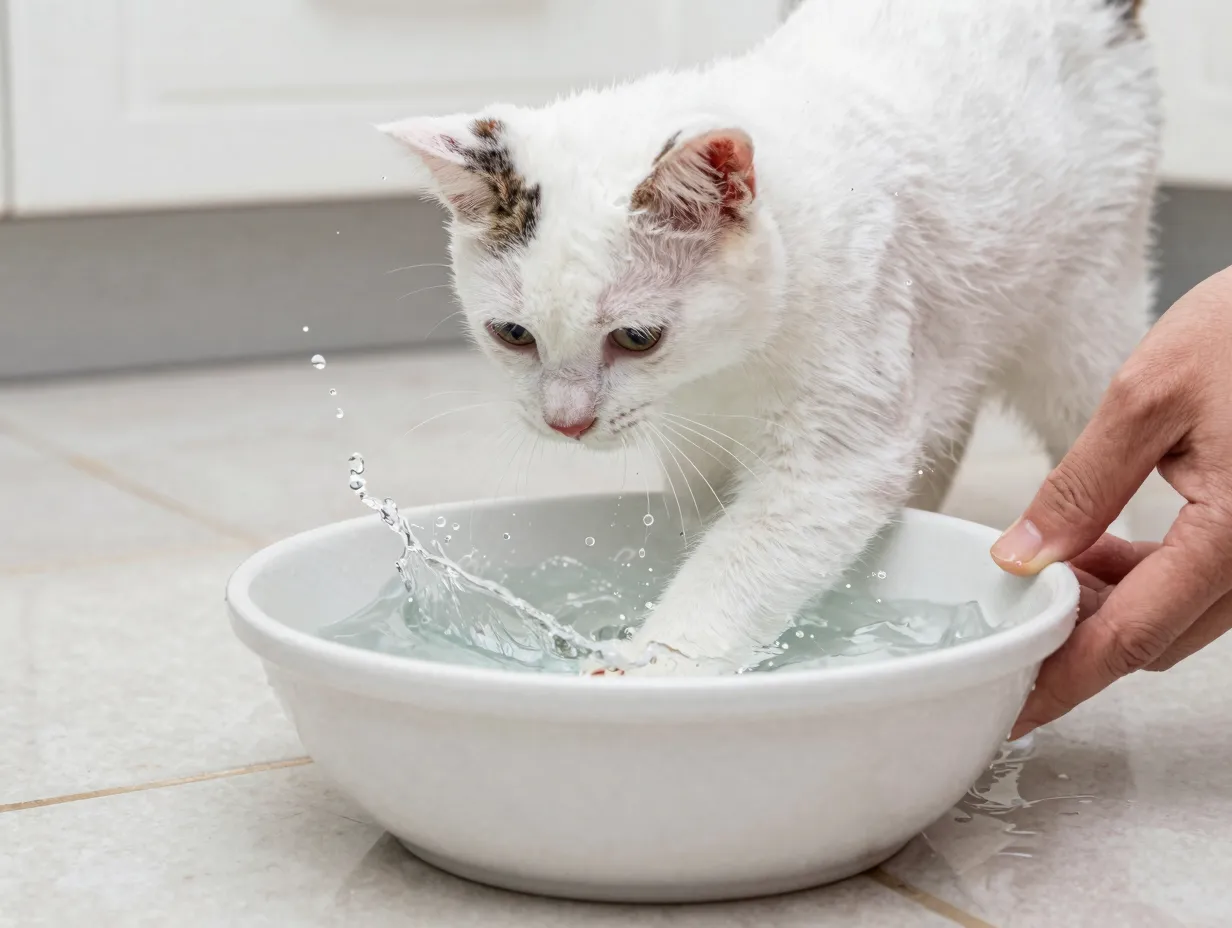
Most domestic cats treat water like a personal enemy. The Turkish Van treats it like a hobby.
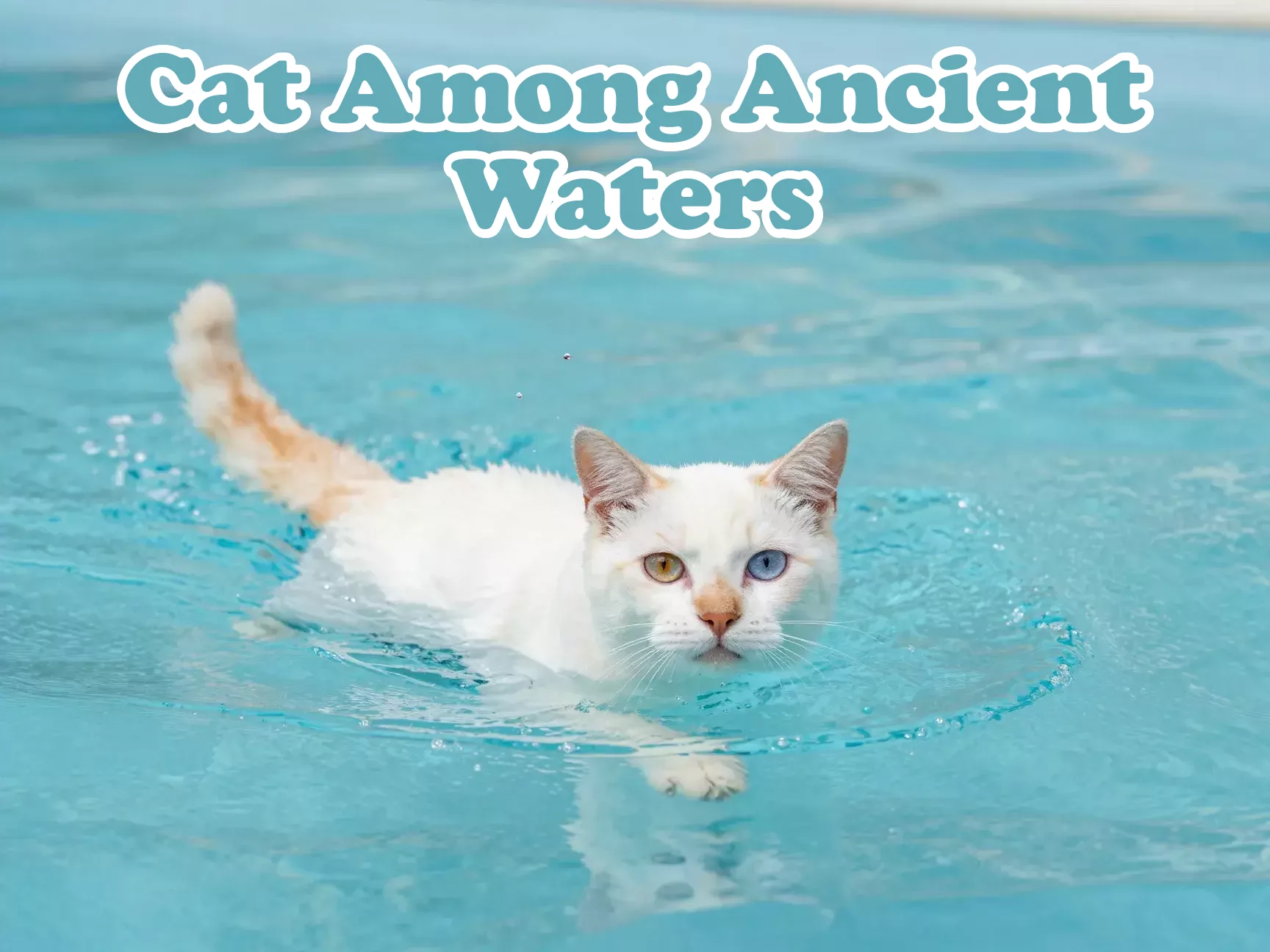
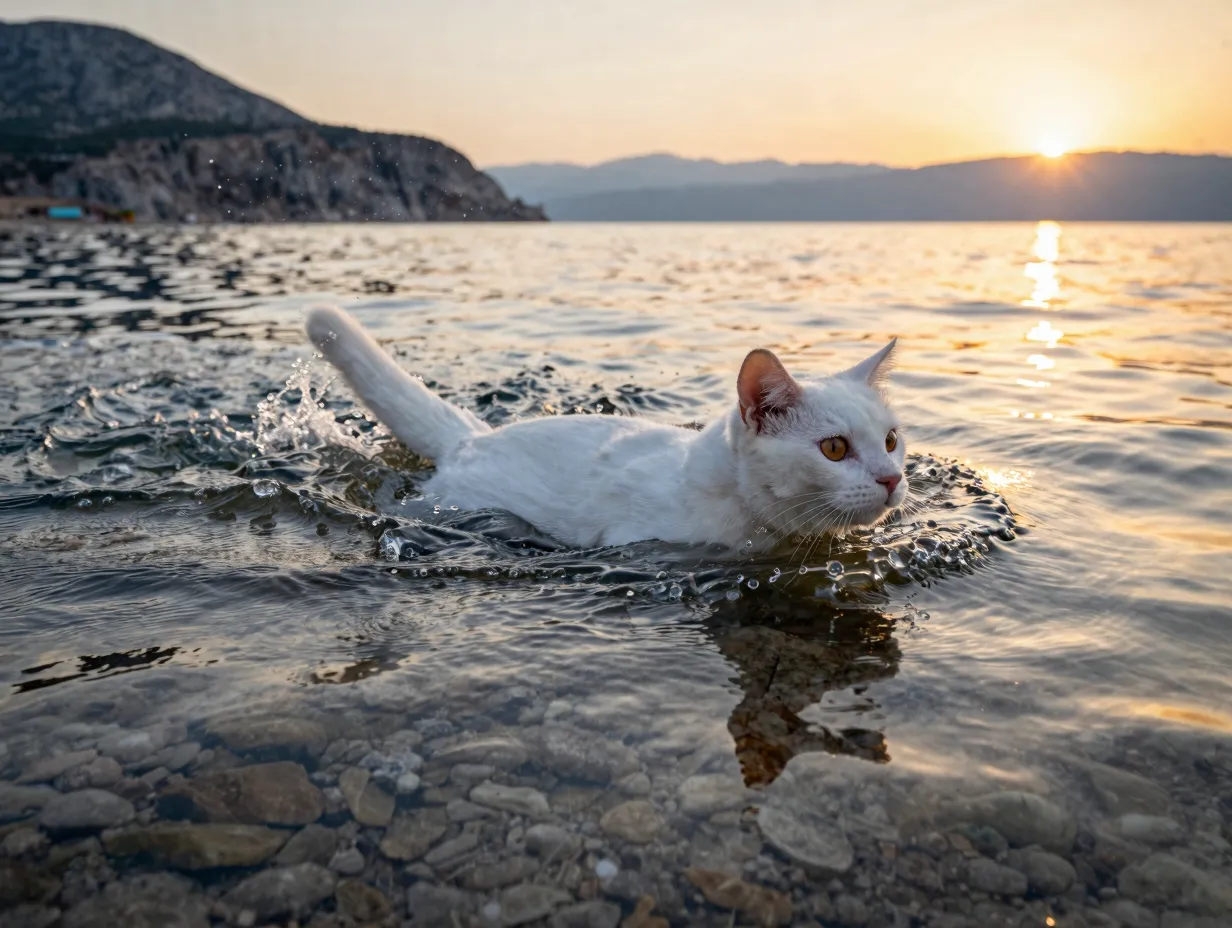
This breed has an unusual and well-documented affinity for water — they will splash in water bowls, join their owners in the shower, and given the chance, actually swim. This behavior is so consistent and so well-known that the Turkish Van earned the nickname “the Swimming Cat” [7].
There are a few theories about why this trait developed:
- Geographic adaptation — The hot, dry summers near Lake Van may have encouraged ancestral cats to cool off in the water.
- Coat structure — The Turkish Van’s coat is cashmere-like, water-resistant, and lacks a dense undercoat, which may make swimming more comfortable for them than for other breeds.
- Selective behavior — Cats near large bodies of water may have learned to fish, passing water-comfort down through generations.
Whatever the reason, if you bring a Turkish Van into your home in 2026, don’t be surprised if your cat tries to join you in the bath. It’s not a quirk — it’s a breed trait.
8. The Breed Didn’t Reach the United States Until 1982

Given that the Turkish Van was established in the UK by the late 1950s and gained formal recognition in 1969, you might assume it spread quickly to North America. It didn’t.
The Turkish Van didn’t arrive in the United States until 1982 — nearly three decades after its British foundation [3]. Even after its American debut, the breed struggled to gain a foothold. Today, it remains one of the rarest pedigreed cat breeds in the country, with very few active breeders and limited annual registrations.
Why so rare?
- The breed’s strict color standards make consistent breeding difficult.
- The gene pool is naturally small due to the breed’s narrow foundation.
- The Turkish Van’s semi-wild temperament makes it less universally appealing than more docile breeds.
For serious cat enthusiasts, however, this rarity is part of the appeal. Owning a Turkish Van in 2026 is a genuine commitment — and a privilege.
Quick Reference: Turkish Van at a Glance
| Feature | Detail |
|---|---|
| Origin | Turkey (standardized in the UK) |
| Genetic Ancestry | Armenian highlands (per UC Davis research) |
| Coat Pattern | Van pattern — color on head and tail only |
| Eye Colors | Amber, blue, or odd-eyed |
| Nickname | The Swimming Cat |
| UK Recognition | 1969 (GCCF) |
| US Introduction | 1982 |
| Rarity | One of the rarest pedigreed breeds in the US |
What Makes the Turkish Van Unique Among Cat Breeds?
After reviewing these 8 surprising facts about the Turkish Van cat breed you need to know, a clear picture emerges: this is not your average domestic cat. The Turkish Van is:
- Historically complex — Its origins span multiple countries and centuries.
- Genetically distinctive — Its DNA lineage is unlike any other breed.
- Visually striking — The Van pattern is one of the most recognizable coat styles in the cat world.
- Behaviorally unusual — Its love of water sets it apart from virtually every other domestic breed.
- Genuinely rare — Finding a reputable breeder requires research and patience.
If you’re drawn to a cat that defies expectations at every turn, the Turkish Van may be exactly what you’re looking for.
Is the Turkish Van the Right Cat for You?
Before you pursue ownership, consider these practical points:
Turkish Vans tend to thrive with owners who:
- Have an active household (these cats are energetic and playful)
- Don’t mind a cat that may splash water around the kitchen
- Appreciate an independent, semi-wild temperament
- Are willing to invest time in finding a reputable breeder
Turkish Vans may not suit owners who:
- Want a lap cat that loves to cuddle constantly
- Have very young children (the breed can be assertive)
- Are looking for a low-maintenance pet
Conclusion
The 8 surprising facts about the Turkish Van cat breed you need to know tell a story that’s bigger than any single cat. This breed bridges continents, cultures, and centuries — from the Armenian highlands to a British photographer’s luggage to a handful of dedicated American breeders today.
What I find most compelling about the Turkish Van is how much it challenges our assumptions. We assume the name tells us where the cat is from. We assume ancient breeds have clear, documented histories. We assume cats don’t like water. The Turkish Van upends all of it.
Here are your actionable next steps:
- Research reputable breeders through organizations like The International Cat Association (TICA) or the Cat Fanciers’ Association (CFA) if you’re interested in ownership.
- Visit a cat show — Turkish Vans are occasionally exhibited, and seeing one in person is the best way to appreciate the breed’s unique coat and presence.
- Learn about the Van pattern if you’re interested in cat genetics — it’s one of the most fascinating examples of gene expression in domestic animals.
- Share this article with fellow cat lovers who think they know everything about rare breeds. I guarantee at least one of these facts will surprise them.
The Turkish Van is rare, ancient, and genuinely extraordinary. In a world full of common cats, that’s worth knowing.
References
[1] Turkish Van – https://en.wikipedia.org/wiki/Turkish_Van
[2] Turkish Van Cats 5 Fascinating Things You Should Know – https://thecatsite.com/c/turkish-van-cats-5-fascinating-things-you-should-know/
[3] Watch – https://www.youtube.com/watch?v=8vL1Tp0qmAs
[4] Truth About Van Cats – https://catwisdom101.com/truth-about-van-cats/
[5] Turkish Van – https://www.purina.co.uk/find-a-pet/cat-breeds/turkish-van
[7] Turkish Van – https://www.wisdompanel.com/en-gb/cat-breeds/turkish-van