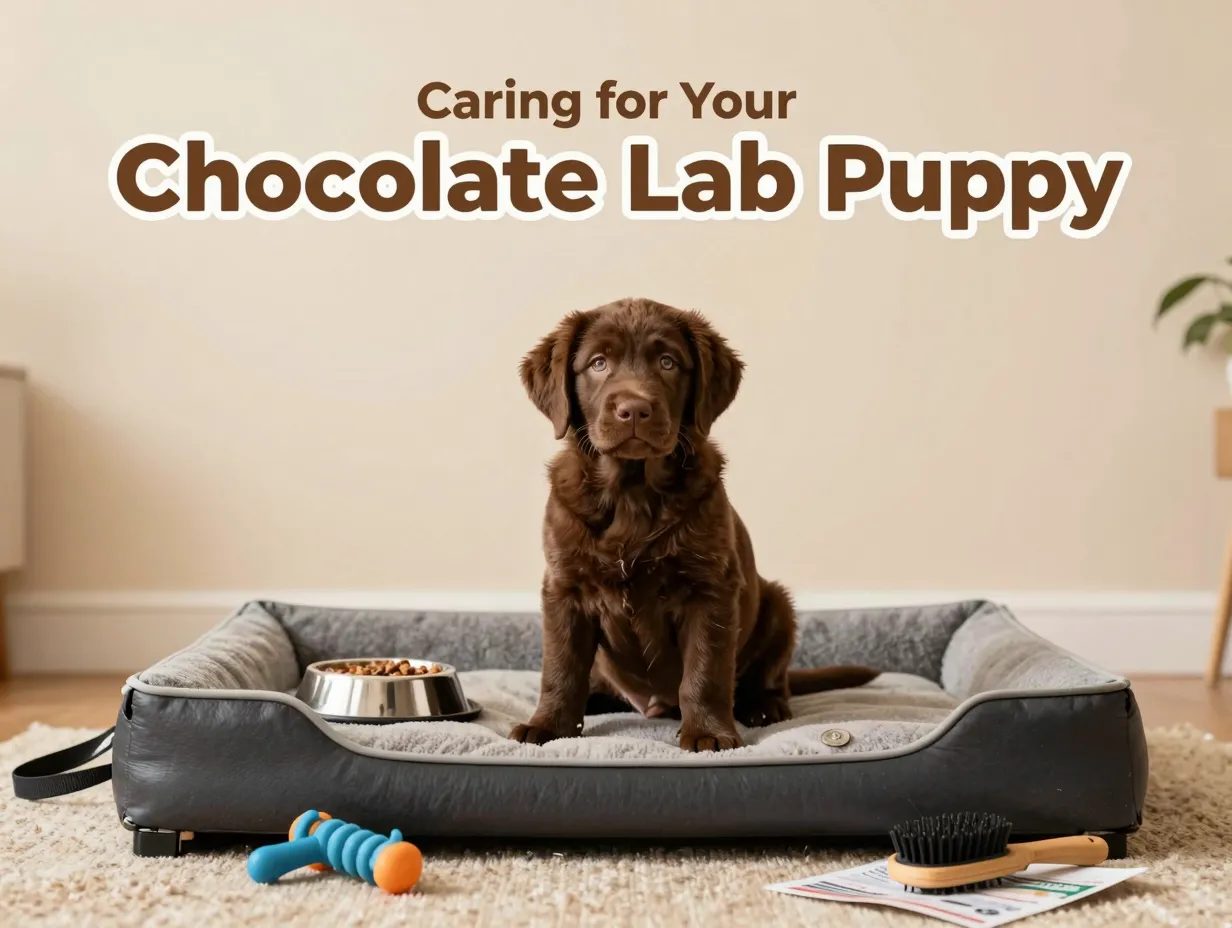
8-Step Guide to Caring for Your Chocolate Labrador Retriever Puppy
Bringing home a chocolate Labrador Retriever puppy is one of the most exciting — and overwhelming — moments a dog owner can experience. Those melting brown eyes, that wagging tail, and that boundless energy can steal your heart in seconds. But here’s the truth: without the right care plan in place from day one, even the most loving owner can struggle. That’s exactly why I put together this complete 8-Step Guide to Caring for Your Chocolate Labrador Retriever Puppy — so you can feel confident, prepared, and ready to give your new companion the best possible start in life.
Whether you’re a first-time puppy parent or a seasoned dog owner welcoming a new chocolate Lab into your home, this guide covers everything from setting up a safe space to building healthy habits that last a lifetime.
Key Takeaways
- 🐾 Puppy-proof your home before your chocolate Lab arrives — Labs are curious and mouthy by nature.
- 🥩 Feed a large-breed puppy formula 3–4 times daily for puppies under 6 months to support healthy bone development.
- 🏥 Schedule a vet visit within the first week and keep up with vaccinations and parasite prevention.
- 🎓 Start training immediately with short 5–10 minute sessions using positive reinforcement.
- 🤝 Socialize early and often — the first 16 weeks are critical for building a confident, well-adjusted dog.
Why This 8-Step Guide to Caring for Your Chocolate Labrador Retriever Puppy Matters
Chocolate Labs are consistently ranked among the most popular dog breeds in the world — and for good reason. They’re loyal, intelligent, playful, and deeply affectionate. However, they also come with specific needs that, if overlooked, can lead to behavioral problems, health issues, and a frustrated household.
In 2026, with so much conflicting advice online, having a structured, step-by-step approach makes all the difference. This guide is built on trusted veterinary guidance and real-world Lab care experience. Let’s dive in.
1. Puppy-Proof Your Home Before Arrival
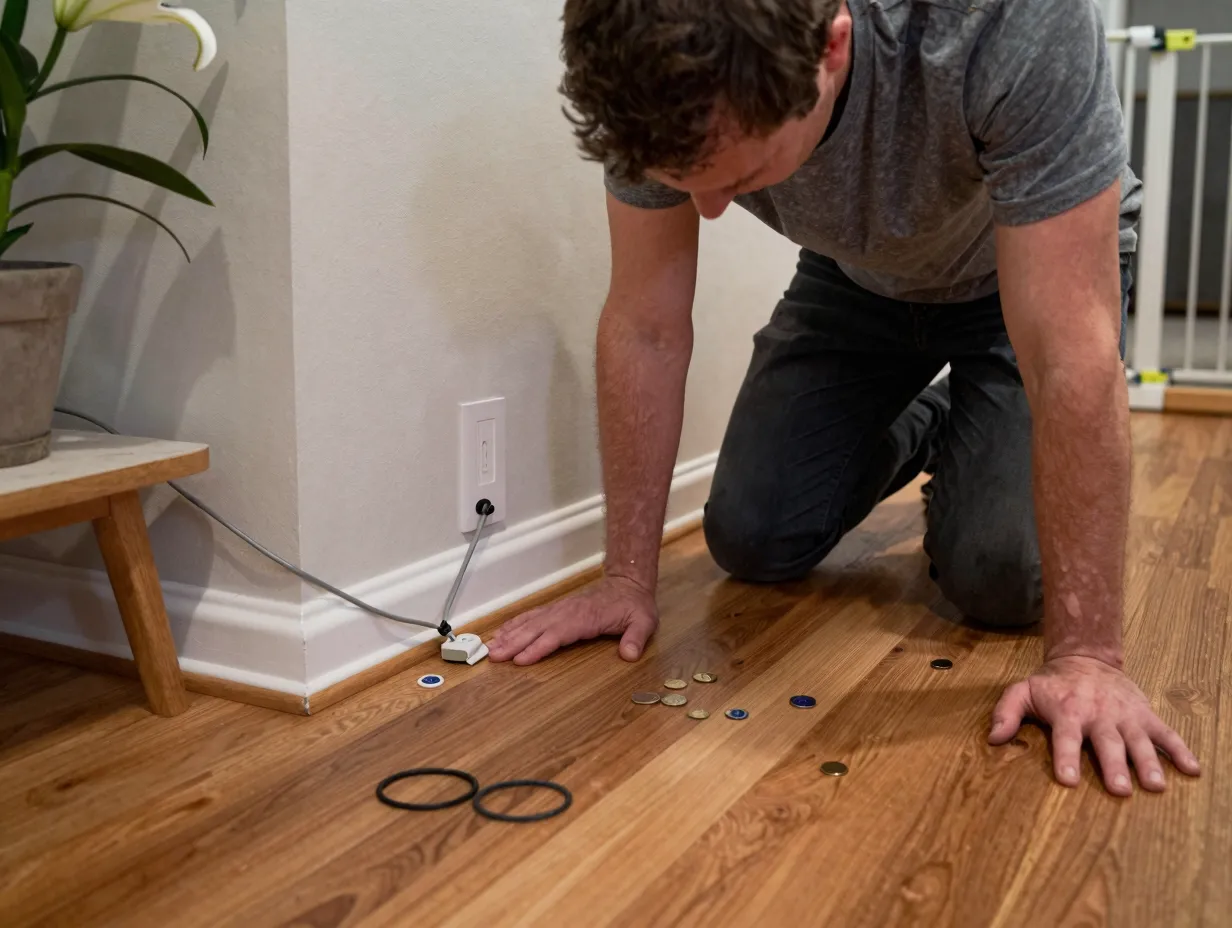
The very first step in caring for your chocolate Labrador Retriever puppy doesn’t involve the puppy at all — it involves your home.
Labs are naturally curious and love to chew, explore, and get into everything. Before your puppy arrives, do a thorough sweep of every room they’ll have access to.
Key puppy-proofing actions:
- Remove small objects like coins, buttons, and rubber bands from low-lying areas where puppies can easily reach them [2].
- Clear away toxic plants such as lilies, pothos, and sago palms — many common houseplants are dangerous to dogs.
- Store household chemicals, cleaning products, and medications in locked or elevated cabinets [2].
- Secure electrical cords with cord covers or tuck them out of reach.
- Use baby gates to block off stairs, laundry rooms, and other off-limit areas.
💡 Pro tip: Get down on your hands and knees and look at your home from a puppy’s eye level. You’ll spot hazards you’d never notice standing up.
2. Set Up a Comfortable, Safe Living Space
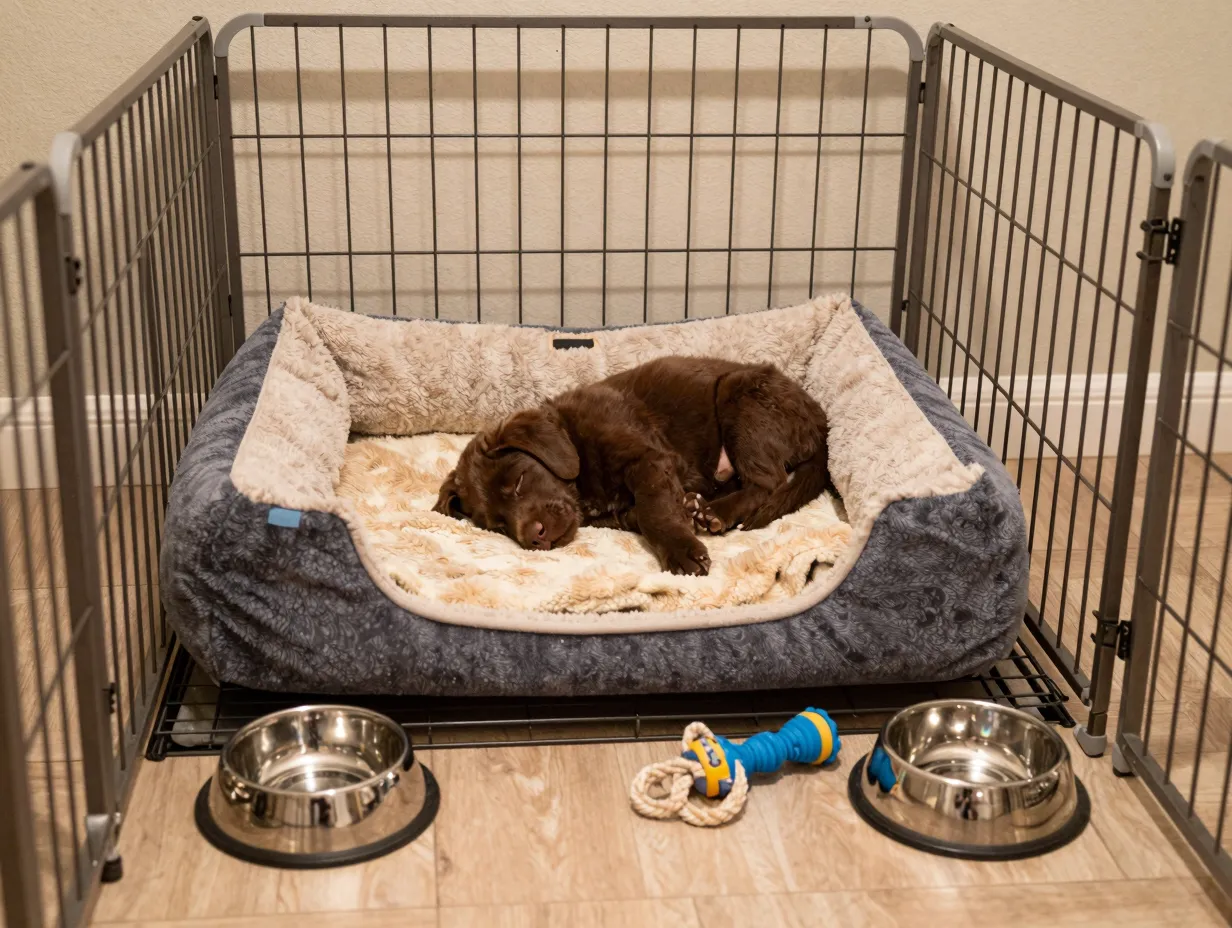
Once your home is safe, it’s time to create a welcoming environment where your puppy feels secure and calm.
What you’ll need:
| Item | Recommended Type | Why It Matters |
|---|---|---|
| Bed | Orthopedic puppy bed or fleece blanket | Supports joints; provides security [2] |
| Food & water bowls | Stainless steel or ceramic | Prevents bacterial growth vs. plastic [2] |
| Crate | Wire or plastic with divider panel | Aids house training; gives safe space |
| Playpen | Foldable exercise pen | Contains puppy safely when unsupervised |
| Chew toys | Rubber, rope, or nylon | Redirects chewing from furniture |
Set up your puppy’s bed in a quiet corner away from heavy foot traffic. This gives them a retreat when they’re feeling overwhelmed [2]. A crate placed nearby can serve as their den — a place they associate with rest and safety, not punishment.
3. Master Nutrition for Your Chocolate Lab Puppy
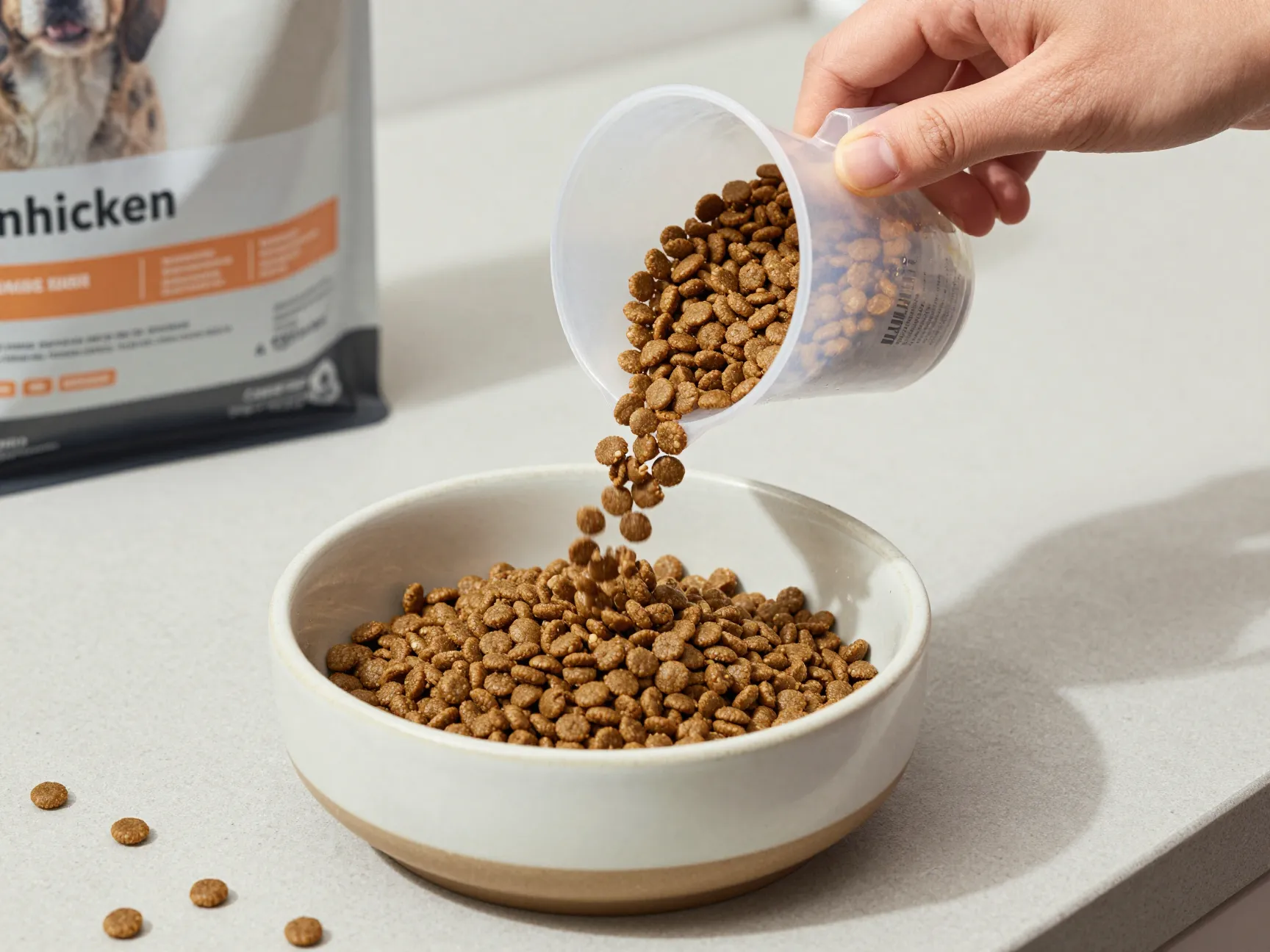
Feeding your chocolate Lab correctly is one of the most impactful things you can do for their long-term health. Labs are notoriously food-motivated — and notoriously prone to overeating [5].
Choosing the Right Food
Select a high-quality puppy food formulated specifically for large breeds. Large-breed formulas contain a carefully balanced ratio of calcium and phosphorus, which supports healthy, controlled bone growth [1]. Rapid bone growth caused by improper nutrition can lead to joint problems like hip dysplasia later in life.
Look for these on the ingredient label:
- A named protein source (chicken, salmon, lamb) as the first ingredient
- No artificial preservatives, colors, or fillers
- AAFCO statement confirming the food meets large-breed puppy nutritional standards
How Much and How Often
- Feed puppies under 6 months old 3–4 times daily due to their small stomachs and high energy requirements [2].
- Transition to twice daily feeding after 6 months.
- Always measure portions carefully according to the package guidelines and adjust as your puppy grows [2].
- Limit treats to a maximum of 10% of daily calorie intake, and choose low-calorie options for training rewards [5].
Body Condition Check
🐕 “You should be able to feel your puppy’s ribs without pressing hard, and see a visible waist when looking down from above.” — This is the gold standard for healthy Lab weight [5].
Labs are prone to obesity, which can lead to joint pain, diabetes, and a shortened lifespan [2]. Stay vigilant about portions from day one.
4. Schedule Veterinary Care Immediately
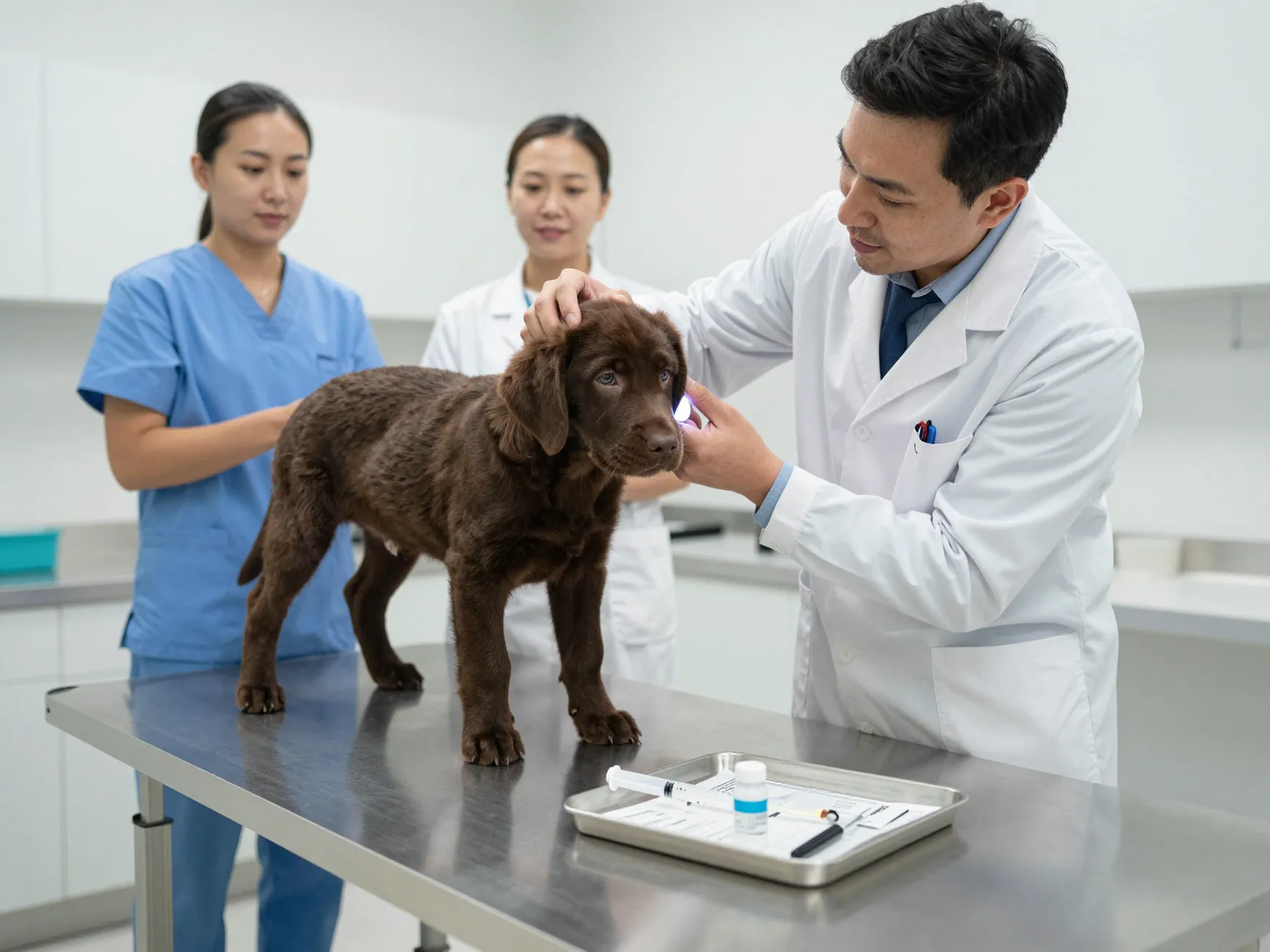
Don’t wait to book your first vet appointment. Ideally, schedule a wellness visit within the first 3–5 days of bringing your puppy home [6].
What to Expect at the First Visit
- A full physical examination to check eyes, ears, heart, and joints.
- A review of your puppy’s vaccination history from the breeder or shelter.
- A deworming treatment if not already completed.
- A flea, tick, and heartworm prevention plan.
Core Vaccination Schedule
| Age | Vaccines Due |
|---|---|
| 6–8 weeks | Distemper, Parvovirus (first dose) |
| 10–12 weeks | DHPP combo (second dose) |
| 14–16 weeks | DHPP (third dose), Rabies |
| 12–16 months | Booster shots |
⚠️ Important: Until your puppy has completed their full vaccination series, limit exposure to unvaccinated dogs and public areas like dog parks.
Regular vet visits aren’t just about vaccines. Your vet will also monitor your Lab’s growth rate, screen for breed-specific conditions like hip and elbow dysplasia, and guide you on spaying or neutering timing [6].
5. Begin Training From Day One
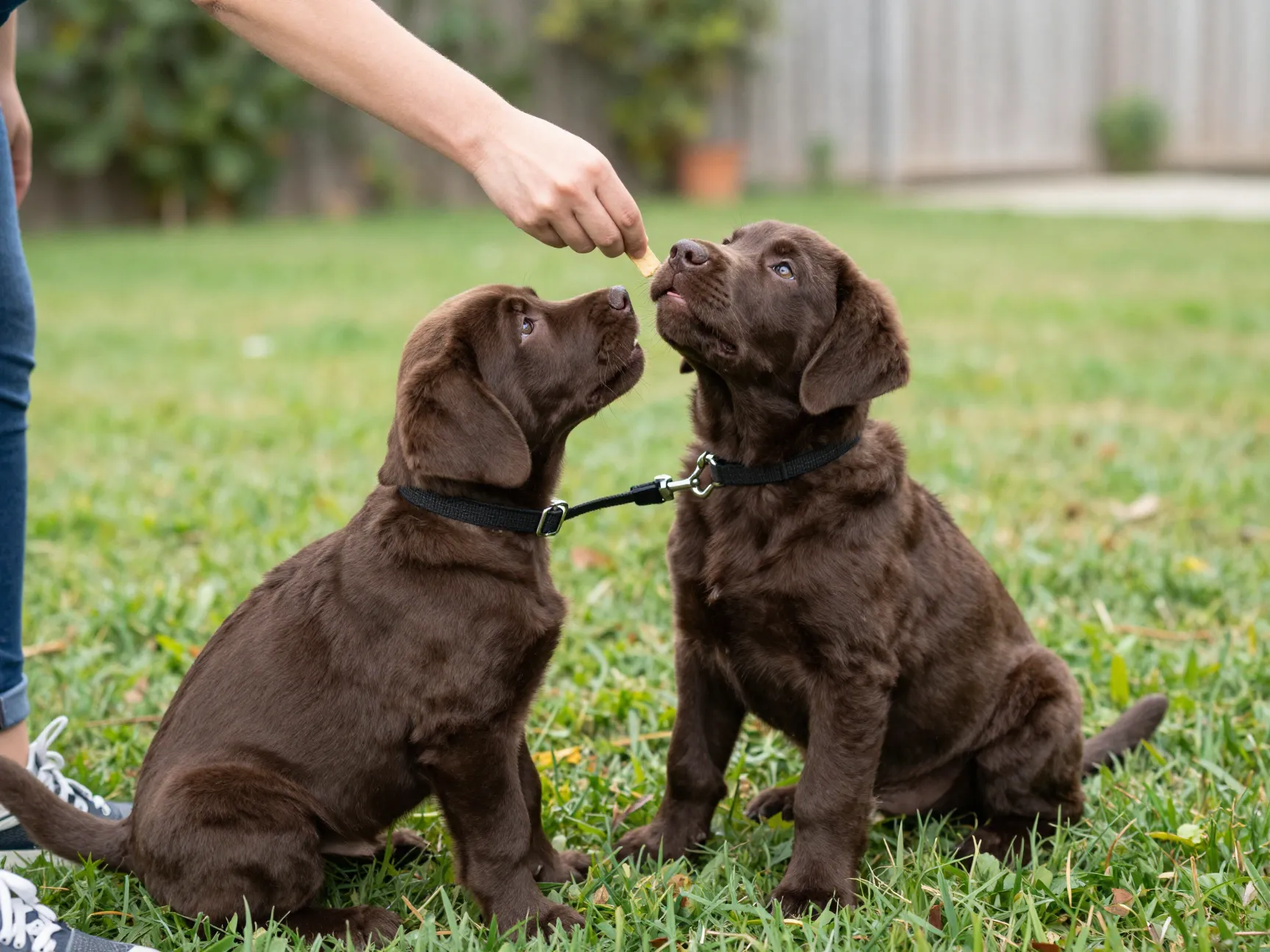
One of the most common mistakes new Lab owners make is waiting to start training. The truth is, every interaction with your puppy is a training opportunity — and the earlier you start, the easier it gets [1].
The Foundation Commands
Start with these five commands in the first few weeks:
- Sit — the gateway command for all other training.
- Stay — builds impulse control, which Labs desperately need.
- Come (recall) — a safety essential for an energetic breed.
- Leave it — critical for a breed that puts everything in its mouth.
- Down — promotes calm behavior.
Training Best Practices
- Keep sessions 5–10 minutes long, multiple times per day [1]. Puppies have short attention spans, and long sessions lead to frustration on both sides.
- Always use positive reinforcement — treats, praise, and play — rather than punishment.
- End every session on a success so your puppy finishes feeling confident.
- Be consistent: every family member should use the same commands and rules [4].
🎓 “Labs are eager to please and highly food-motivated, which makes them one of the easiest breeds to train — but only if you start early and stay consistent.”
House Training
Begin crate training and house training simultaneously. Take your puppy outside:
- First thing in the morning
- After every meal
- After naps
- Before bedtime
Reward immediately when they eliminate outside. Accidents will happen — clean them up without scolding, and move on [7].
6. Prioritize Socialization During the Critical Window

Between 3 and 16 weeks of age, your puppy’s brain is in a unique developmental phase. Positive experiences during this window shape how your dog perceives the world for the rest of their life [7].
A well-socialized chocolate Lab is confident, friendly, and adaptable. A poorly socialized one can become fearful, reactive, or aggressive — despite the breed’s naturally gentle temperament.
Socialization Checklist
Expose your puppy to as many of the following as possible during the critical window:
- Different people — men, women, children, people wearing hats or uniforms.
- Other vaccinated, friendly dogs of various sizes and breeds.
- Various environments — urban streets, parks, car rides, pet-friendly stores.
- Common sounds — traffic, vacuum cleaners, thunder recordings, doorbells.
- Handling — touching paws, ears, mouth, and tail (essential for vet visits and grooming).
💡 Keep all new experiences positive and low-pressure. Never force a frightened puppy into a situation — let them approach at their own pace.
Puppy classes are an excellent option. They combine structured socialization with basic training in a controlled environment [3].
7. Meet Their Exercise and Mental Stimulation Needs
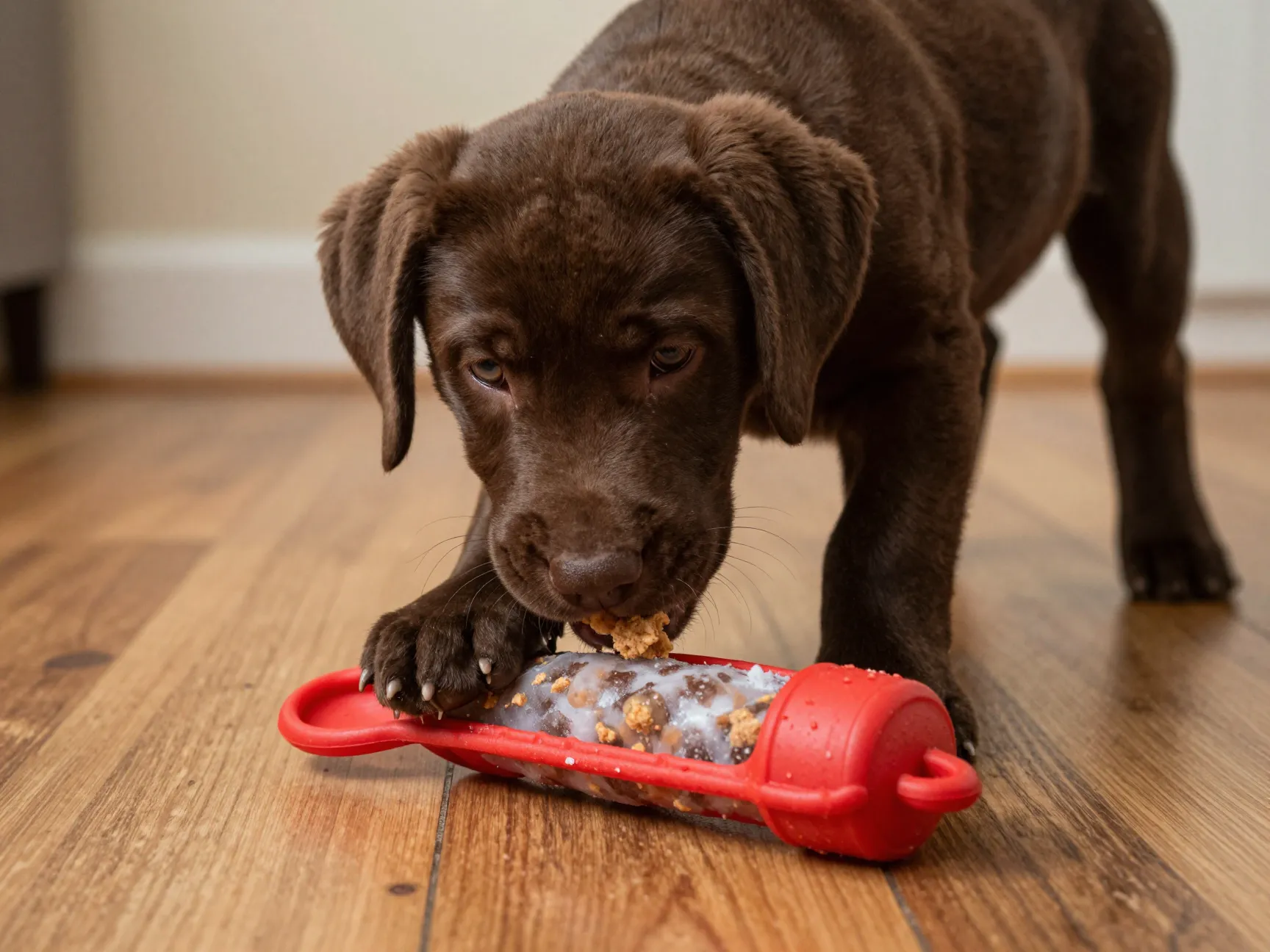
Chocolate Labs are high-energy dogs. Without adequate physical and mental outlets, they become bored — and a bored Lab is a destructive Lab.
Exercise Guidelines by Age
A widely used rule for puppies is the “5-minute rule”: no more than 5 minutes of structured exercise per month of age, twice daily. This protects developing joints.
| Age | Max Exercise Per Session |
|---|---|
| 8 weeks | 10 minutes |
| 12 weeks | 15 minutes |
| 4 months | 20 minutes |
| 6 months | 30 minutes |
After 12–18 months, once growth plates have closed, your Lab can handle much more vigorous activity [8].
Mental Stimulation Ideas
Physical exercise alone isn’t enough. Labs are intelligent dogs that need brain work too:
- Puzzle feeders — make mealtime a mental challenge.
- Sniff walks — let your puppy lead and explore with their nose.
- Hide-and-seek games — hide treats or toys around the house.
- Training new tricks — even silly tricks build focus and confidence.
- Frozen Kongs — stuff with puppy-safe food and freeze for a long-lasting activity.
8. Establish a Grooming and Health Maintenance Routine
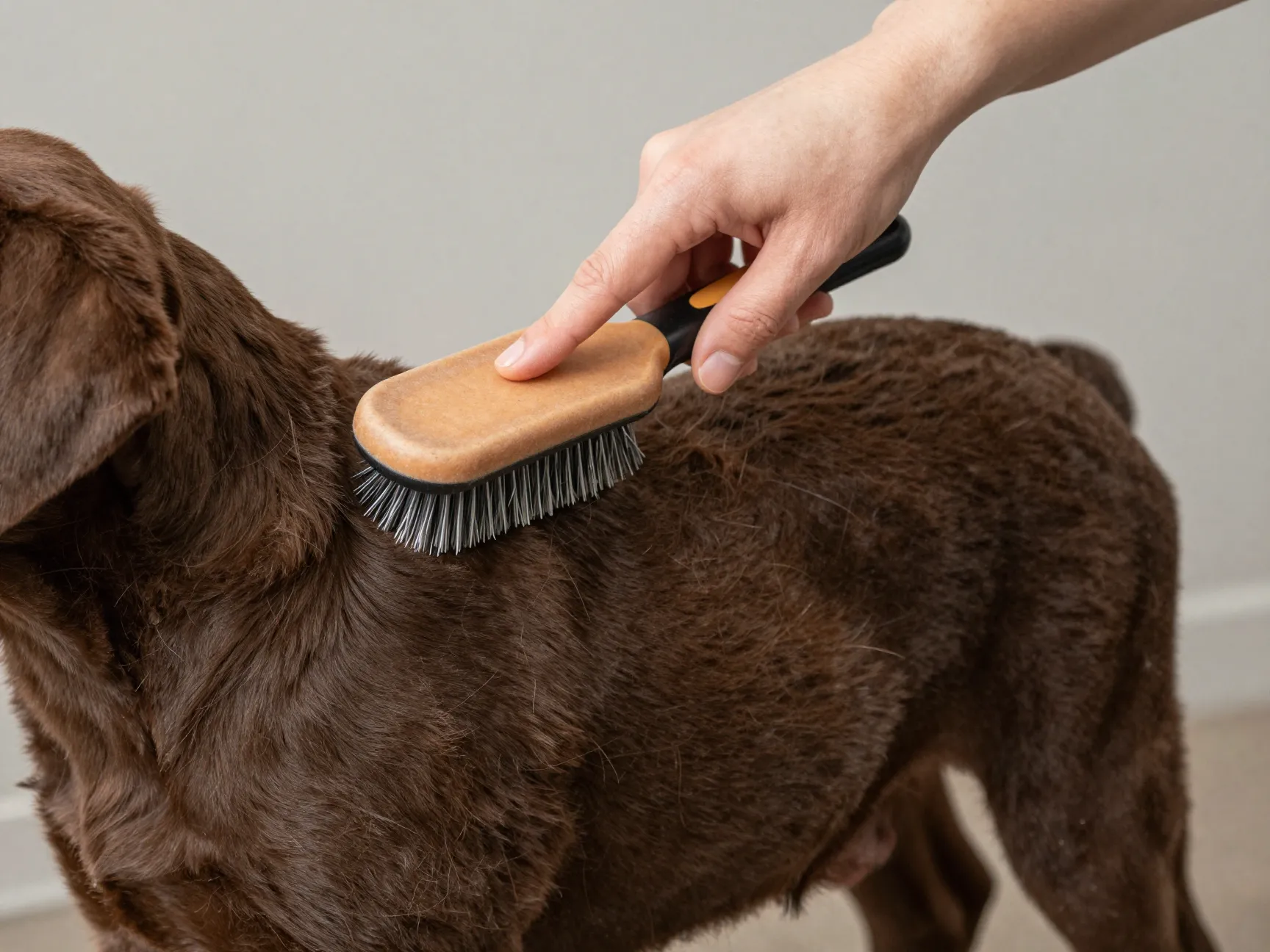
The final step in this 8-Step Guide to Caring for Your Chocolate Labrador Retriever Puppy is building consistent grooming and health habits. The good news: chocolate Labs are relatively low-maintenance compared to many other breeds.
Coat Care
Labs have a short, dense double coat that sheds year-round with heavier shedding twice a year. Brush your puppy 2–3 times per week with a rubber curry brush or slicker brush to remove loose hair and distribute natural oils [5].
Bathe only when necessary — every 4–6 weeks or when visibly dirty. Over-bathing strips the natural oils from their coat.
Ear Care
Labs love water, which makes them prone to ear infections. Check ears weekly for redness, odor, or discharge. Clean gently with a vet-approved ear cleaner [6].
Nail Trimming
Trim nails every 2–3 weeks. Overgrown nails cause discomfort and can affect your puppy’s gait. Start handling paws from day one so your puppy tolerates nail trims calmly.
Dental Health
Dental disease is one of the most common health problems in dogs. Start brushing your puppy’s teeth daily with dog-safe toothpaste. Introduce the toothbrush gradually, making it a positive experience with praise and rewards [3].
Monthly Health Check Routine
| Task | Frequency |
|---|---|
| Brushing coat | 2–3x per week |
| Ear check & clean | Weekly |
| Nail trim | Every 2–3 weeks |
| Teeth brushing | Daily |
| Flea/tick prevention | Monthly (per vet guidance) |
| Heartworm prevention | Monthly (per vet guidance) |
| Vet wellness visit | Every 3–4 months in first year |
Bonus Tips for Raising a Happy Chocolate Lab
Beyond the eight core steps, here are a few additional insights that make a real difference:
- Manage the “Lab lean” — Labs love to lean against their people. Enjoy it, but also teach them not to jump on guests from puppyhood.
- Watch for resource guarding — some Labs become possessive of food or toys. Address this early with training and vet guidance.
- Invest in a good leash — Labs are strong pullers. A front-clip harness can make walks much more manageable while you work on loose-leash walking.
- Build a support network — find a trusted vet, a good trainer, and connect with other Lab owners online or locally. The community is invaluable.
Conclusion
Raising a chocolate Labrador Retriever puppy is one of life’s greatest joys — but it requires intention, consistency, and preparation. By following this 8-Step Guide to Caring for Your Chocolate Labrador Retriever Puppy, you’re setting both yourself and your dog up for a long, happy, and healthy relationship.
Here’s a quick recap of your action plan:
- Puppy-proof your home before your Lab arrives.
- Set up a safe, comfortable living space with the right supplies.
- Feed a large-breed puppy formula on a consistent schedule.
- Book a vet appointment within the first week.
- Start training immediately with short, positive sessions.
- Socialize your puppy during the critical developmental window.
- Balance physical exercise with mental stimulation.
- Build a consistent grooming and health maintenance routine.
Your chocolate Lab is counting on you — and with this guide in hand, you’re more than ready. Start with step one today, and enjoy every muddy paw print, every enthusiastic greeting, and every moment of this incredible journey. 🐾
References
[1] Essential Guide To Chocolate Lab Puppies – https://www.threebearslabradors.com/post/essential-guide-to-chocolate-lab-puppies
[2] Labrador Retriever Puppy Care 5 Essential Tips – https://wopet.com/labrador-retriever-puppy-care-5-essential-tips/
[3] Your New Labrador Puppy The Essentials – https://www.joiipetcare.com/blogs/advice/your-new-labrador-puppy-the-essentials
[4] 1108680 Labrador Puppies 101 A Comprehensive Guide To Welcoming A Lab Into Your Home – https://www.doggieduderanchia.com/blog/1108680-labrador-puppies-101-a-comprehensive-guide-to-welcoming-a-lab-into-your-home
[5] Dog Breed Guides Labrador – https://www.borrowmydoggy.com/doggypedia/dog-breed-guides-labrador
[6] Labrador Retriever Guide – https://www.parkgrovepethospital.com/labrador-retriever-guide/
[7] Train Labrador Retriever Puppy Milestone Timeline – https://www.akc.org/expert-advice/puppy-information/train-labrador-retriever-puppy-milestone-timeline/
[8] Winterparkveterinaryhospitallabradorretriever – https://wpvet.com/pdfs/dogbreedinfo/winterparkveterinaryhospitallabradorretriever.pdf