
8 Must-Know Tips Before Bringing Home a Blue Russian Cat Kitten
Only about 2% of domestic cat breeds are recognized for their naturally hypoallergenic qualities — and the Russian Blue is among the most celebrated of them. Yet despite their growing popularity in 2026, thousands of new owners are caught off guard by this breed’s unique emotional needs, dietary preferences, and environmental sensitivities. The result? Stressed kittens, frustrated owners, and avoidable vet visits. If you’re about to welcome one of these silver-blue beauties into your home, these 8 must-know tips before bringing home a Blue Russian Cat Kitten could make the difference between a smooth transition and a rocky start. Let’s set you — and your new companion — up for success.

Key Takeaways 🐾
- Preparation is everything: Set up a dedicated introduction room before your kitten arrives.
- Routine is non-negotiable: Russian Blues are emotionally sensitive and thrive on predictability.
- Nutrition matters early: High-protein, kitten-formulated food fed on a fixed schedule supports healthy development.
- Socialization shapes temperament: Gentle, structured daily interaction during kittenhood builds a confident, affectionate adult cat.
- Grooming is simple but essential: Weekly brushing and regular nail trims keep this low-maintenance breed in top condition.
Getting the Basics Right: The Foundation of These 8 Must-Know Tips Before Bringing Home a Blue Russian Cat Kitten
Before your kitten even crosses the threshold, the groundwork you lay will shape their first weeks — and their long-term personality. Russian Blues are sensitive, observant cats. They notice everything. A chaotic or unprepared environment can trigger anxiety that takes weeks to undo. The tips in this section focus on the physical and nutritional foundation your kitten needs from day one.
1. Set Up a Controlled Introduction Space Before Your Kitten Arrives
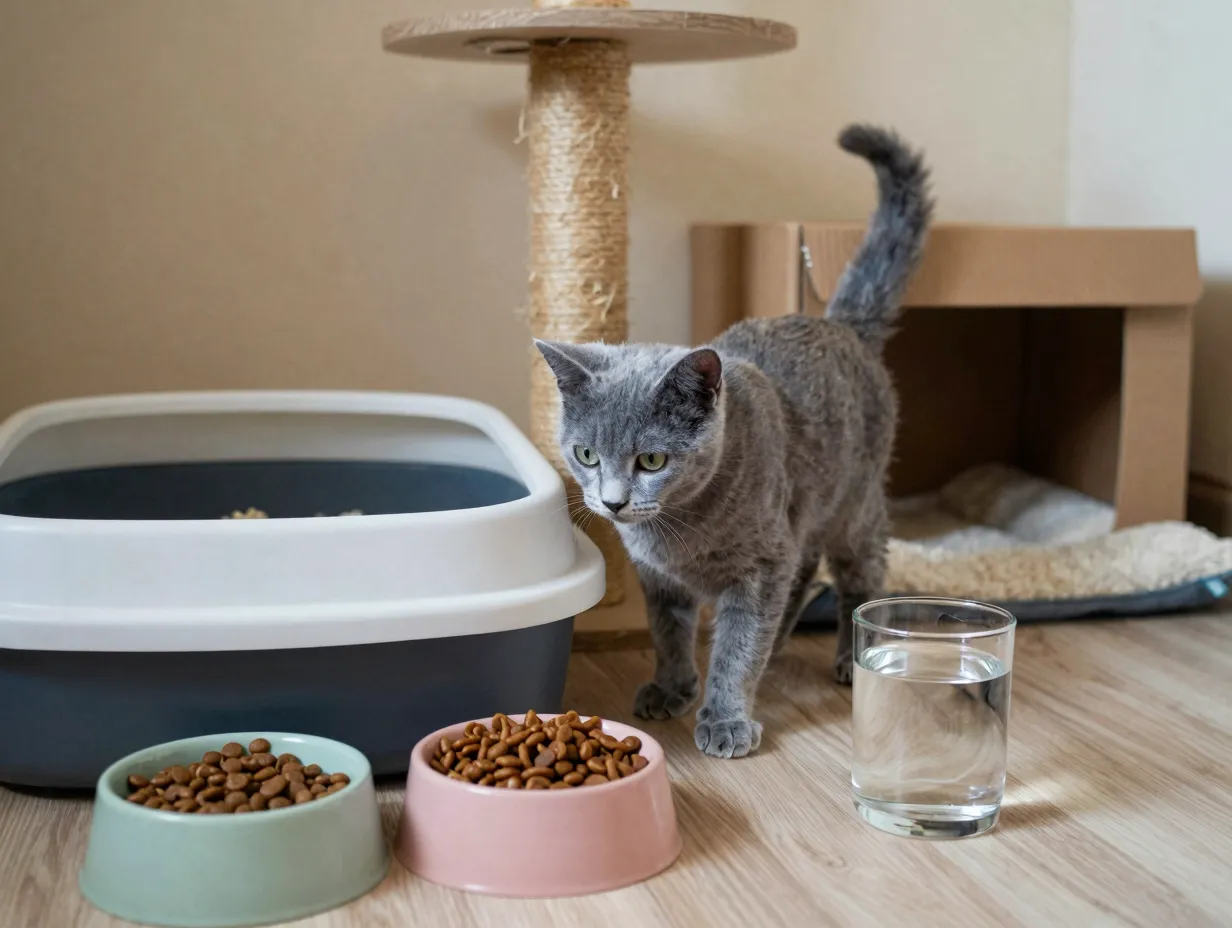
The single most important thing you can do before bringing home a Russian Blue kitten is prepare a dedicated introduction room. This is not optional — it is essential.
Choose a quiet, low-traffic room and stock it with:
- ✅ A low-sided litter box (easy for kittens to enter)
- ✅ High-quality kitten food and fresh water
- ✅ Soft, washable bedding
- ✅ A sturdy scratching post
- ✅ A safe hiding option (a cardboard box works perfectly)
Limit your kitten’s access to the entire house for the first 3 to 7 days. Once their litter habits are consistent and they show signs of comfort — relaxed posture, voluntary exploration, normal appetite — you can gradually expand their territory [1].
💡 Pull Quote: “A smaller, controlled space gives a Russian Blue kitten the security to observe, adapt, and build confidence on their own terms.”
This approach prevents the overwhelm that leads to hiding, litter box avoidance, and stress-related illness. Think of it as giving your kitten a home base before handing them the whole map.
2. Establish a Consistent Feeding Schedule with 3–4 Small Meals Daily
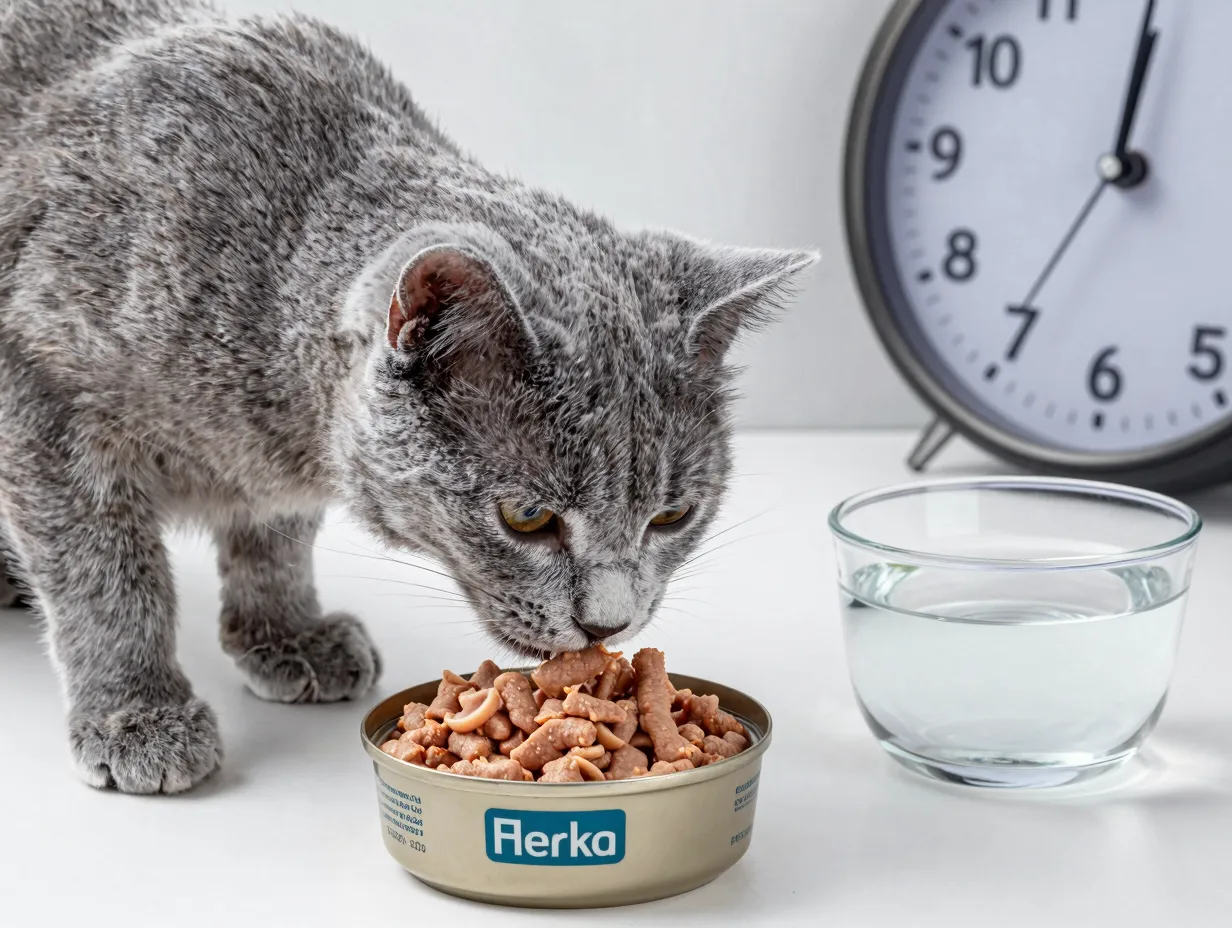
Russian Blue kittens have sensitive digestive systems and a well-documented tendency to experience stress-related appetite changes during transitions. A fixed feeding routine is one of the most effective tools you have to support both their physical health and emotional stability.
What to feed:
- Choose a high-protein, kitten-formulated food as the primary diet
- Offer a combination of wet and dry food to support hydration [2]
- Feed 3 to 4 small meals per day rather than free-feeding
Why it matters:
Russian Blues may be prone to urinary issues, making adequate hydration particularly important [2]. Wet food contributes meaningfully to daily fluid intake, especially in the early weeks when your kitten may not drink freely from a bowl.
| Meal | Timing | Food Type |
|---|---|---|
| Breakfast | 7:00 AM | Wet food |
| Midday | 12:00 PM | Dry kibble |
| Afternoon | 4:00 PM | Wet food |
| Evening | 7:00 PM | Dry kibble or mixed |
Monitor stool quality and hydration closely during the first week. Loose stools, skipped meals, or excessive thirst are early signals worth noting — and worth mentioning to your vet [1].
3. Maintain Litter Consistency During the First Two Weeks
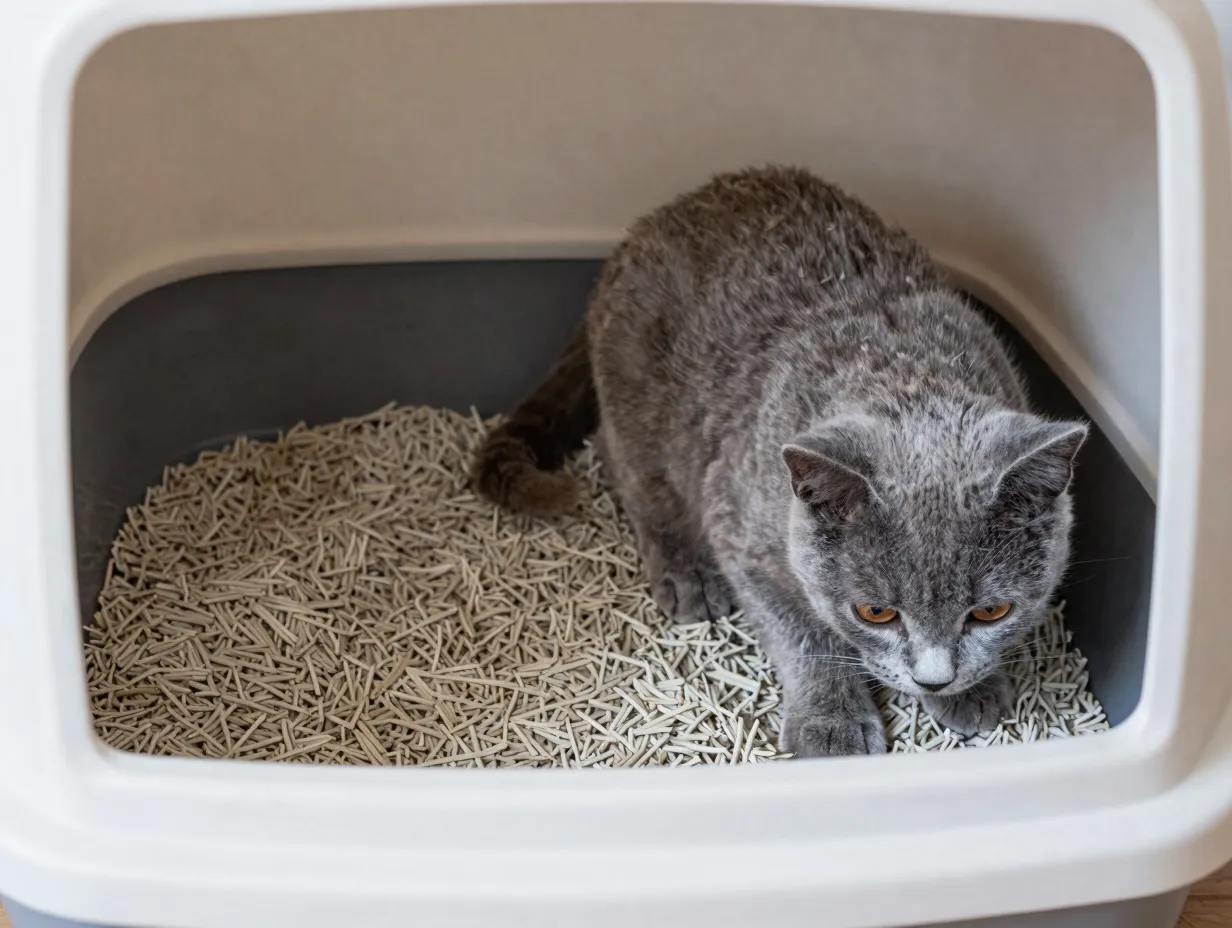
Here is a fact that surprises many first-time Russian Blue owners: these kittens arrive already litter trained. Breeders typically begin litter training early, and by the time your kitten comes home, the behavior is already established [1].
Your job is not to teach — it is to not undo what has already been learned.
Follow these litter rules during the adjustment period:
- Place your kitten in the litter box immediately after meals and naps
- Keep litter depth consistent (approximately 2–3 inches)
- Scoop at least once daily — Russian Blues are fastidious and will avoid a dirty box
- Do not change litter type during the first two weeks
Switching litter brands or textures during the initial adjustment period is one of the most common causes of litter box accidents in newly homed kittens. Consistency here is not about convenience — it is about communication. Your kitten needs to recognize the box as familiar and safe [1].
4. Provide Balanced Nutrition That Supports Long-Term Health

Beyond the feeding schedule, what you feed your Russian Blue kitten matters enormously for their long-term wellbeing. This breed is known for its lean, muscular build and dense double coat — both of which require proper nutritional support.
Key nutritional priorities:
- Protein: Look for named animal proteins (chicken, turkey, salmon) as the first ingredient
- Omega-3 and Omega-6 fatty acids: Support coat health and reduce shedding
- Taurine: An essential amino acid for feline heart and eye health — confirm it appears in your food’s ingredient list
- Hydration: Wet food or a cat water fountain encourages consistent fluid intake [2]
Avoid:
- Foods with artificial preservatives, fillers, or excessive carbohydrates
- Overfeeding — Russian Blues can be prone to weight gain if free-fed
- Abrupt food changes (transition over 7–10 days by mixing old and new food)
⚠️ Important: Never switch foods abruptly. A gradual transition over 7 to 10 days prevents digestive upset and encourages acceptance of the new diet.
Building Trust and Wellbeing: More of the 8 Must-Know Tips Before Bringing Home a Blue Russian Cat Kitten
The second half of these essential tips moves beyond logistics and into the emotional and behavioral landscape of the Russian Blue. This is where many owners either build a deep, lasting bond — or inadvertently create a shy, anxious cat that never fully comes out of its shell.
5. Support Early Socialization Through Gentle, Structured Interaction
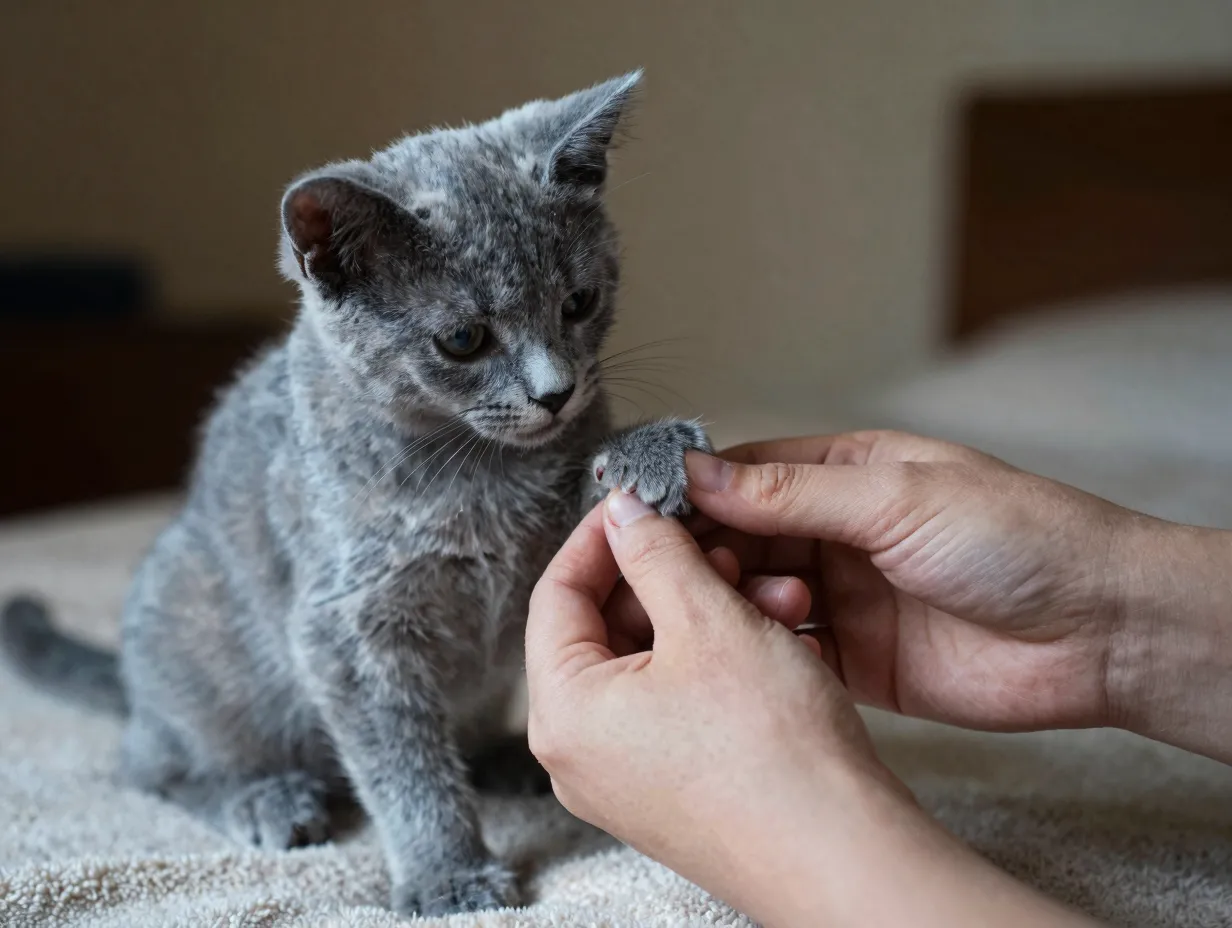
Russian Blues have a reputation for being reserved with strangers — but this trait is not fixed. It is shaped significantly by the quality of socialization during kittenhood. A well-socialized Russian Blue is affectionate, playful, and curious. A poorly socialized one can become permanently skittish [1].
Daily socialization practices to start immediately:
- Gently handle paws, ears, and around the mouth for 1–2 minutes per session
- Conduct short, positive grooming sessions (even before grooming is strictly necessary)
- Introduce normal household sounds — television, kitchen appliances, moderate conversation
- Use a calm, consistent tone when speaking to your kitten
- Invite (but never force) interaction — let your kitten approach on their own terms
What to avoid:
- Loud voices or sudden movements
- Forcing the kitten out of hiding spots
- Overwhelming them with too many new people at once during the first week
💡 Pull Quote: “The Russian Blue’s reserved nature is not coldness — it is caution. Earn their trust early, and you earn it for life.”
Structured socialization during the first 8 to 16 weeks of life has a lasting impact on adult temperament [3]. Invest this time deliberately.
6. Provide Enrichment Through Climbing, Play, and Mental Stimulation
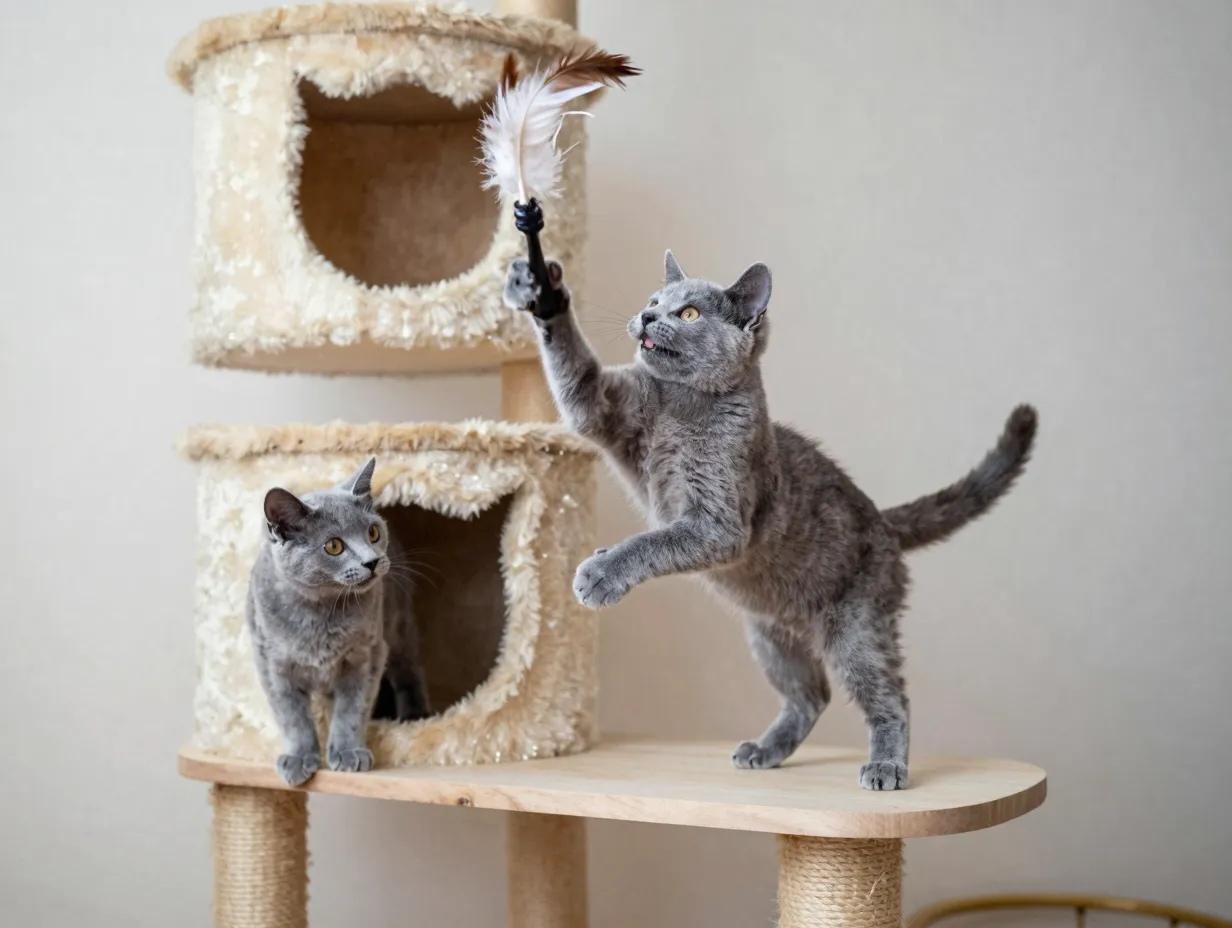
Do not let the Russian Blue’s elegant, quiet demeanor fool you. This is an athletic, highly intelligent breed that needs meaningful daily stimulation to stay mentally and physically healthy [2].
Recommended enrichment setup:
- 🐾 Cat tree or wall shelves for vertical climbing (Russian Blues love height)
- 🧩 Puzzle feeders to engage their problem-solving instincts
- 🪶 Interactive wand toys (feather wands, ribbon toys) for daily play sessions
- 🔴 Laser pointers used with a physical “catch” at the end to avoid frustration
- 🐾 Scratching surfaces in multiple locations — both horizontal and vertical
Aim for at least 20 to 30 minutes of interactive play daily, split into two or more sessions [2]. Kittens have short attention spans but high energy bursts — multiple shorter sessions are more effective than one long one.
| Enrichment Type | Frequency | Benefit |
|---|---|---|
| Wand toy play | Daily | Physical exercise, bonding |
| Puzzle feeder | 3–4x per week | Mental stimulation |
| Climbing/exploring | Daily | Confidence, muscle tone |
| Window perch access | Daily | Passive enrichment |
An under-stimulated Russian Blue will find their own entertainment — usually at the expense of your furniture, cables, or sleep schedule.
7. Maintain a Predictable Daily Routine to Protect Emotional Stability
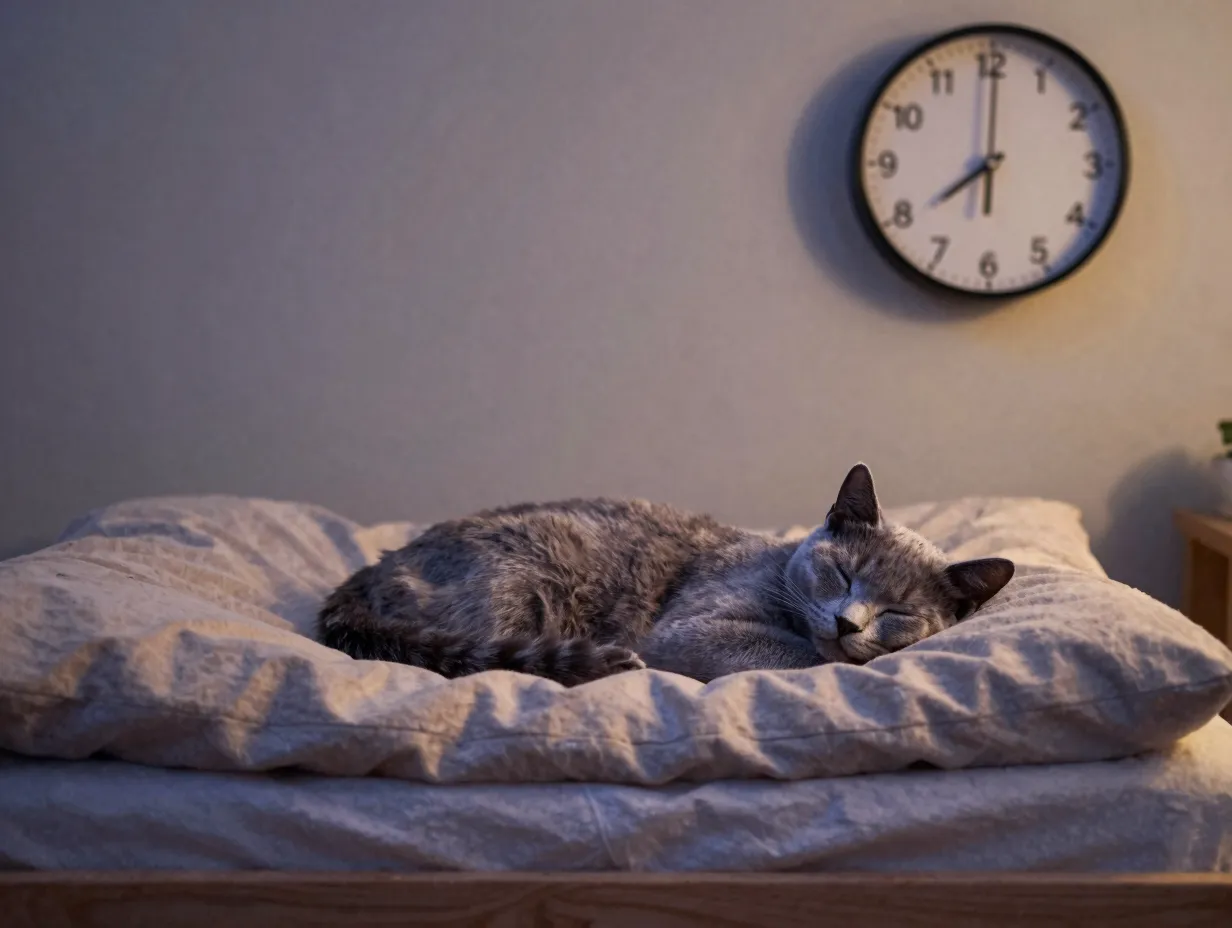
Of all the 8 must-know tips before bringing home a Blue Russian Cat Kitten, this one is perhaps the most underestimated. Russian Blues are deeply routine-oriented cats. They form strong attachments to their people and their environment, and they are acutely sensitive to disruption [1].
What “routine” looks like in practice:
- Fixed feeding times (same time, every day)
- Predictable sleep and wake patterns
- Gradual environmental changes (new furniture, rearranged rooms) rather than sudden ones
- Calm, consistent correction — never shouting or physical discipline
- Advance preparation for disruptions (visitors, travel, renovations)
Signs your Russian Blue is experiencing routine-related stress:
- Hiding more than usual
- Reduced appetite
- Increased vocalization
- Litter box changes
- Excessive grooming or grooming-related hair loss
⚠️ Note: If you work from home, your Russian Blue will likely become accustomed to your presence during the day. Returning to an office schedule can cause genuine separation anxiety. Plan transitions gradually.
This breed thrives on knowing what comes next. Predictability is not boring to a Russian Blue — it is safety [1].
8. Perform Regular Grooming and Nail Maintenance
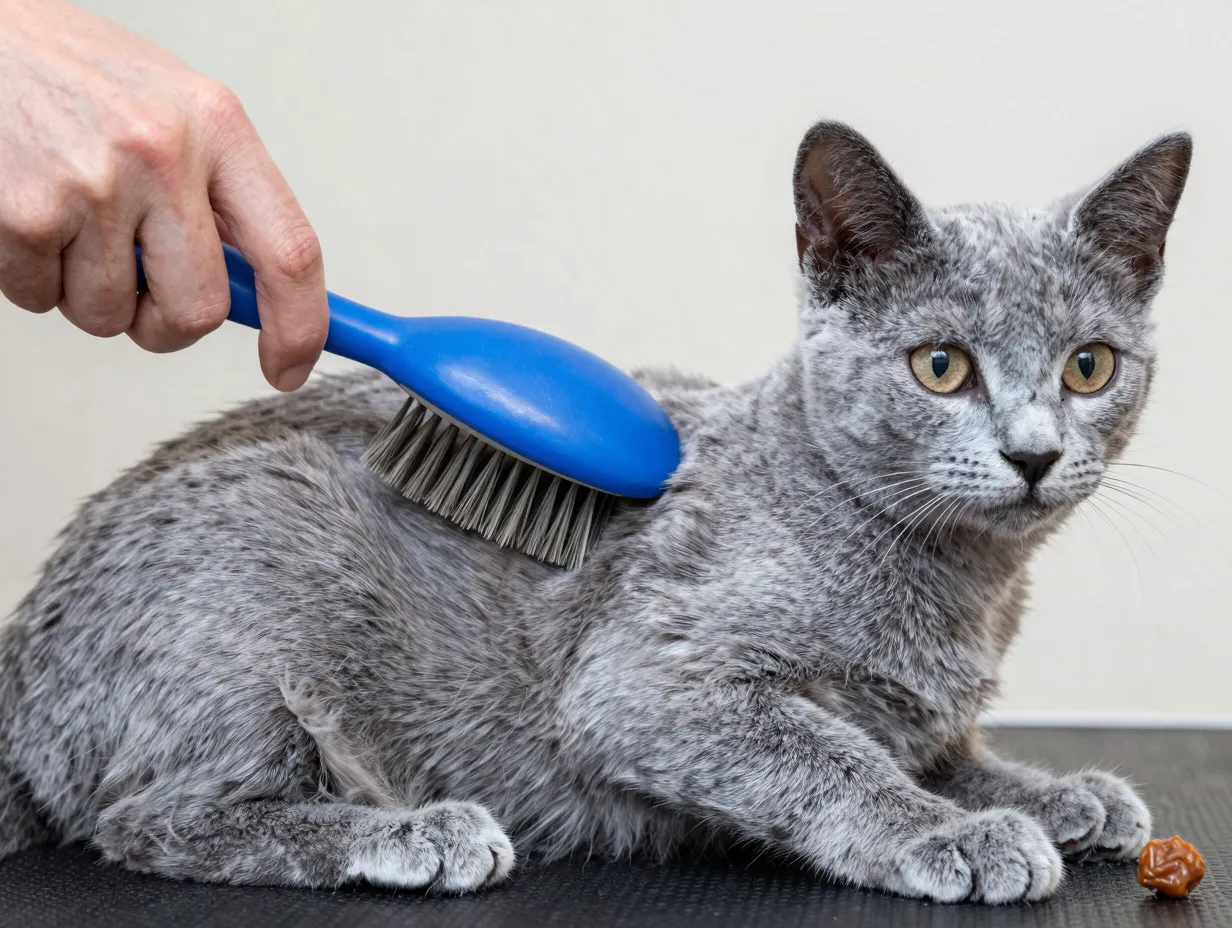
One of the genuine joys of owning a Russian Blue is their remarkably low grooming requirement. Their dense, plush double coat does not mat easily and sheds relatively little compared to many other breeds [4][6]. But “low maintenance” does not mean “no maintenance.”
Grooming schedule for Russian Blue kittens:
- Brushing: At least once per week; increase to 2–3 times per week during spring and autumn shedding seasons [4]
- Nail trimming: Check every 2–3 weeks; trim when you hear clicking on hard floors [4]
- Ear checks: Monthly, using a vet-approved ear cleaner if wax buildup is visible
- Dental care: Begin tooth brushing early using cat-specific toothpaste — the earlier you start, the more accepting your kitten will be
Nail trimming tips:
- Use cat-specific clippers (never human nail clippers)
- Trim only the clear tip — avoid the pink “quick”
- Do it after play when the kitten is calm and tired
- Reward immediately with a treat or affection
Starting grooming routines during kittenhood — even when they are not strictly necessary — builds tolerance and even enjoyment of the process. An adult Russian Blue that has been groomed since kittenhood will sit calmly for brushing sessions. One that hasn’t may make the experience considerably more dramatic [7].
💡 Pull Quote: “Weekly brushing is less about managing shedding and more about maintaining the bond. Russian Blues often come to love the ritual.”
Conclusion: Your Russian Blue Kitten Deserves a Thoughtful Start
The 8 must-know tips before bringing home a Blue Russian Cat Kitten are not just a checklist — they are a framework for building a relationship with one of the most intelligent, loyal, and emotionally nuanced cat breeds available today. In 2026, more families than ever are choosing Russian Blues, drawn by their hypoallergenic qualities, their striking appearance, and their reputation for forming deep bonds with their people.
But that bond does not happen automatically. It is built through preparation, consistency, and respect for this breed’s unique temperament.
Your actionable next steps:
- ✅ Set up your introduction room before your kitten arrives
- ✅ Purchase high-protein kitten food and schedule a vet appointment for the first week
- ✅ Establish your feeding and play schedule in advance — and stick to it
- ✅ Buy a quality cat brush and nail clippers now, and begin handling paws from day one
- ✅ Brief everyone in your household on the importance of calm, consistent interaction
A Russian Blue kitten given the right start will reward you with years of quiet companionship, playful intelligence, and unwavering loyalty. Take these tips seriously, and you will not just bring home a cat — you will gain a genuinely devoted companion.
References
[1] How To Care For A Russian Blue Kitten – https://www.archangelcat.com/post/how-to-care-for-a-russian-blue-kitten
[2] 4 Essential Steps For Caring For Your Russian Blue Kitten – https://jetpetresort.com/blog/safety-comfort-in-pet-care/4-essential-steps-for-caring-for-your-russian-blue-kitten/
[3] Everything You Need To Know About Russian Blue Kittens – https://wagwalking.com/daily/everything-you-need-to-know-about-russian-blue-kittens
[4] Russian Blue Breed Guide – https://vetslovepets.com.au/blogs/cat/russian-blue-breed-guide
[6] Russian Blue – https://www.petmd.com/cat/breeds/russian-blue
[7] Secrets Of Caring For Russian Blue Cats – https://portrait-my-pet.com/en-ca/blogs/pet-portrait/secrets-of-caring-for-russian-blue-cats