8 Incredible and Endangered All Wild Cat Species You Should Know
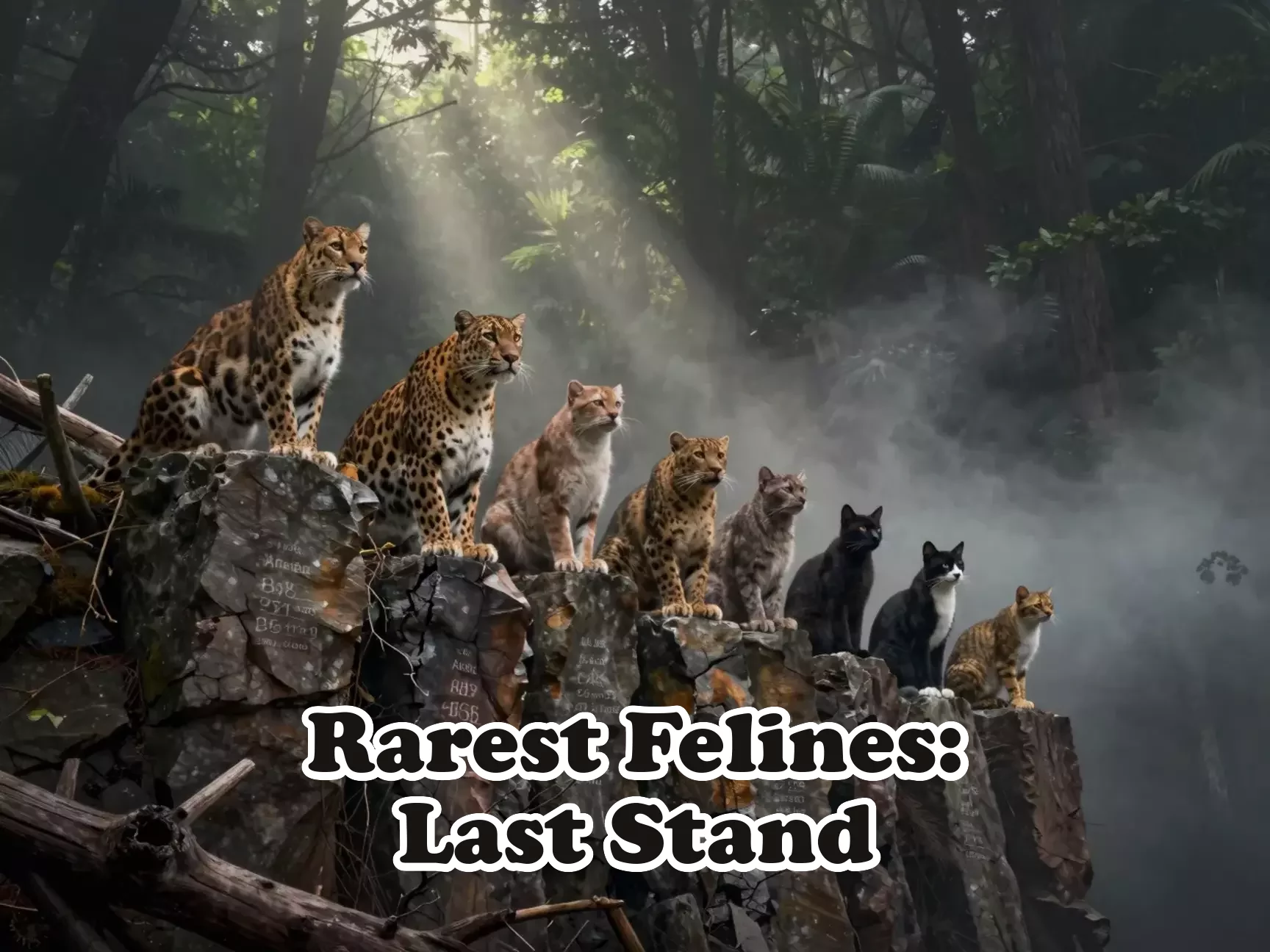
Of the 40 to 41 distinct wild cat species on Earth, a shocking number are racing toward extinction — and most people cannot name more than three of them [1][3]. While lions and tigers dominate wildlife documentaries, dozens of smaller, lesser-known felines are quietly disappearing from forests, deserts, and islands around the world. In 2026, understanding the full picture of wild cat conservation has never been more urgent. This guide to the 8 incredible and endangered all wild cat species you should know shines a light on the cats that need our attention most — from the rarest feline alive to a surprising conservation comeback story.
Key Takeaways 🐾
- There are 40–41 species of wild cats globally, and many face serious threats from habitat loss, poaching, and illegal wildlife trade [1][3].
- The Iriomote Cat holds the heartbreaking title of rarest cat on Earth, with only ~100 individuals remaining [1].
- The Iberian Lynx proves that conservation works — it rebounded from just 94 individuals in 2002 to 688 today [1][2].
- Deforestation is the single biggest driver of wild cat decline; Borneo alone lost 50% of its forest cover between 1973 and 2015 [1].
- Awareness, habitat protection, and anti-poaching laws are the most effective tools we have to protect these species.
Why These 8 Incredible and Endangered All Wild Cat Species You Should Know Matter
Before diving into the list, it helps to understand what makes wild cats so ecologically important. As apex or meso-predators, wild cats regulate prey populations, maintain healthy ecosystems, and signal the overall health of their habitats. When a cat species disappears, the ripple effects can destabilize entire food webs.
“Every wild cat species lost is a thread pulled from the fabric of its ecosystem — and eventually, the whole fabric unravels.”
The threats these animals face are well-documented: deforestation, illegal wildlife trade, human-wildlife conflict, and declining prey numbers [1][3]. Yet, as you will see with the Iberian Lynx, recovery is possible when humans commit to the work.
Here is a quick overview before we go deeper:
| # | Species | Status | Est. Population |
|---|---|---|---|
| 1 | Iriomote Cat | Critically Endangered | ~100 |
| 2 | Amur Leopard | Critically Endangered | ~120 |
| 3 | Arabian Leopard | Critically Endangered | 100–120 |
| 4 | Iberian Lynx | Endangered (recovering) | ~688 |
| 5 | Flat-headed Cat | Endangered | Unknown (low) |
| 6 | Borneo Bay Cat | Endangered | Unknown (low) |
| 7 | Black-footed Cat | Vulnerable | 10,000+ |
| 8 | Kodkod | Vulnerable | Declining |
The 8 Incredible and Endangered All Wild Cat Species You Should Know
1. Iriomote Cat — The World’s Rarest Feline
Status: Critically Endangered
Location: Iriomote Island, Japan 🇯🇵
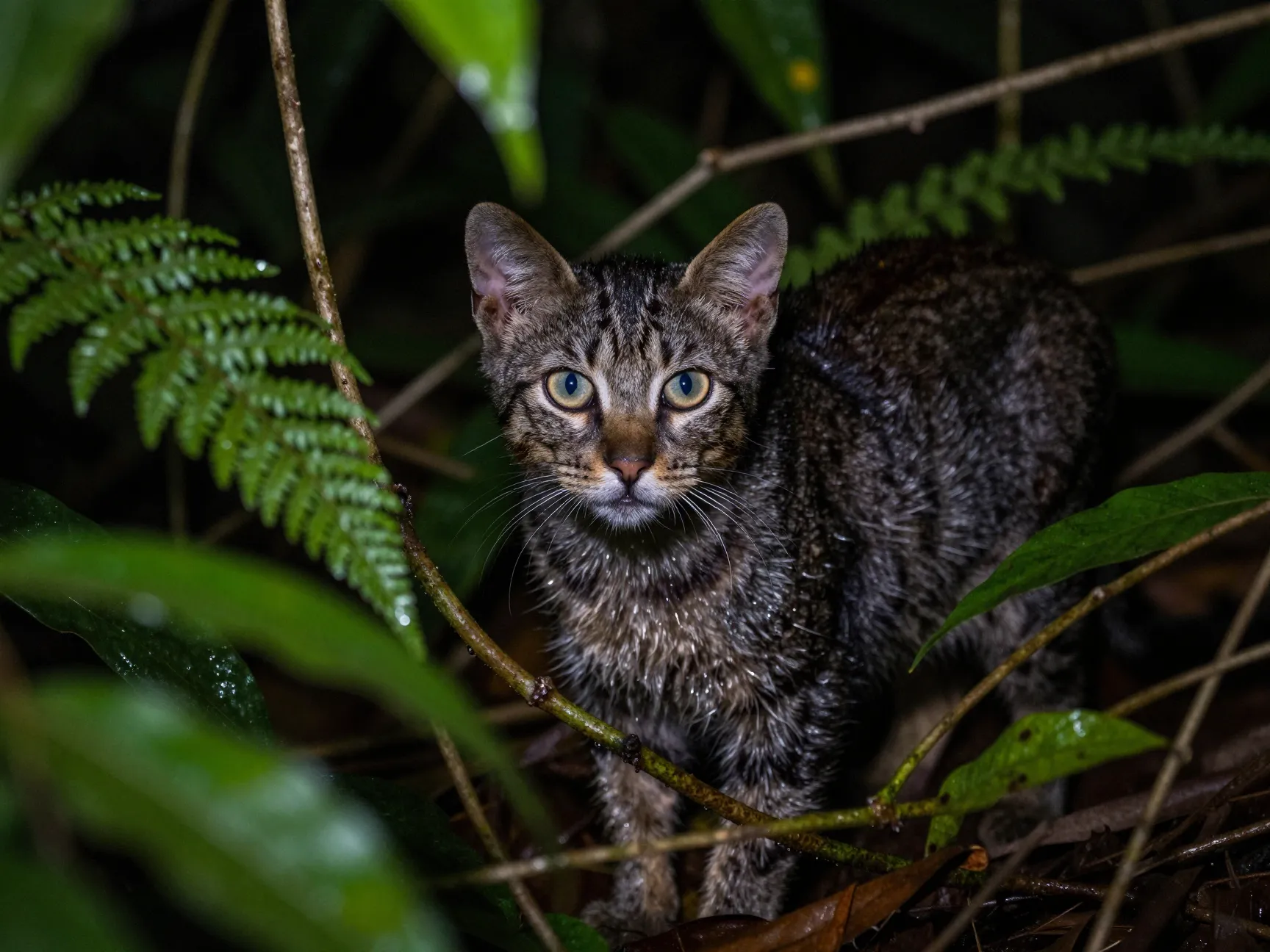
The Iriomote Cat holds the devastating distinction of being the rarest cat in the world, with only approximately 100 individuals left in the wild [1]. It lives exclusively on Iriomote Island, a remote subtropical island in southern Japan — making it one of the most geographically restricted mammals on the planet.
This small, dark-coated cat is a nocturnal hunter that preys on birds, reptiles, and small mammals in the island’s dense jungle. Its population has been declining steadily, squeezed by tourism development, road traffic fatalities, and the introduction of non-native species that compete for food and territory [1].
Key threats:
- Habitat fragmentation from development
- Road collisions
- Invasive species competition
- Extremely limited geographic range
Because its entire population lives on a single island, any catastrophic event — a disease outbreak, a severe typhoon, or rapid coastal development — could push this species to extinction with terrifying speed. Conservation efforts on Iriomote focus on traffic management, habitat preservation, and strict tourism controls.
2. Amur Leopard — The Most Endangered Big Cat on Earth
Status: Critically Endangered
Location: Russian Far East, Northeast China 🇷🇺🇨🇳
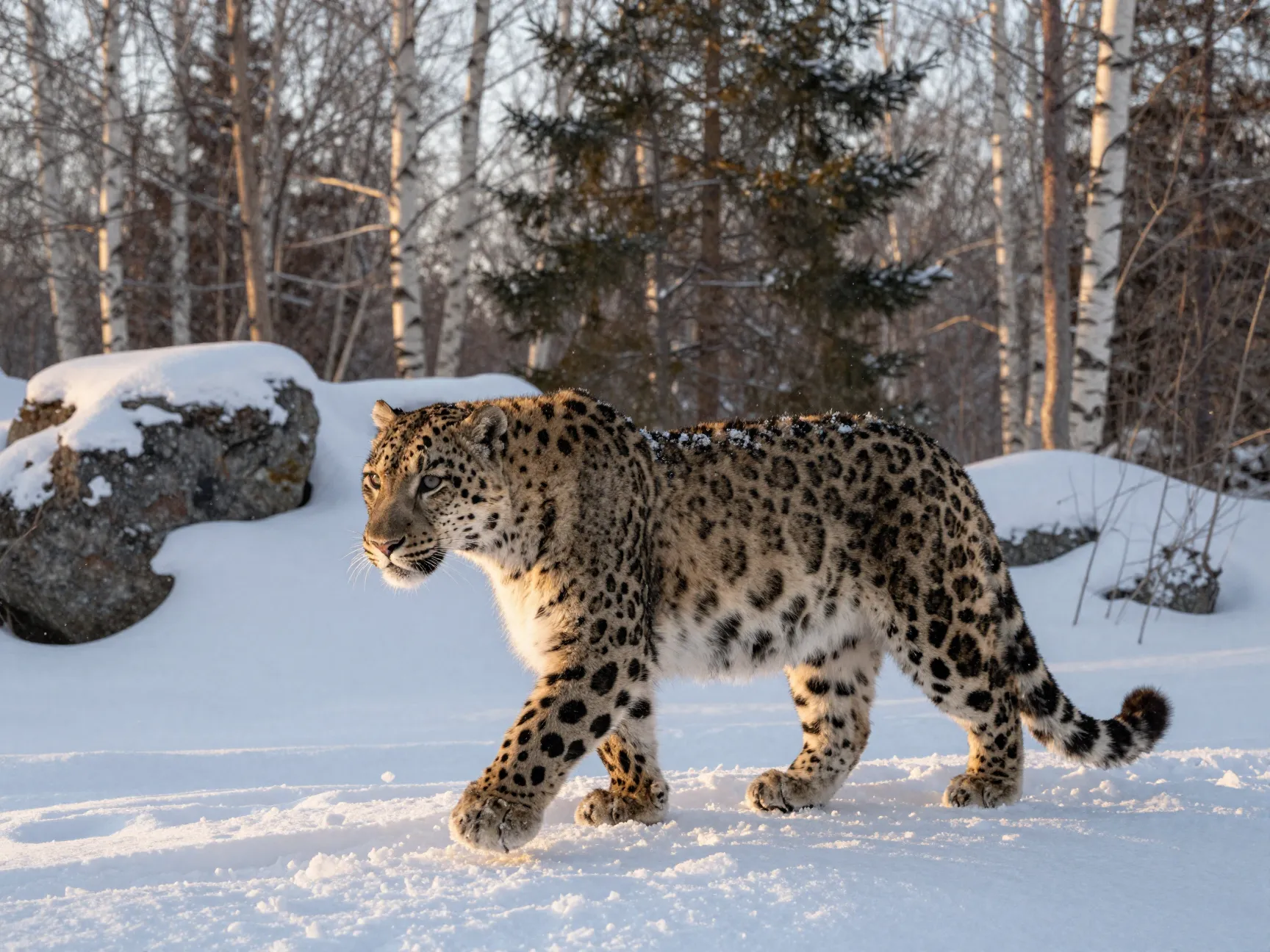
With only around 120 individuals remaining, the Amur Leopard is widely considered the most endangered big cat in the world [1]. Unlike its more famous cousin the Snow Leopard, the Amur Leopard rarely makes headlines — but its situation is just as dire.
This stunning, thick-furred leopard is adapted to cold, snowy climates in the temperate forests of the Russian Far East. It is a solitary, territorial animal that requires large home ranges to survive. Unfortunately, those ranges have been shredded by illegal logging, agricultural expansion, and road construction.
Primary threats include:
- Habitat loss from logging and agriculture
- Declining prey numbers (deer and wild boar populations)
- Illegal wildlife trade (pelts and bones)
- Inbreeding due to small, isolated population [1]
The good news? Russia’s Land of the Leopard National Park, established in 2012, has provided critical protection. Camera trap surveys suggest the population has grown slightly from its historic low of around 30 individuals in the early 2000s — a cautious reason for optimism.
3. Arabian Leopard — Edging Toward Vanishing
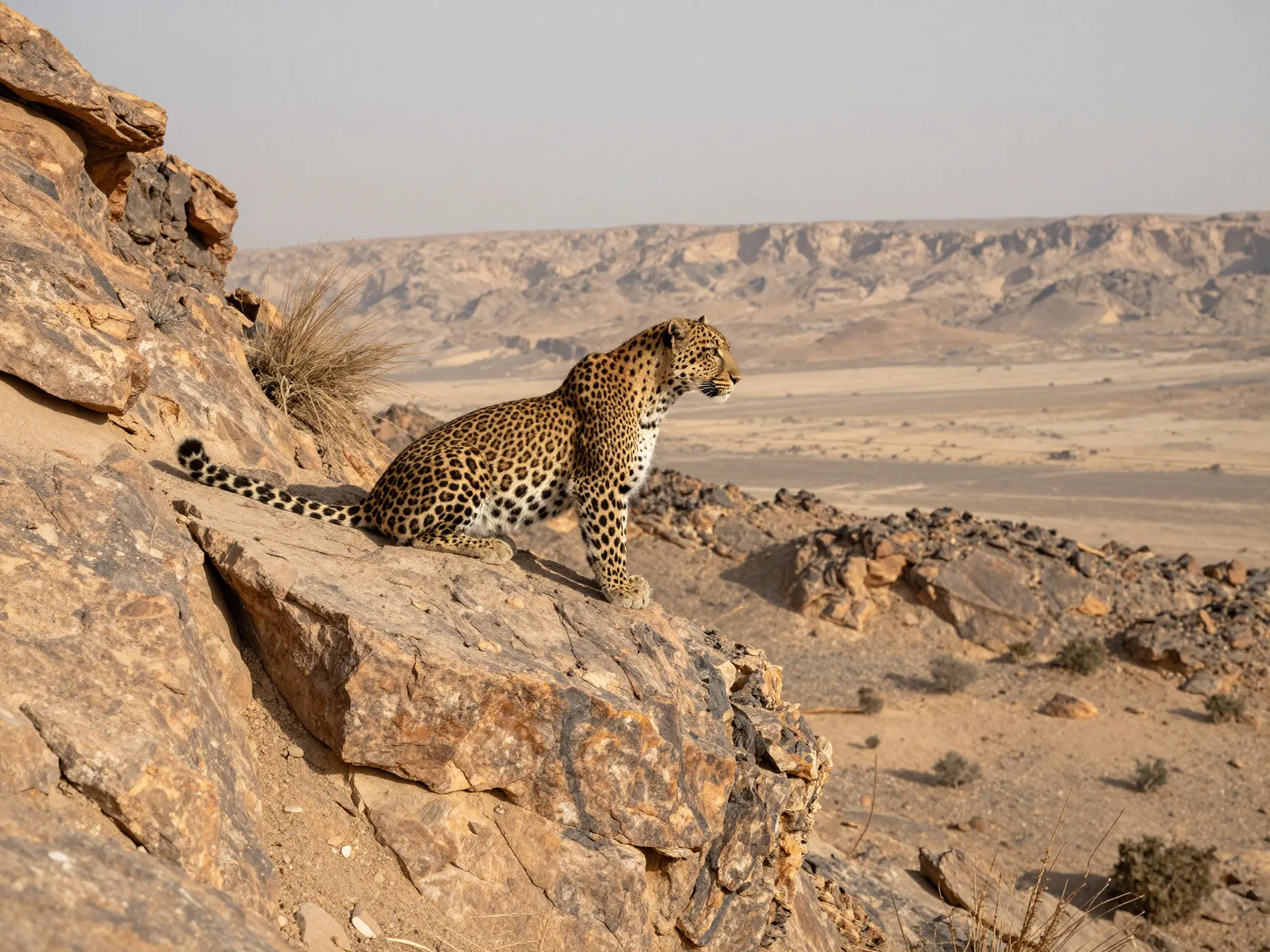
Status: Critically Endangered
Location: Arabian Peninsula 🇸🇦🇾🇪🇴🇲
The Arabian Leopard is one of the smallest leopard subspecies in the world, and the IUCN describes it as “edging dangerously close to vanishing entirely” [1]. With only 100 to 120 individuals estimated to remain in fragmented mountain ranges across the Arabian Peninsula, this cat is in a race against time [1].
Historically ranging across the entire Arabian Peninsula, the Arabian Leopard has been pushed into isolated pockets in Yemen, Oman, and Saudi Arabia. It is a secretive, elusive animal — which makes both study and protection extremely difficult, especially in politically unstable regions.
Biggest challenges:
- Habitat destruction from agriculture and urban sprawl
- Prey depletion (gazelles, ibex, and hares have all declined)
- Direct persecution by farmers protecting livestock
- Political instability limiting conservation access
Captive breeding programs in Saudi Arabia and the UAE offer a lifeline, but without securing wild habitat, reintroduction remains a distant goal.
4. Iberian Lynx — Conservation’s Greatest Success Story
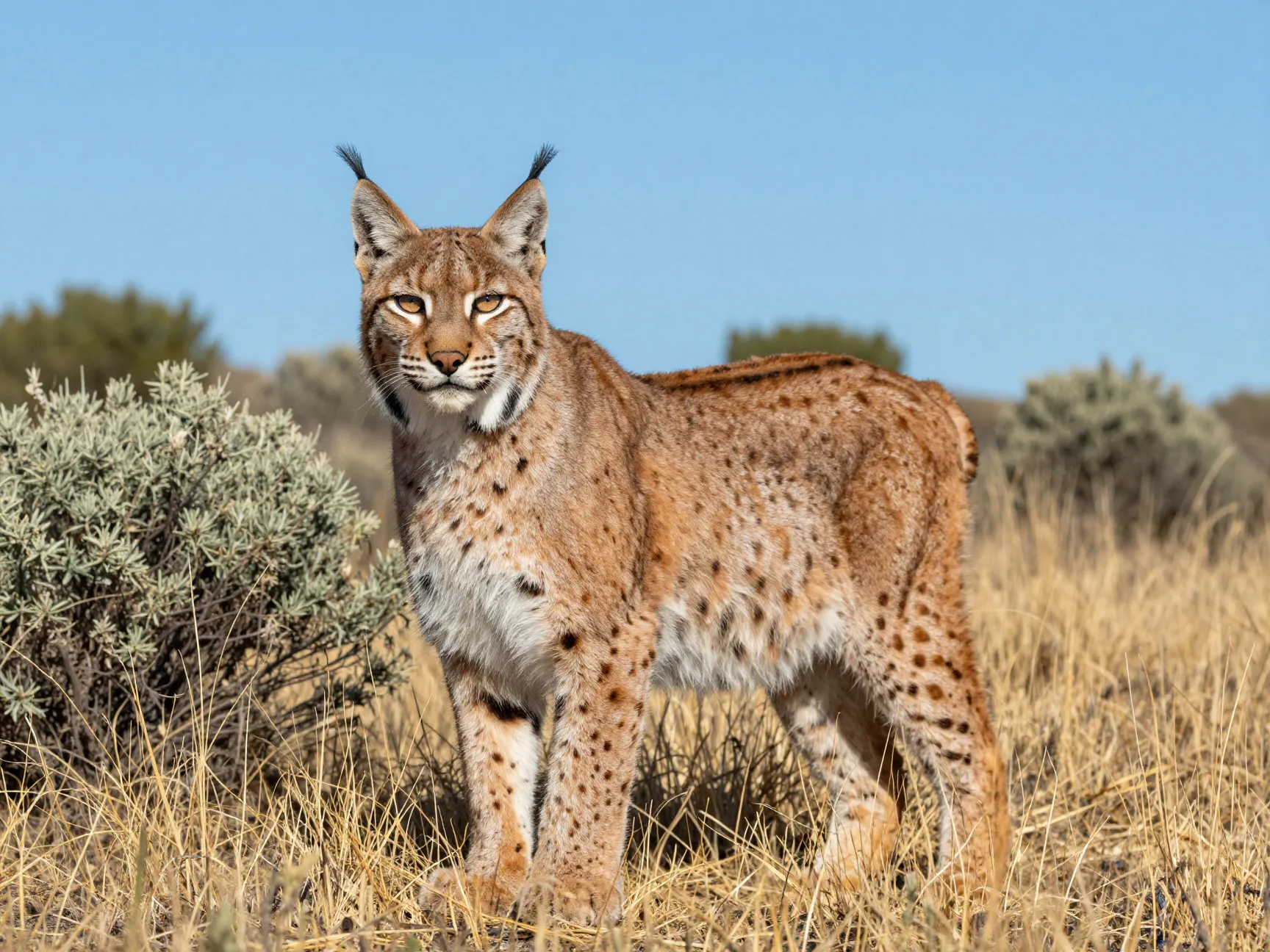
Status: Endangered (recovering strongly)
Location: Spain and Portugal 🇪🇸🇵🇹
If you ever need proof that conservation works, look no further than the Iberian Lynx. In 2002, the global population had crashed to just 94 individuals, making it the most endangered cat species in the world at the time [1][2]. Today, that number stands at approximately 688 individuals — a remarkable recovery driven by captive breeding, habitat restoration, and the reintroduction of its primary prey, the European rabbit [1].
The Iberian Lynx is a medium-sized cat with distinctive tufted ears and a spotted coat. It is a specialist predator — up to 90% of its diet consists of European rabbits — which means rabbit population health is directly tied to lynx survival.
What made the recovery work:
- Government-backed captive breeding centers in Spain and Portugal
- Reintroduction programs into suitable habitats
- Rabbit population management
- Strict legal protection and anti-poaching enforcement
- Public education campaigns
“The Iberian Lynx is living proof that with political will and scientific commitment, we can pull species back from the brink.”
This species remains listed as Endangered, and ongoing habitat connectivity is still needed — but the trajectory is genuinely inspiring.
5. Flat-headed Cat — The River Hunter You’ve Never Heard Of
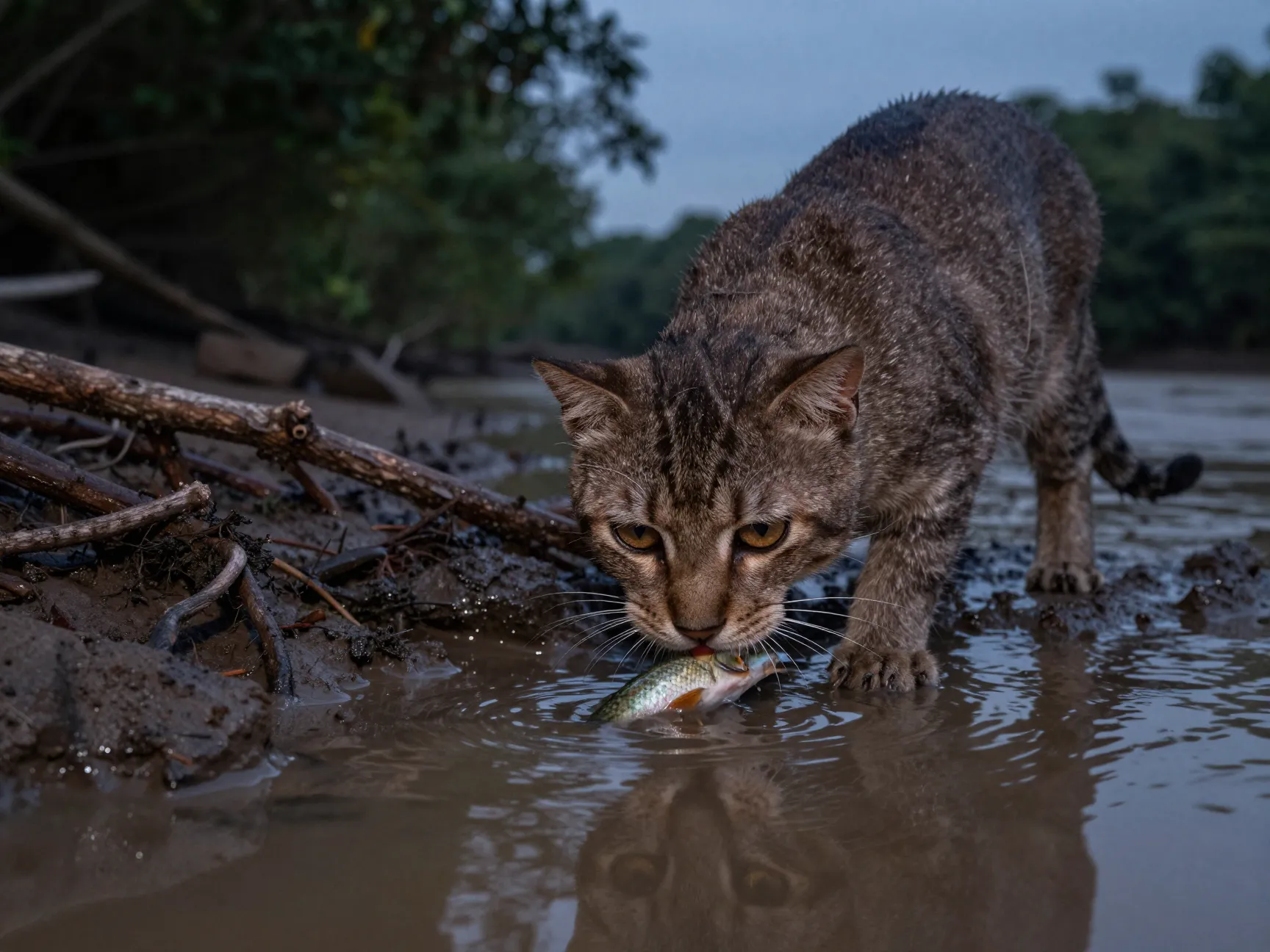
Status: Endangered
Location: Sumatra, Borneo, Malayan Peninsula 🌿
The Flat-headed Cat is one of the strangest-looking felines alive. Its head is literally flattened, with small, rounded ears set far back on the skull — an adaptation for hunting fish and frogs along riverbanks. It is so specialized for aquatic environments that it even has partially webbed feet and backward-pointing teeth to grip slippery prey.
Despite these fascinating adaptations, the Flat-headed Cat is endangered across its entire range in Sumatra, Borneo, and the Malayan Peninsula [1]. Its riverine habitat is under severe pressure from two primary forces:
Key threats:
- Deforestation for palm oil plantations — one of the most destructive land-use changes in Southeast Asia [1]
- Illegal wildlife trade — the cat is captured for the exotic pet market
- River pollution from agricultural runoff, which depletes fish populations
- Overfishing by local communities, reducing prey availability
Because this cat depends so heavily on clean, fish-rich rivers, it is essentially a living indicator of river ecosystem health. Protecting the Flat-headed Cat means protecting entire watershed systems.
6. Borneo Bay Cat — The Ghost of the Rainforest
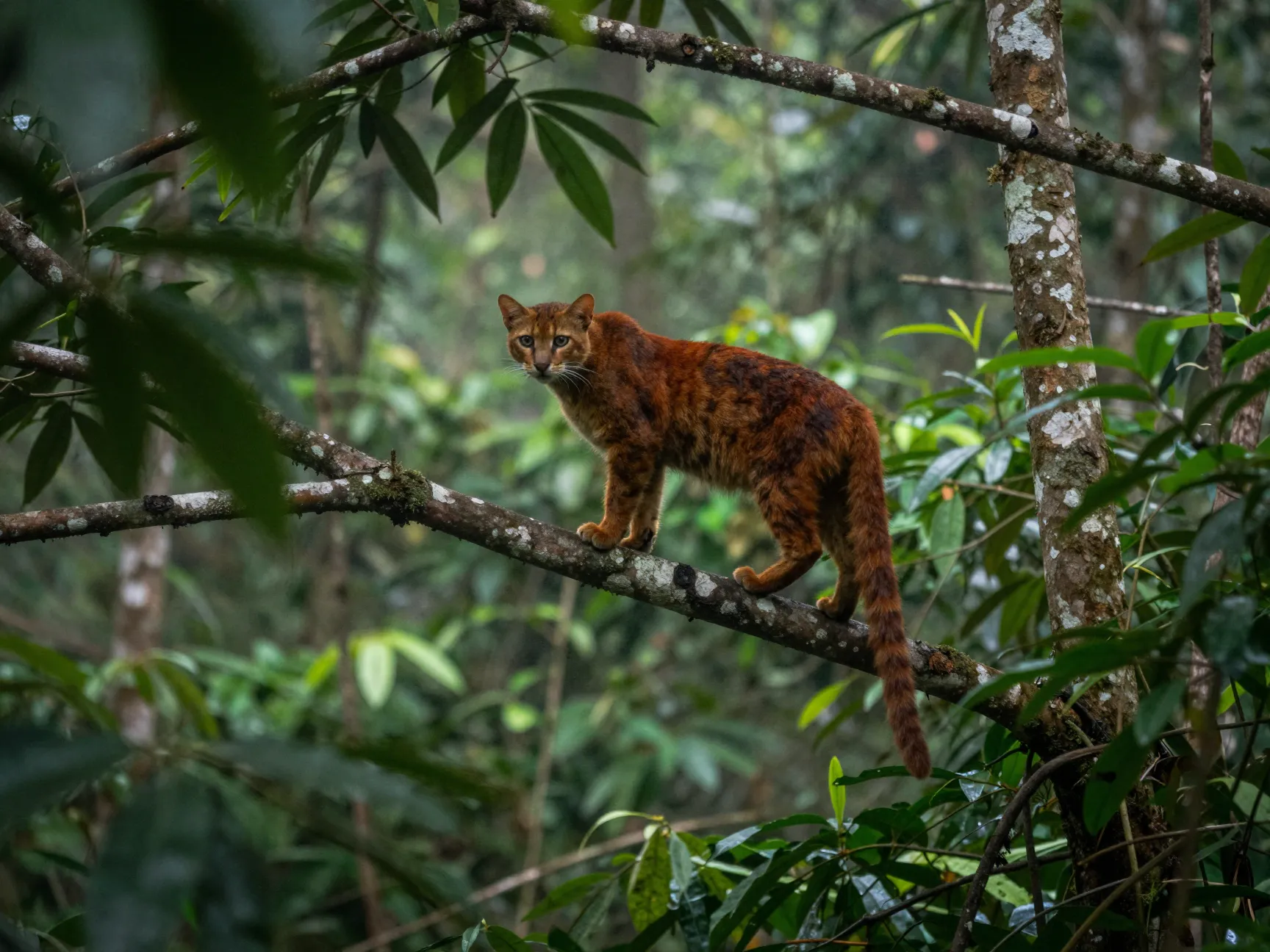
Status: Endangered
Location: Borneo 🌳
The Borneo Bay Cat is so rarely seen that scientists went decades without a confirmed photograph. It is endemic to the island of Borneo and is considered one of the least-studied wild cats on Earth. Its chestnut-red coat and long tail make it visually distinctive, but spotting one in the wild is extraordinarily rare.
The primary threat to the Borneo Bay Cat is catastrophic habitat loss. Borneo lost 50% of its forest cover between 1973 and 2015 — one of the fastest deforestation rates ever recorded for a tropical island [1]. Palm oil expansion, logging, and mining have fragmented the rainforest into isolated patches too small to support viable cat populations.
Fast facts about Borneo Bay Cat threats:
- 50% forest loss in just 42 years [1]
- Palm oil and timber industries continue to expand
- No confirmed population estimate exists due to extreme rarity
- Illegal wildlife trade adds additional pressure
Conservation of this species is deeply tied to broader Borneo rainforest protection campaigns and sustainable palm oil certification programs.
7. Black-footed Cat — Small Body, Extraordinary Hunter
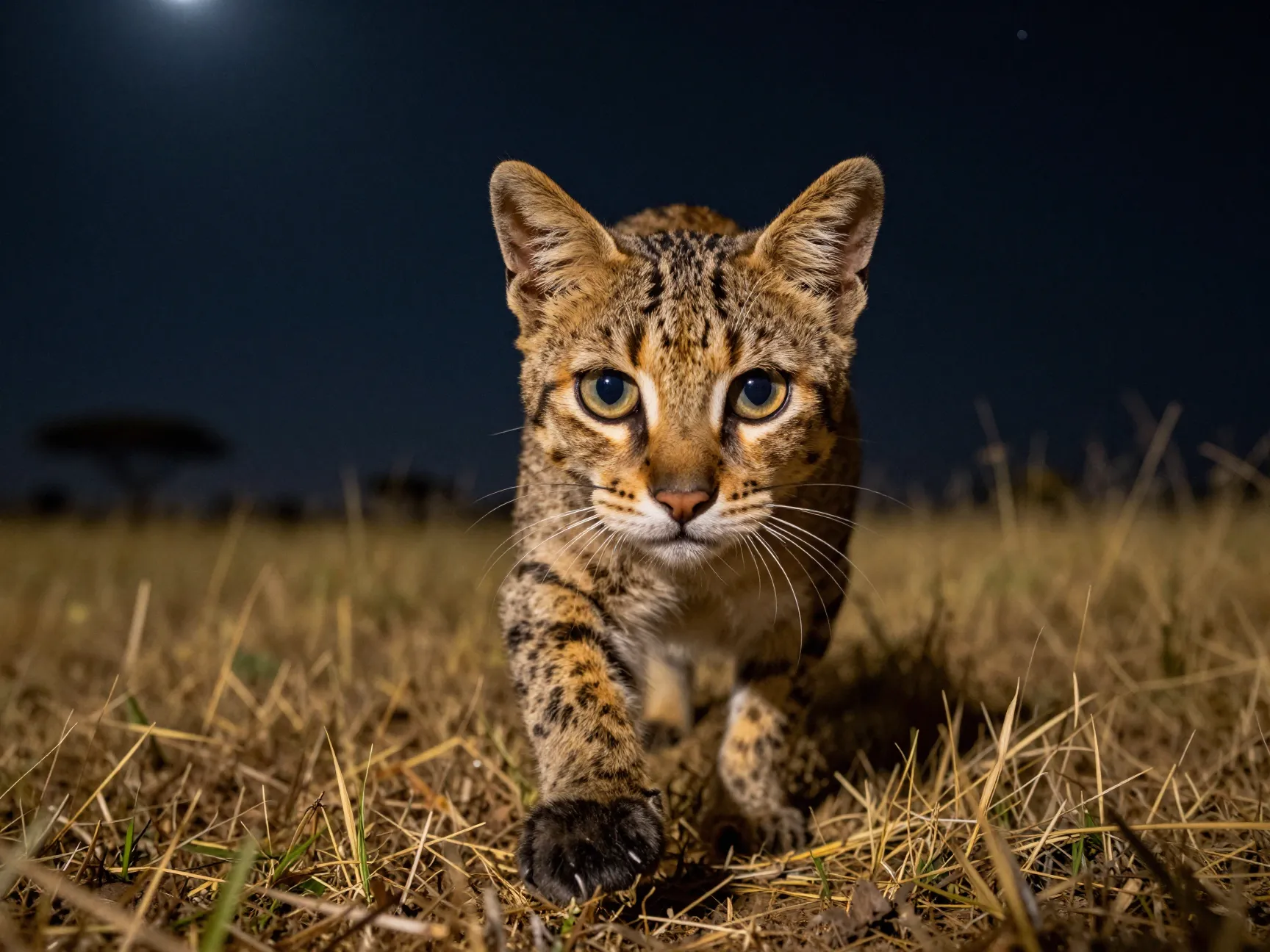
Status: Vulnerable
Location: Southern Africa 🌍
At first glance, the Black-footed Cat looks like a slightly wild-looking house cat. It is, in fact, Africa’s smallest wild felid — and statistically, the most successful hunter of any wild cat species on Earth [1][2].
In a single night, a Black-footed Cat catches more prey than a leopard catches in six months [1][2]. It hunts with relentless efficiency, covering up to 32 km in a single night and achieving a hunting success rate of around 60% — compared to a lion’s 25–30%.
Despite having a population of over 10,000 individuals, the Black-footed Cat is listed as Vulnerable due to ongoing population decline [1]. It is found in the arid grasslands and scrublands of South Africa, Botswana, and Namibia.
Threats facing the Black-footed Cat:
- Habitat loss from overgrazing and agricultural conversion
- Accidental poisoning from rodenticides set for pest control
- Hunting by farmers who mistake it for a chicken thief
- Capture for the illegal exotic pet trade [7]
Its small size makes it easy to overlook in conservation funding conversations — but its ecological role in controlling rodent populations is significant.
8. Kodkod — South America’s Forgotten Small Cat
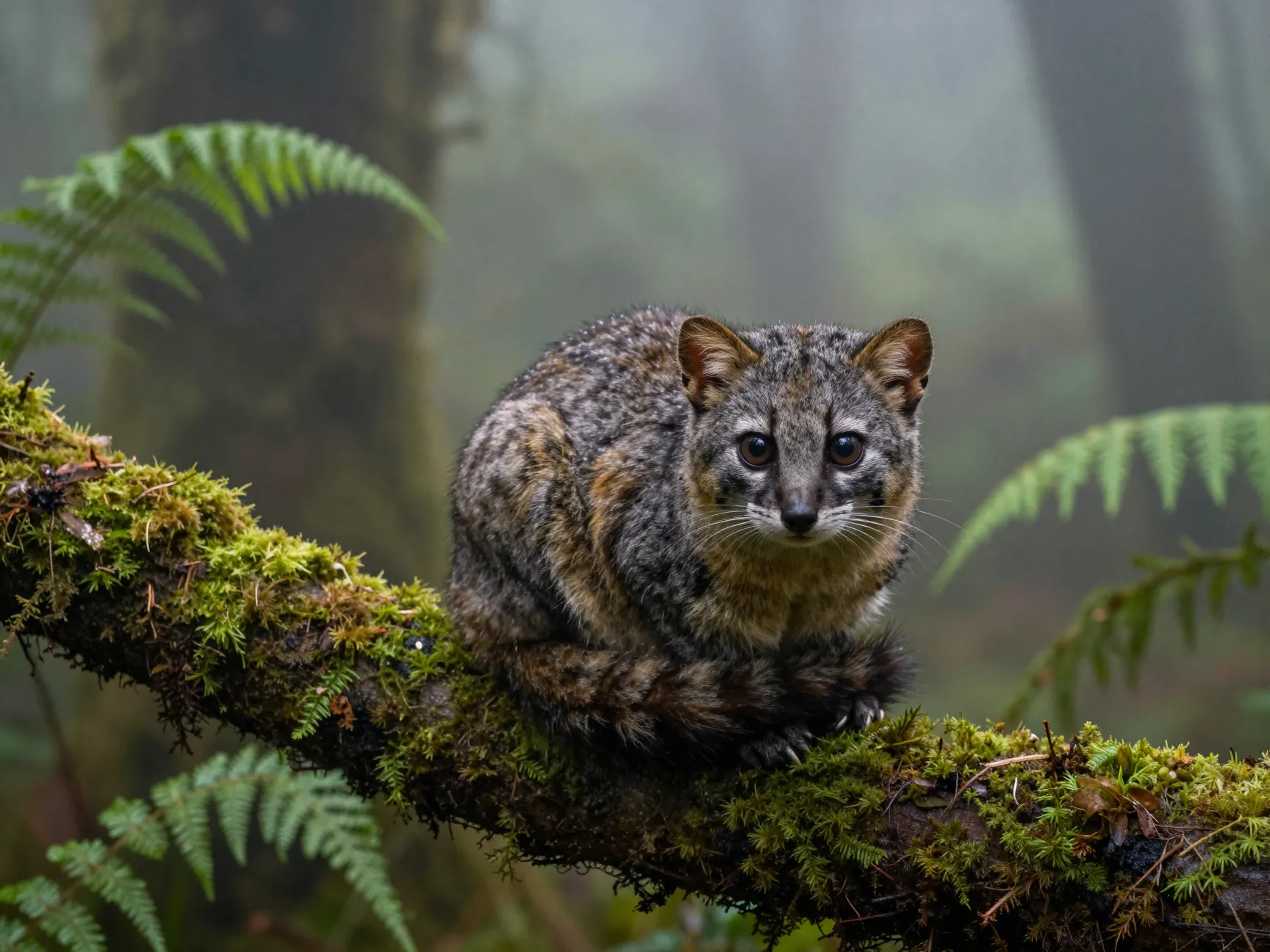
Status: Vulnerable (declining)
Location: Chile and Argentina 🇨🇱🇦🇷
The Kodkod is the smallest wild cat in the Western Hemisphere, roughly the size of a large domestic cat. Found only in the temperate forests of Chile and a small region of Argentina, it is one of the most range-restricted cats in the Americas [4].
Despite its limited range, the Kodkod has received relatively little conservation attention compared to larger South American cats like the Jaguar or Puma. It is currently listed as Vulnerable, but without stronger intervention, it risks sliding into Endangered status [4].
Primary threats:
- Deforestation — Chile’s native Valdivian temperate rainforest is under pressure from logging and agricultural conversion [4]
- Overhunting — farmers kill Kodkods for preying on poultry [4]
- Habitat fragmentation — remaining forest patches are too small and disconnected
- Competition with domestic cats and dogs near human settlements
The Kodkod is a solitary, arboreal hunter that feeds on small birds, lizards, and rodents. It is rarely studied in the wild, and basic population data remains incomplete — a gap that urgently needs to be filled.
Conservation Threats at a Glance 📊
Understanding what these 8 incredible and endangered all wild cat species you should know have in common helps focus conservation energy where it matters most.
The three biggest threats across all eight species:
- Habitat loss — Deforestation, agricultural expansion, and urban development destroy the living space these cats need to survive. Borneo’s 50% forest loss is the starkest example [1].
- Illegal wildlife trade — Cats are captured for pelts, bones (used in traditional medicine), and the exotic pet market. This affects species from the Amur Leopard to the Black-footed Cat [1][3].
- Prey depletion — When prey species decline due to overhunting or habitat loss, cats starve. The Arabian Leopard and Iberian Lynx are both classic examples of this cascade effect [1].
What actually works in conservation:
- Protected area establishment (Land of the Leopard National Park for Amur Leopard)
- Captive breeding and reintroduction (Iberian Lynx)
- Prey species management (European rabbit for Iberian Lynx)
- Community education and farmer compensation programs
- International anti-poaching legislation enforcement [3][7]
How You Can Help Protect These Species 🌿
You do not need to be a wildlife biologist to make a difference. Here are practical, actionable steps anyone can take in 2026:
- Support certified sustainable palm oil — Look for the RSPO (Roundtable on Sustainable Palm Oil) label on products. This directly reduces pressure on Flat-headed Cat and Borneo Bay Cat habitats.
- Donate to reputable conservation organizations — Groups like Panthera, WWF, and Big Cat Rescue fund field research and anti-poaching programs directly [7].
- Avoid exotic pet markets — Never purchase wild-caught animals, and report suspected illegal wildlife trade to local authorities or TRAFFIC.
- Spread awareness — Sharing accurate information about lesser-known species like the Iriomote Cat or Kodkod helps build the public pressure needed for policy change.
- Advocate for forest protection policies — Contact elected representatives about supporting international deforestation agreements and biodiversity funding.
- Engage with wildlife tourism responsibly — Choose tour operators certified by recognized wildlife welfare organizations, and follow all wildlife interaction guidelines.
Conclusion: The Clock Is Ticking for Wild Cats
The 8 incredible and endangered all wild cat species you should know represent both the fragility and resilience of life on Earth. From the heartbreaking isolation of the Iriomote Cat to the triumphant recovery of the Iberian Lynx, these animals tell us everything we need to know about what happens when humans choose to destroy — or protect — the natural world.
In 2026, we have better tools, better science, and more global awareness than ever before. What we need now is urgency. Every species on this list can still be saved with sufficient commitment, funding, and political will.
Your next steps:
- 🔍 Research one species from this list and share what you learn
- 💰 Make a single donation to a wild cat conservation fund
- 🛒 Check the sustainability credentials of products you buy regularly
- 📢 Talk about these cats — awareness is the first step toward action
The rarest cat in the world has about 100 individuals left. The most endangered big cat has about 120. These are not abstract numbers — they are the last members of ancient lineages. They deserve our full attention.
References
[1] Worlds Rarest Cats – https://www.discoverwildlife.com/animal-facts/mammals/worlds-rarest-cats
[2] 8 Cool Wild Cats You Probably Dont Know – https://blog.nature.org/2022/05/31/8-cool-wild-cats-you-probably-dont-know/
[3] Endangered Wild Cats – https://bigcatswildcats.com/conservation/endangered-wild-cats/
[4] Wild Cats Youve Never Heard Of – https://education.turpentinecreek.org/2025/05/03/wild-cats-youve-never-heard-of/
[7] Species – https://bigcatrescue.org/species