8 Fascinating Fishing Cat Species You Probably Didn’t Know Existed
Only about 28 small wild cat species exist on Earth — and most people can name fewer than five. Hidden among that list are some of the most unusual, water-loving, and behaviorally complex felines ever studied. This article dives deep into 8 Fascinating Fishing Cat Species You Probably Didn’t Know Existed, shining a light on the secretive world of aquatic and semi-aquatic wild cats that most wildlife lovers have never heard of.

The fishing cat (Prionailurus viverrinus) sits at the heart of this story. Native to southern Asia — ranging from Pakistan in the west all the way to Cambodia in the east — this remarkable predator has evolved specifically to hunt in water [3]. But the fishing cat is just the beginning. Related species, ecological cousins, and other water-adapted wild cats round out a group of animals that deserve far more attention than they get.
Key Takeaways 🐾
- The fishing cat (Prionailurus viverrinus) is one of the largest of the 28 small wild cat species, with males weighing up to 14 kg (31 lbs) [3]
- Fishing cats have partially webbed front toes and semi-retractable claws — rare physical traits that make them elite aquatic hunters [3]
- Several species in this group are Vulnerable or Endangered, facing threats from wetland destruction and illegal hunting
- These cats are found across South and Southeast Asia, with some species also appearing in Africa and South America
- Conservation awareness in 2026 is growing, but habitat loss remains the single biggest threat to most of these species
Why Fishing Cats Are So Extraordinary
Before we explore the full list of 8 Fascinating Fishing Cat Species You Probably Didn’t Know Existed, it helps to understand what makes a “fishing cat” so special in the first place.
Most wild cats avoid water. The fishing cat seeks it out. This behavioral shift — combined with a suite of physical adaptations — sets these animals apart from virtually every other feline on the planet.
“The fishing cat is one of nature’s most surprising engineers — a cat that has essentially rewired its instincts to thrive where other felines fear to tread.”
Here’s a quick look at what makes fishing cats physically unique:
| Feature | Description |
|---|---|
| Webbed toes | Partially webbed front feet improve swimming efficiency [3] |
| Semi-retractable claws | Claws protrude slightly even when retracted, gripping slippery prey [3] |
| Double-layered coat | Short, dense undercoat with longer guard hairs repels water |
| Stocky build | Males weigh 8–14 kg; females 5–9 kg — built for power, not speed [3] |
| Nocturnal behavior | Primarily active at night, making them extremely hard to study [3] |
Their diet is equally impressive. Fishing cats are piscivores at heart, but they’re also opportunistic — eating frogs, snakes, insects, rodents, small civets, ducks, and even domestic animals when fish aren’t available [4].
Now, let’s meet all eight species.
8 Fascinating Fishing Cat Species You Probably Didn’t Know Existed
1. The Fishing Cat (Prionailurus viverrinus)
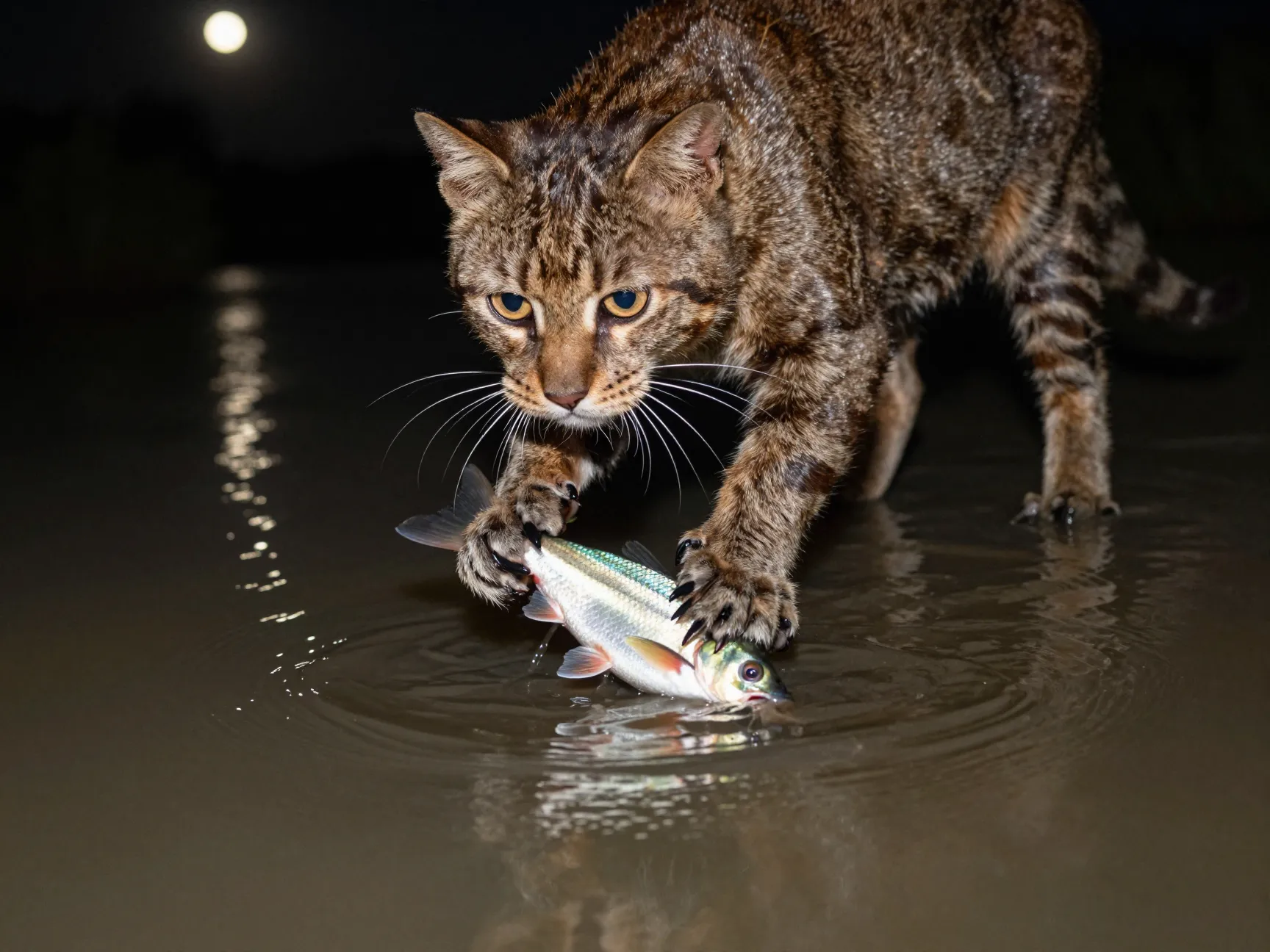
The original and most well-known member of this group, the fishing cat is the species that gave the entire category its name. Found across South and Southeast Asia — including India, Sri Lanka, Bangladesh, Thailand, Vietnam, and historically Java — this cat is a true wetland specialist [3].
What sets it apart immediately is its hunting technique. Rather than waiting passively at the water’s edge, the fishing cat actively wades, dives, and swims to catch fish. It uses its partially webbed front paws to scoop prey from below the surface, and its slightly protruding claws act like natural fish hooks [3].
Males are significantly larger than females, and the species is considered one of the biggest among all 28 recognized small cat species globally [3]. Despite this impressive size, the fishing cat remains nocturnal and elusive, with researchers still working to understand its full behavioral range [3].
🔴 Conservation status: Vulnerable (IUCN)
2. The Flat-Headed Cat (Prionailurus planiceps)
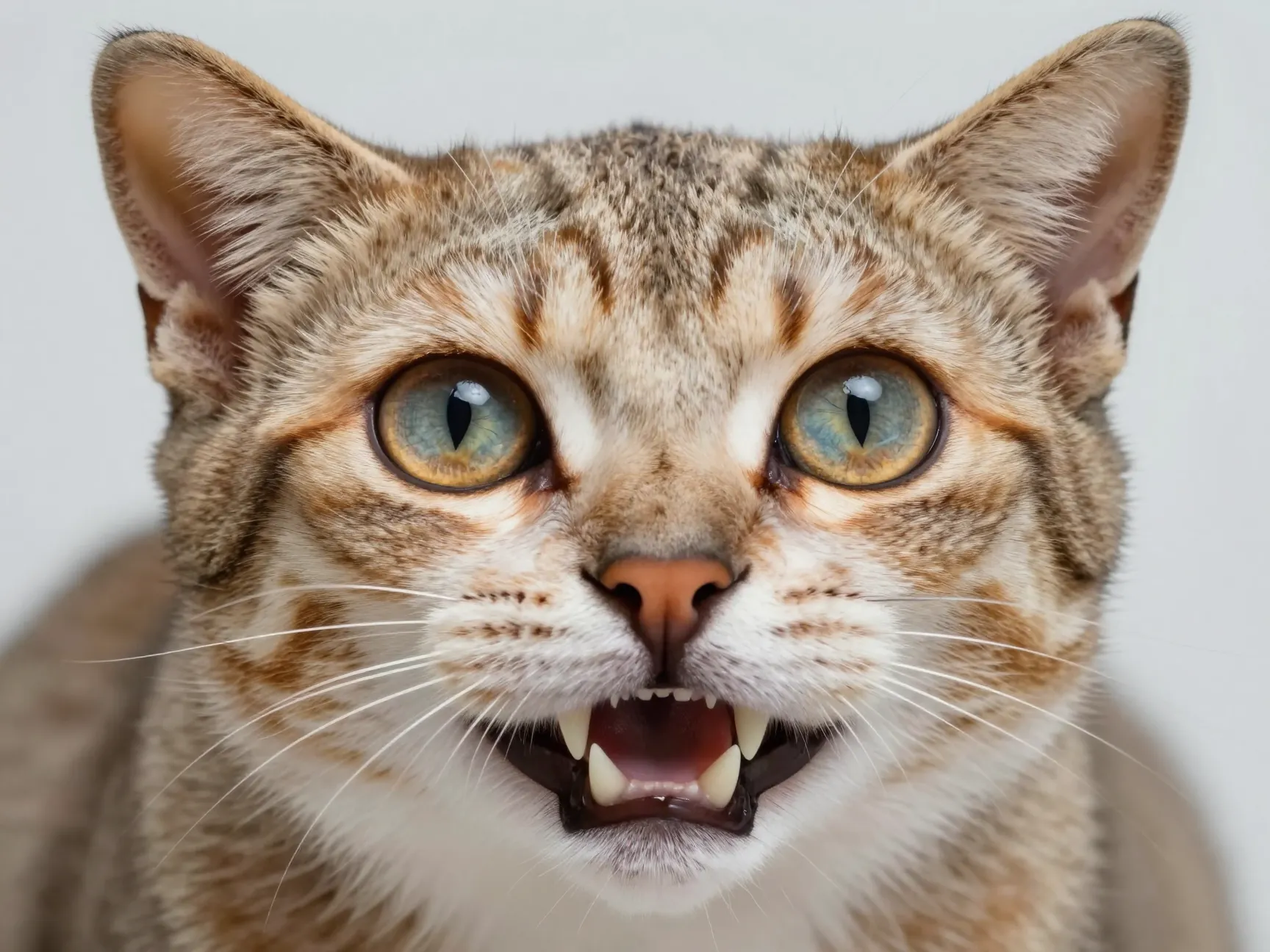
If the fishing cat is unusual, the flat-headed cat is downright bizarre — and that’s meant as a compliment. Native to the rainforests of Borneo, Sumatra, and the Thai-Malay Peninsula, this small feline has a skull so flattened it looks almost prehistoric.
Its eyes are positioned unusually far forward, giving it exceptional binocular vision for spotting fish underwater. Its teeth are sharp and backward-pointing — perfect for gripping slippery prey. Even its feet are partially webbed, similar to the fishing cat [2].
The flat-headed cat is extremely rare and poorly studied. It weighs only 1.5–2.5 kg, making it one of the smallest wild cats in Asia. Deforestation and river pollution have pushed it to the edge, and sightings in the wild are incredibly uncommon.
🔴 Conservation status: Endangered (IUCN)
3. The Leopard Cat (Prionailurus bengalensis)
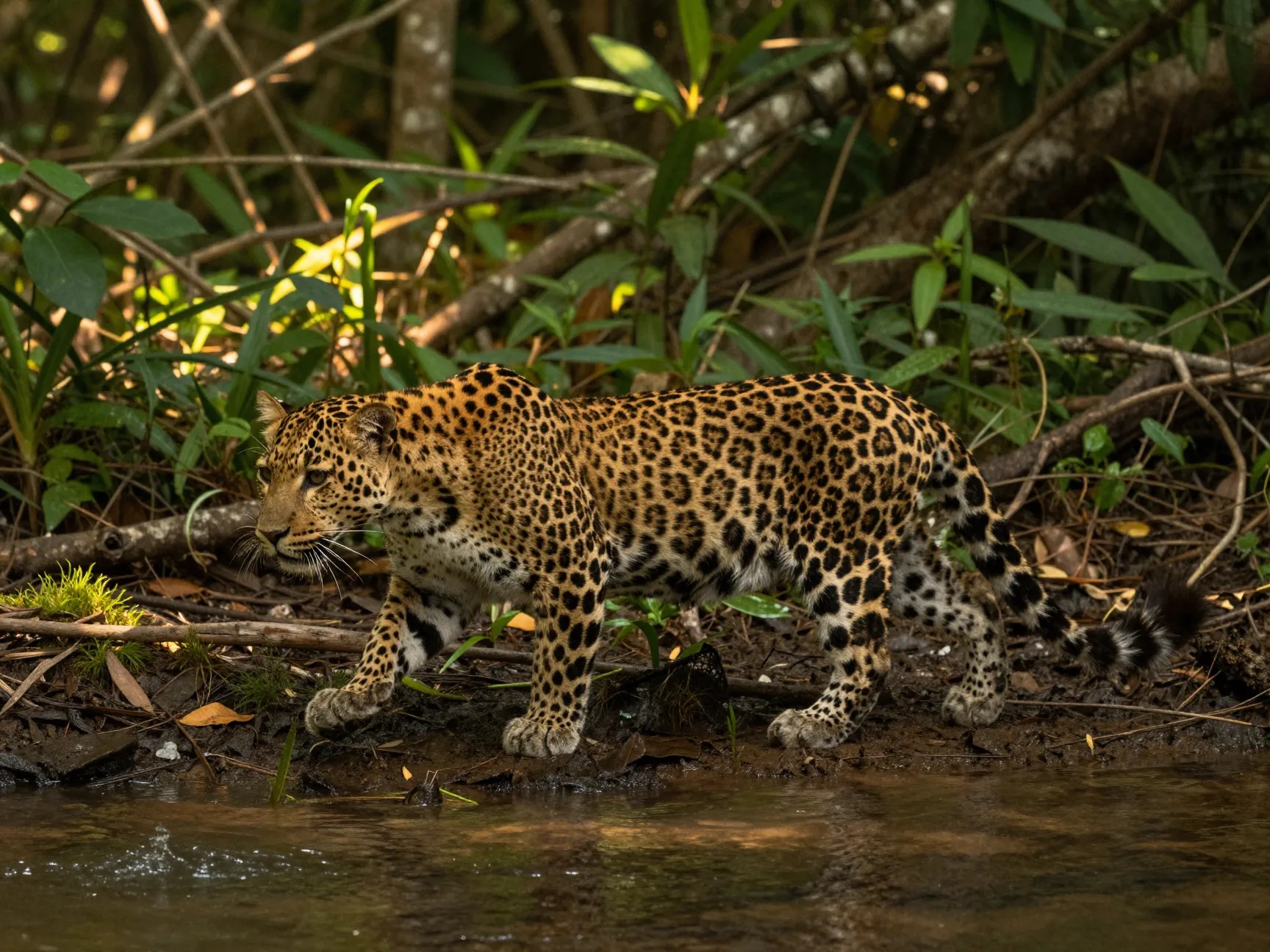
The leopard cat is the most widespread small wild cat in Asia, and it’s a close genetic relative of the fishing cat. Found from the Russian Far East to the Philippines, and from Pakistan to Indonesia, this adaptable feline occupies an enormous range [2].
While not a dedicated fish hunter like its cousin, the leopard cat is a strong swimmer and frequently hunts near water. It’s about the size of a domestic cat, but far more athletic and wild in temperament.
The leopard cat holds a unique cultural distinction: it is the wild ancestor of the Bengal cat, one of the most popular domestic cat breeds in the world. Hybridization programs in the 1960s and 70s crossed leopard cats with domestic shorthairs to create the Bengal breed.
🟡 Conservation status: Least Concern (IUCN) — though some island subspecies are endangered
4. The Rusty-Spotted Cat (Prionailurus rubiginosus)
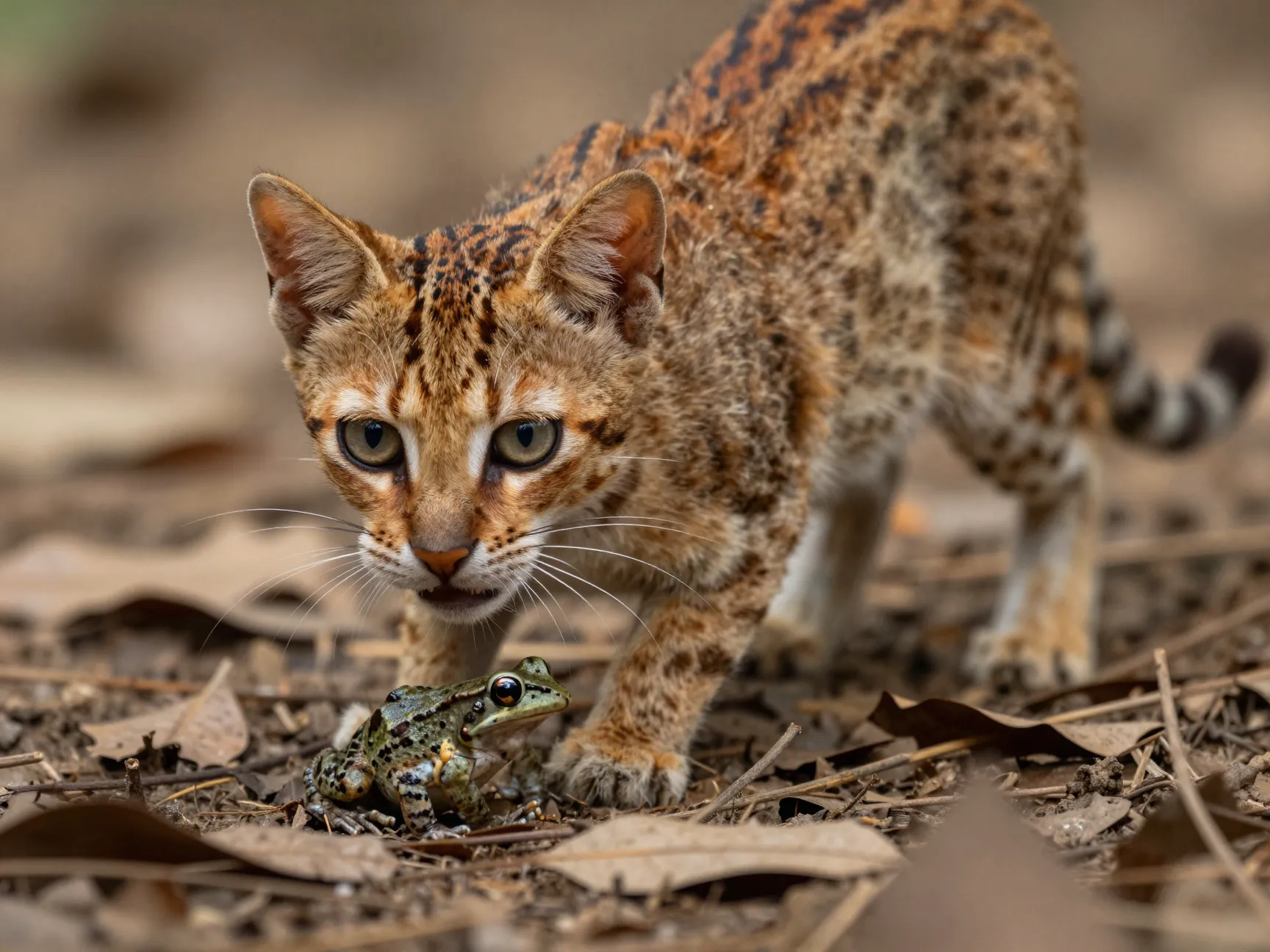
At just 0.9–1.6 kg, the rusty-spotted cat holds the title of world’s smallest wild cat — and it’s another member of the Prionailurus genus that shares ancestry with the fishing cat [1].
Native to India and Sri Lanka, this tiny predator is a forest and grassland specialist. While not primarily a fish hunter, it is agile near water and has been observed hunting frogs and small aquatic prey. Its rust-colored spots give it excellent camouflage in dry leaf litter.
Despite its small size, the rusty-spotted cat is a fierce and fearless hunter, capable of taking down prey larger than itself. It’s also one of the least-studied wild cats in Asia — a status that researchers in 2026 are actively working to change.
🟡 Conservation status: Near Threatened (IUCN)
5. The Iriomote Cat (Prionailurus bengalensis iriomotensis)
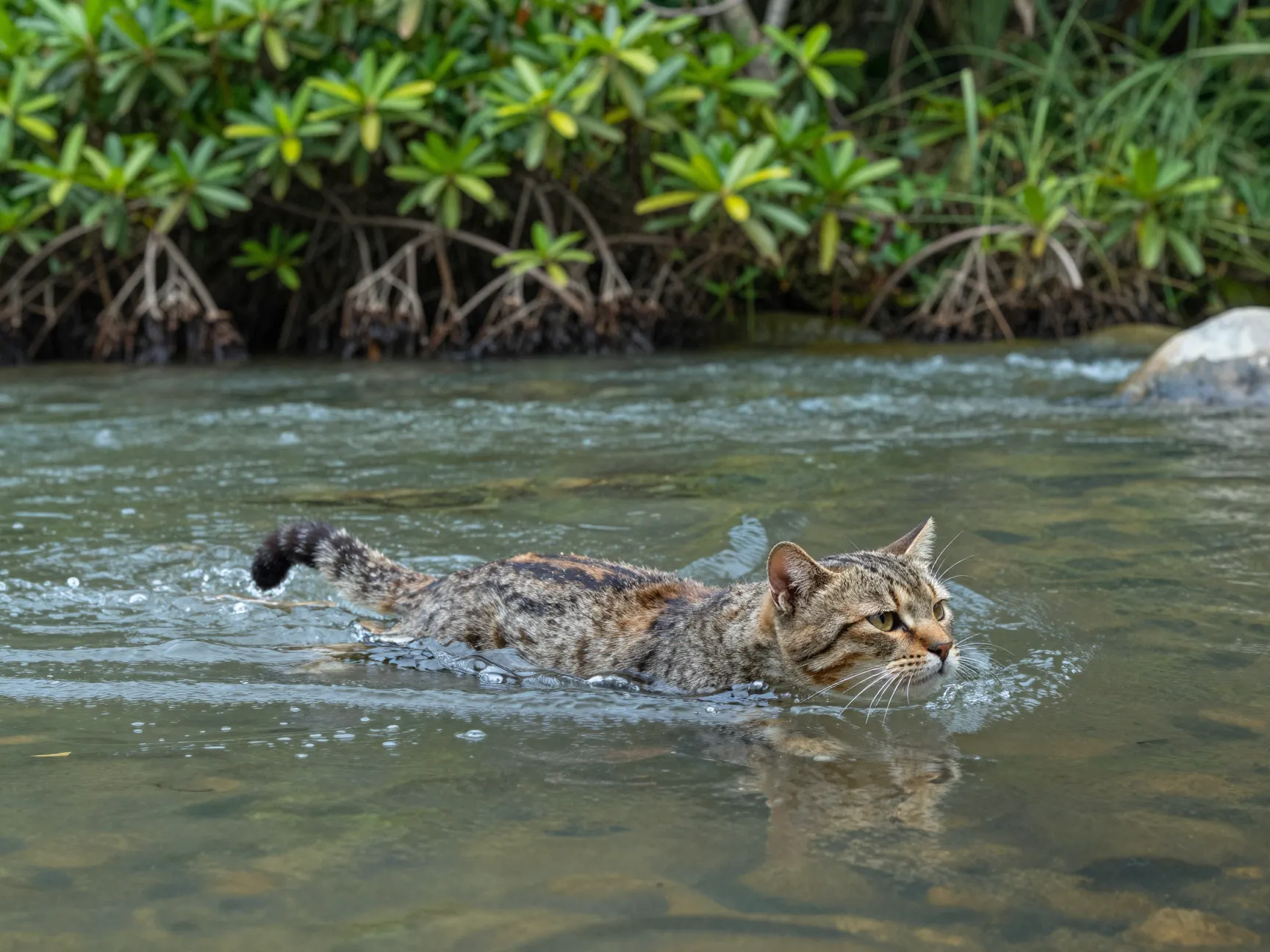
Found only on Iriomote Island in Japan — an island roughly 292 square kilometers in size — the Iriomote cat is one of the rarest wild cats on Earth. It was only formally described by science in 1967, making it a relatively recent discovery.
This subspecies of the leopard cat has adapted to the subtropical forests and mangroves of its tiny island home. It is an excellent swimmer, regularly crossing rivers and coastal shallows to hunt. Fish, crabs, and water birds make up a significant portion of its diet.
With an estimated population of fewer than 100 individuals, the Iriomote cat faces extreme pressure from habitat loss, road traffic, and hybridization with feral domestic cats. It is considered a national treasure in Japan and is protected under strict conservation laws.
🔴 Conservation status: Critically Endangered
6. The Marbled Cat (Pardofelis marmorata)
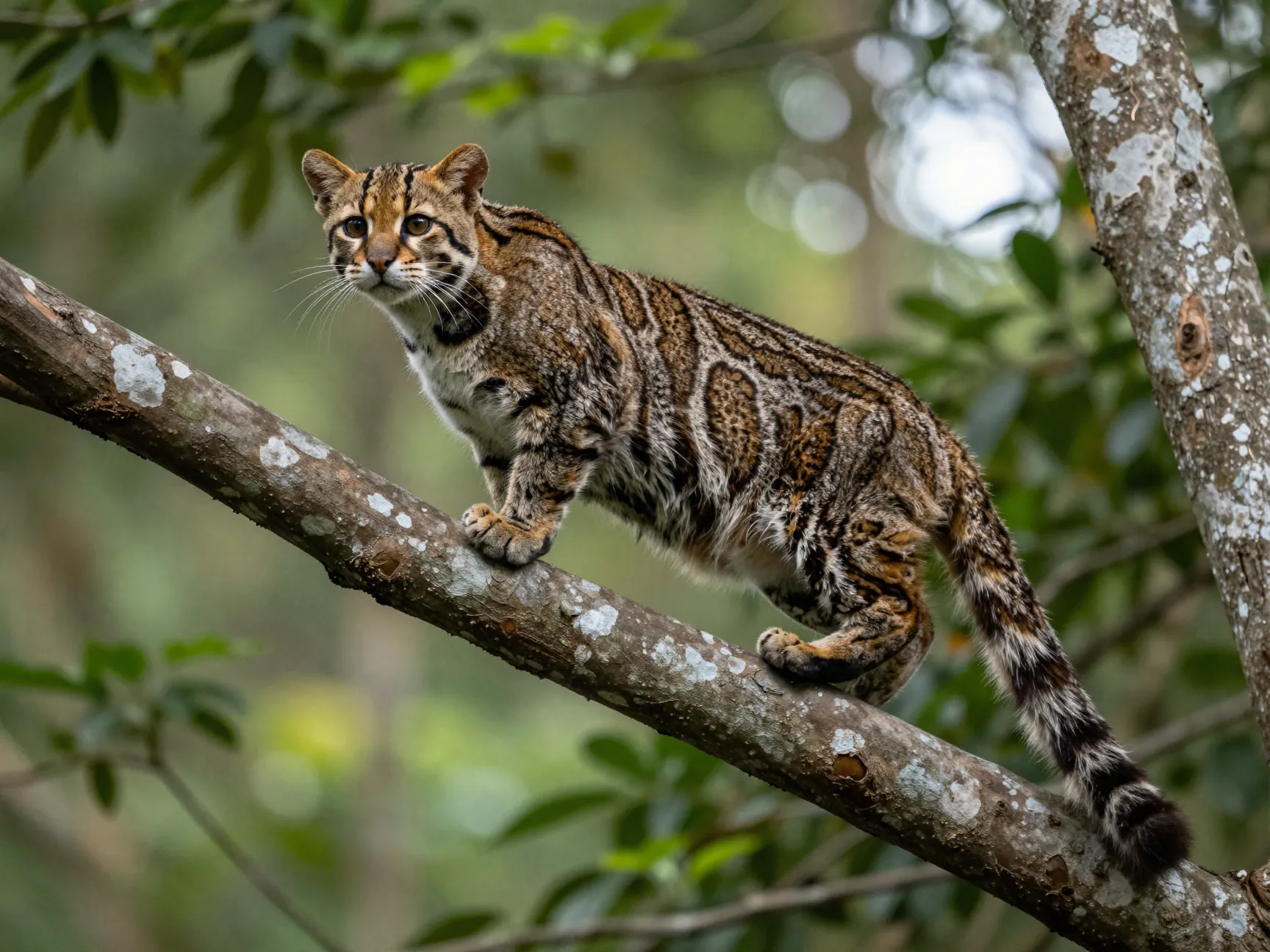
The marbled cat is one of the most visually stunning wild cats in the world. Its coat resembles a living painting — swirling, cloud-like patterns of dark brown and black on a tawny background. Native to the forests of South and Southeast Asia, from Nepal to Borneo, this arboreal hunter is rarely photographed in the wild [1].
While not a dedicated fish hunter, the marbled cat is closely related to the bay cat and the Asian golden cat, and it shares ecological overlap with fishing cats in riverine forest habitats. It has been observed near streams and is believed to supplement its diet with fish and frogs.
The marbled cat is roughly the size of a domestic cat but has a disproportionately long tail — sometimes as long as its body — which helps it balance in the tree canopy. Very little is known about its population size or behavior.
🟠 Conservation status: Vulnerable (IUCN)
7. The Jaguarundi (Herpailurus yagouaroundi)
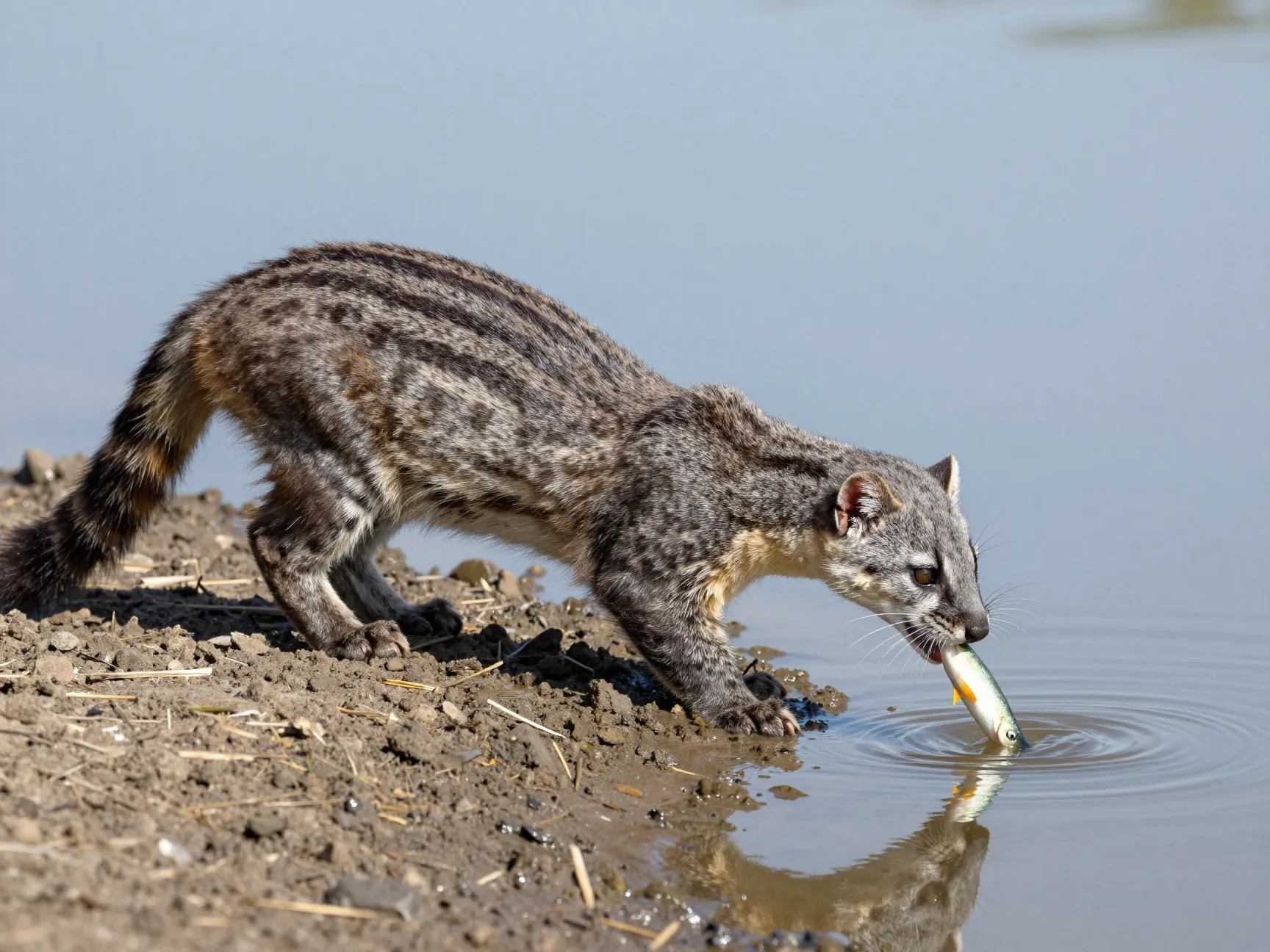
Crossing to the Americas, the jaguarundi is a fascinating outlier in this list — a New World wild cat that has independently evolved many of the same water-adapted behaviors seen in Asian fishing cats [2].
Found from Mexico through Central America and into South America, the jaguarundi has an elongated, weasel-like body and a small, flattened head. Unlike most wild cats, it is diurnal — active during the day — and it’s an excellent swimmer that actively hunts fish, frogs, and water birds along riverbanks.
The jaguarundi’s closest relative is actually the puma (Puma concolor), despite looking nothing like one. It comes in two color morphs — gray and reddish-brown — and was historically found as far north as Texas and Arizona in the United States.
🟡 Conservation status: Least Concern (IUCN) — though declining in some regions
8. The Fishing Cat’s Ghost: The Clouded Leopard (Neofelis nebulosa)
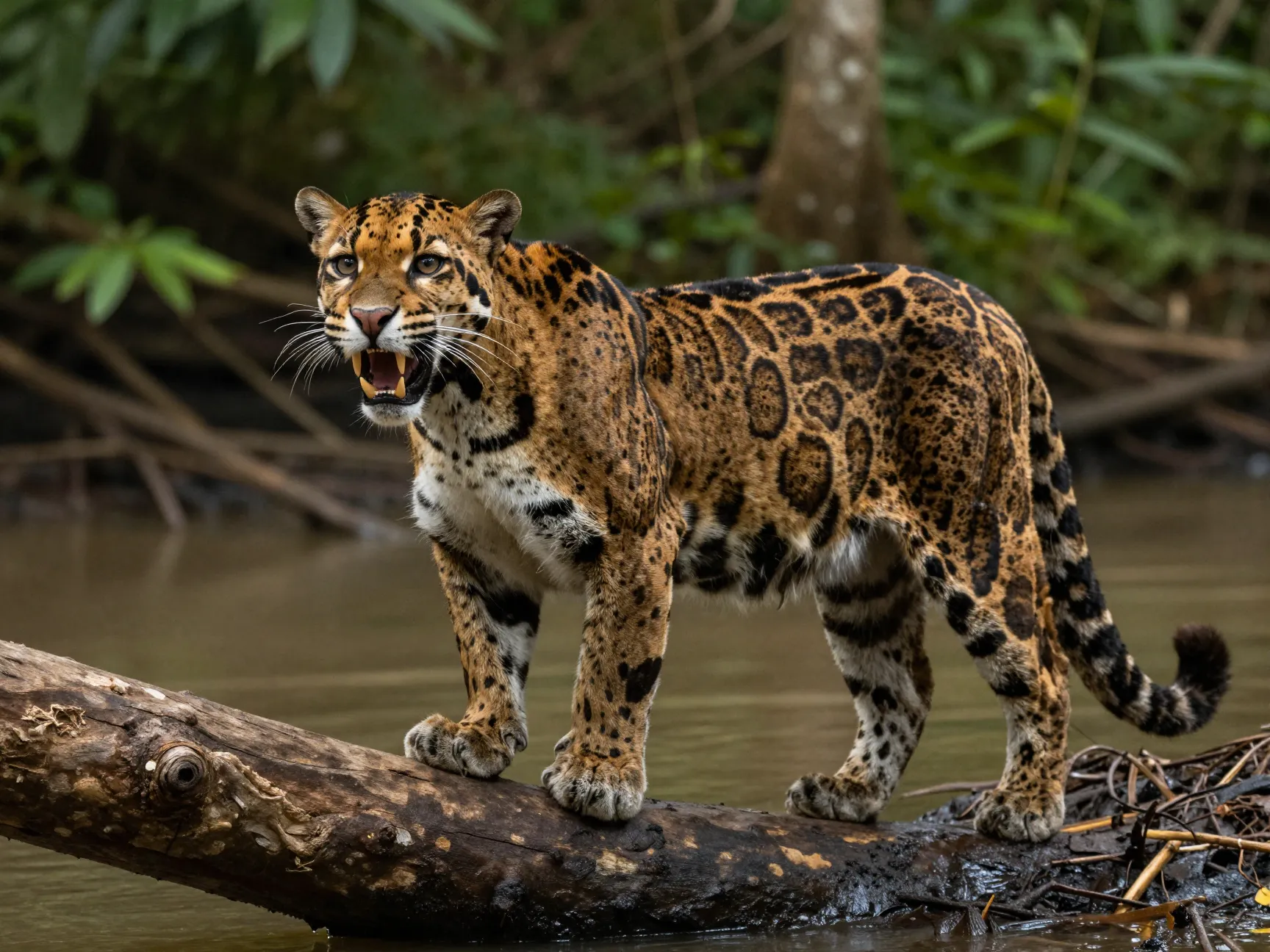
The clouded leopard closes our list of 8 Fascinating Fishing Cat Species You Probably Didn’t Know Existed — not because it’s a true fishing cat, but because it represents the evolutionary bridge between small cats and big cats, and it shares critical habitat with fishing cats across Southeast Asia [1].
Found in the foothills of the Himalayas through mainland Southeast Asia to China, the clouded leopard is a master of riverine forest environments. It is an exceptional swimmer and has been documented crossing wide rivers with ease. Its diet includes fish, deer, monkeys, and porcupines.
The clouded leopard has the largest canine teeth relative to body size of any living cat — a trait it shares with the extinct saber-toothed cats. It also has uniquely flexible ankles that allow it to descend trees headfirst, a skill shared by very few large predators.
🟠 Conservation status: Vulnerable (IUCN)
Conservation Challenges Facing These Species in 2026
The story of these eight remarkable cats is also, unfortunately, a story of habitat loss, illegal trade, and human conflict. In 2026, conservation organizations are ramping up efforts, but the challenges remain steep.
Here are the key threats these species face:
- Wetland destruction — The fishing cat has lost an estimated 45% of its wetland habitat to agriculture, aquaculture, and urban development [3]
- Deforestation — Species like the marbled cat and clouded leopard depend on intact forest corridors that are shrinking every year
- Illegal wildlife trade — Several species are poached for their pelts or captured for the exotic pet trade
- Road mortality — The Iriomote cat is particularly vulnerable to vehicle strikes on its small island
- Hybridization — Feral domestic cats threaten the genetic integrity of island subspecies like the Iriomote cat
- Climate change — Rising sea levels directly threaten the coastal mangrove habitats that fishing cats depend on
“Protecting fishing cats means protecting entire wetland ecosystems — the same ecosystems that filter water, prevent floods, and support millions of people.”
What Conservation Success Looks Like
Despite the challenges, there are reasons for optimism. Community-based conservation programs in India and Bangladesh have helped stabilize local fishing cat populations. Camera trap networks are providing new data on species like the flat-headed cat and marbled cat. And international awareness — including growing social media interest in 2026 — is bringing funding and attention to these overlooked species [4].
Quick Comparison: The 8 Species at a Glance
| # | Species | Region | Weight | Conservation Status |
|---|---|---|---|---|
| 1 | Fishing Cat | South/SE Asia | 5–14 kg | Vulnerable |
| 2 | Flat-Headed Cat | Borneo, Sumatra | 1.5–2.5 kg | Endangered |
| 3 | Leopard Cat | Asia (widespread) | 1–7 kg | Least Concern |
| 4 | Rusty-Spotted Cat | India, Sri Lanka | 0.9–1.6 kg | Near Threatened |
| 5 | Iriomote Cat | Japan (Iriomote Is.) | 3–5 kg | Critically Endangered |
| 6 | Marbled Cat | South/SE Asia | 2–5 kg | Vulnerable |
| 7 | Jaguarundi | Americas | 3–9 kg | Least Concern |
| 8 | Clouded Leopard | SE Asia, China | 11–23 kg | Vulnerable |
Conclusion: What You Can Do Right Now
Exploring 8 Fascinating Fishing Cat Species You Probably Didn’t Know Existed reveals something important: wild cats are far more diverse, adaptable, and ecologically vital than most people realize. From the webbed-toed fishing cat wading through South Asian wetlands to the ghost-like Iriomote cat clinging to survival on a tiny Japanese island, each of these species tells a story about evolution, resilience, and the urgent need for conservation.
Here are actionable next steps you can take today:
- Support wetland conservation — Donate to organizations like the IUCN Cat Specialist Group or WWF’s wetland programs
- Spread awareness — Share articles, videos, and social media content about lesser-known wild cats [5][6]
- Adopt responsibly — If you own a Bengal cat (descended from the leopard cat), support ethical breeders who contribute to wild cat conservation funds
- Reduce your footprint — Sustainable seafood choices and reduced plastic use help protect the aquatic ecosystems these cats depend on
- Visit accredited zoos — Institutions like the Smithsonian National Zoo and Denver Zoo house fishing cats and fund field research [3][4]
- Stay informed — Follow wildlife researchers and conservation organizations in 2026 for the latest population data and breakthroughs
These cats have survived millions of years of evolution. With the right support, they can survive us too. 🐾
References
[1] Wild Cats You’ve Never Heard Of – https://education.turpentinecreek.org/2025/05/03/wild-cats-youve-never-heard-of/
[2] 8 Cool Wild Cats You Probably Don’t Know – https://blog.nature.org/2022/05/31/8-cool-wild-cats-you-probably-dont-know/
[3] Fishing Cat – https://nationalzoo.si.edu/animals/fishing-cat
[4] Fishing Cat – https://denverzoo.org/animals/fishing-cat/
[5] Watch – https://www.youtube.com/watch?v=-Kof5mov-rE
[6] Watch – https://www.youtube.com/watch?v=skVDu-X26YE