8 Essential Tips for Raising a Happy & Healthy Fox Red Labrador Puppy
There is something truly special about the moment a fox red Labrador puppy trots into your home for the first time — that deep, burnished amber coat glowing like a sunset, those eager eyes full of mischief and love. But beneath all that adorable energy lies a responsibility that every new owner must take seriously. These 8 Essential Tips for Raising a Happy & Healthy Fox Red Labrador Puppy are your roadmap to giving your pup the best possible start in life in 2026 and beyond.
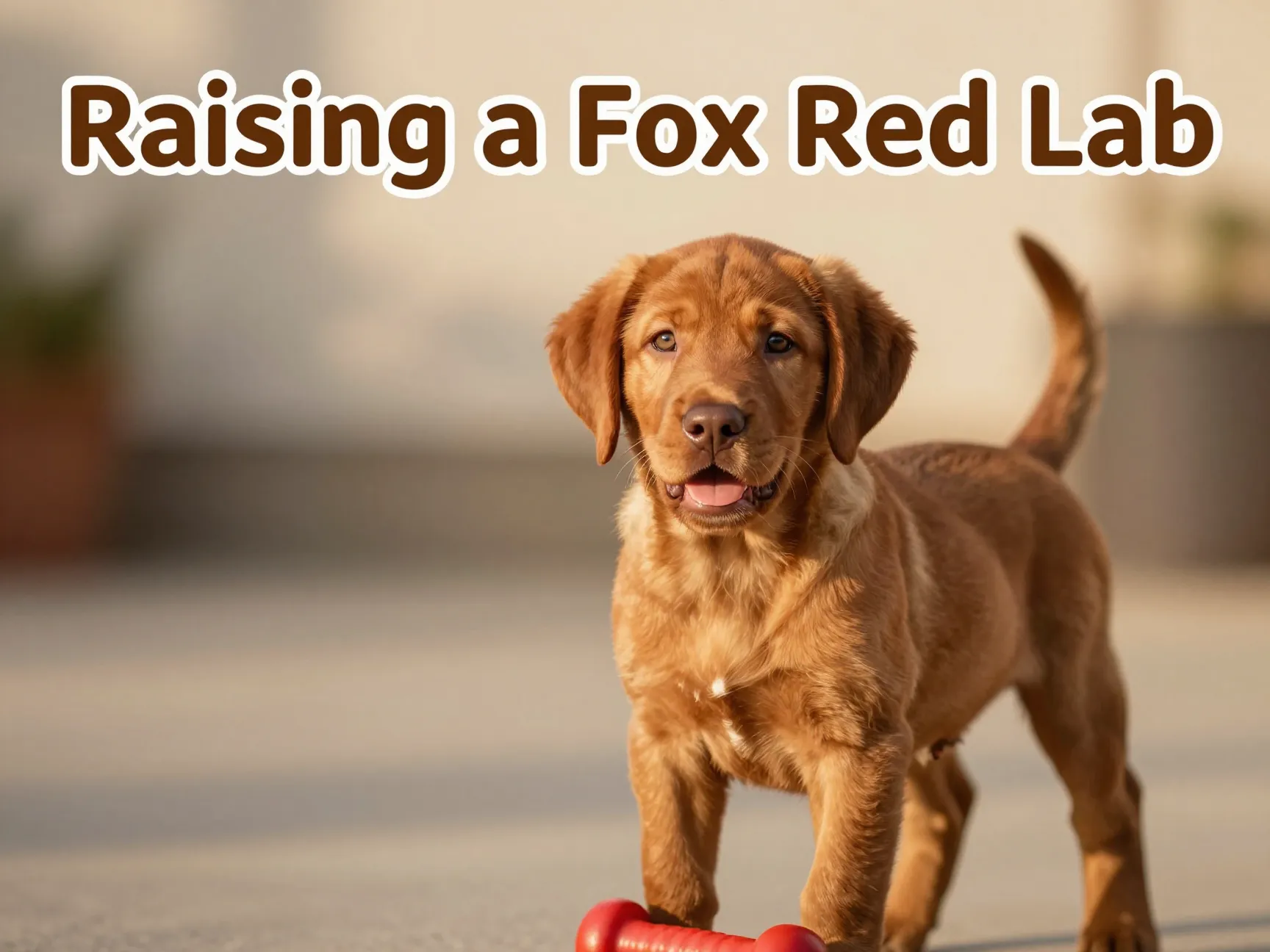
Whether you are a first-time dog owner or a seasoned Lab enthusiast, the fox red variety — sometimes called the “red fox Lab” — brings its own unique considerations. From genetic health screening to exercise limits, nutrition, and socialization, getting the fundamentals right in those early weeks and months will shape your dog’s temperament, health, and happiness for years to come. Let’s dive in.
Key Takeaways 🐾
- Early socialization during the first 8–16 weeks is critical for developing a well-rounded, confident dog.
- Exercise must be age-appropriate — too much too soon can damage developing growth plates.
- Positive reinforcement training works exceptionally well with fox red Labs due to their sensitive, people-pleasing nature.
- Genetic health screening from reputable breeders is non-negotiable for long-term health.
- Consistent grooming, nutrition, and veterinary care from day one builds lifelong healthy habits.
Why the Fox Red Labrador Is Special
The fox red Labrador is not a separate breed — it is a yellow Labrador Retriever with a particularly deep, rich pigmentation that ranges from golden-red to a dark russet shade. Despite some myths suggesting otherwise, this color variation does not affect temperament or working ability [1]. What it does attract, however, is a passionate community of owners and breeders who are devoted to the health and quality of these striking dogs.
💬 “Fox red Labs are sensitive dogs keen to please and responsive to training — but their high energy levels mean thorough, consistent training is essential.” [1]
Understanding what makes this dog tick is the foundation of everything that follows. Now, let’s get into the 8 essential tips for raising a happy & healthy fox red Labrador puppy.
The 8 Essential Tips for Raising a Happy & Healthy Fox Red Labrador Puppy
1. Verify Genetic Health Screening Before You Bring Your Puppy Home
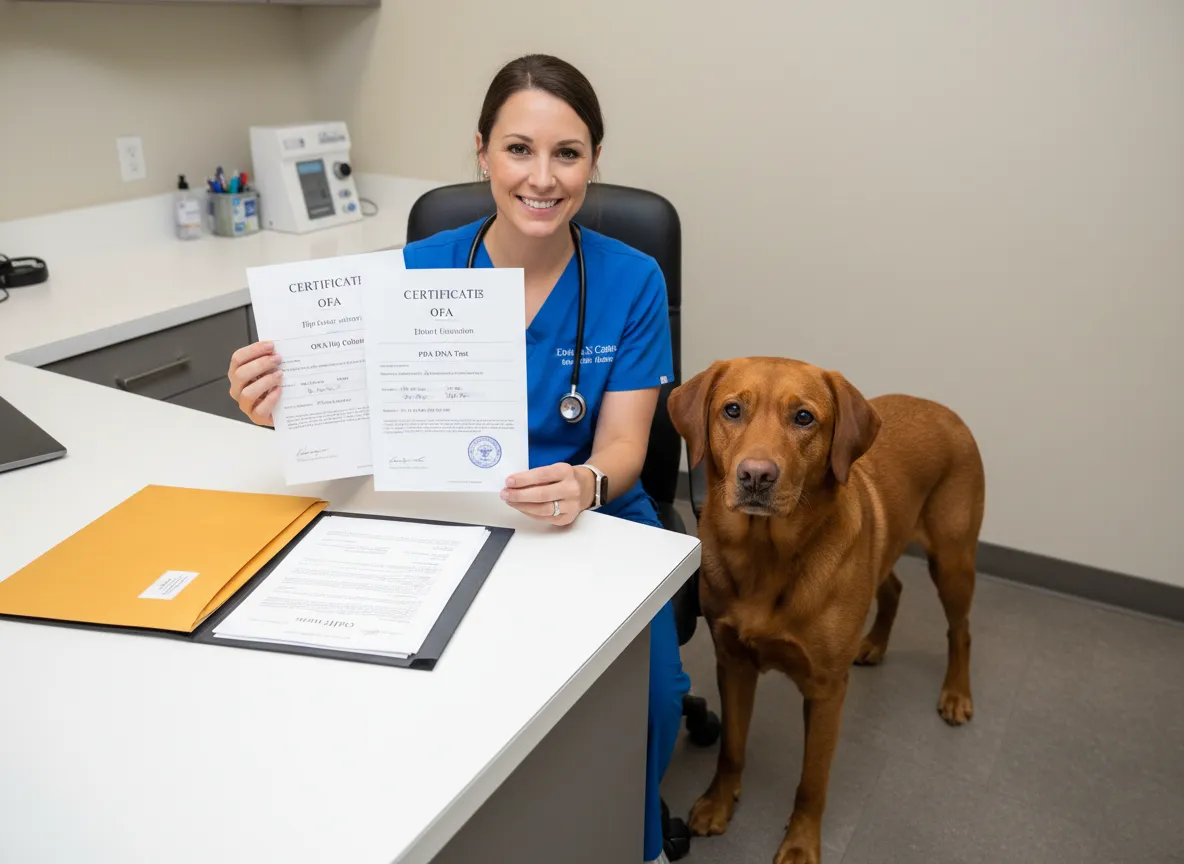
Before your puppy ever sets a paw in your house, the groundwork for its long-term health should already have been laid — by a responsible breeder. Reputable breeders must provide documentation of genetic testing results and OFA (Orthopedic Foundation for Animals) certification for hips and eyes [6]. This involves licensed veterinarians examining adult breeding dogs — typically after 2 years of age — for early signs of hip dysplasia or eye disease.
What to ask your breeder:
- Do both parents have good hip and elbow scores?
- Are eye tests current and clear?
- Are both parents PRA (Progressive Retinal Atrophy) clear? [1]
- Can you provide written documentation for all health certifications?
Skipping this step is one of the most common and costly mistakes new owners make. Hip dysplasia and hereditary eye conditions are serious, painful, and expensive to manage. Choosing a breeder who prioritizes health testing is the single best investment you can make for your fox red Lab’s future.
| Health Test | What It Screens For | Who Performs It |
|---|---|---|
| OFA Hip Evaluation | Hip dysplasia | Licensed veterinarian / radiologist |
| OFA Elbow Evaluation | Elbow dysplasia | Licensed veterinarian / radiologist |
| Eye Certification (CAER) | PRA, cataracts | Board-certified ophthalmologist |
| PRA DNA Test | Progressive Retinal Atrophy | Genetic laboratory |
2. Nail Nutrition From Day One With Breeder-Guided Feeding
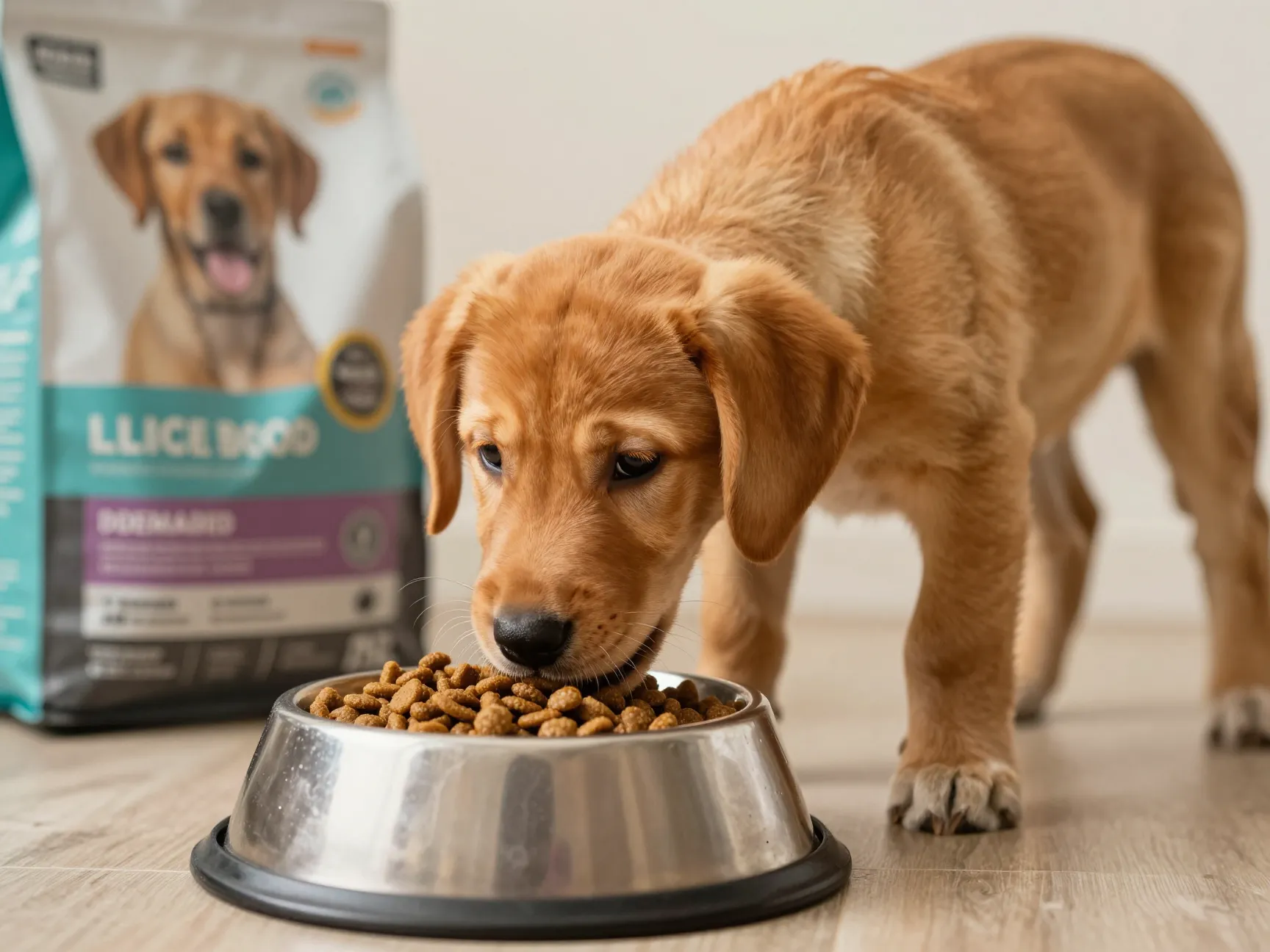
Proper nutrition during puppyhood is not just about keeping your pup full — it directly affects bone development, immune function, coat quality, and long-term health. One of the smartest things you can do is ask your breeder for feeding recommendations before you pick up your puppy [5]. Breeders know what the litter has been eating and can guide you on the right transition.
Key nutrition principles for fox red Lab puppies:
- Follow packaging guidelines carefully and provide the recommended amounts for your puppy’s size and age [5].
- Choose a large-breed puppy formula — these are specially balanced to support controlled bone growth and reduce the risk of developmental orthopedic disease.
- Avoid overfeeding. Labs are notorious for overeating, and obesity in puppyhood sets the stage for joint problems later.
- Transition to new food gradually over 7–10 days to avoid digestive upset.
- Feed 2–3 times per day on a consistent schedule rather than free-feeding.
⚠️ Pro Tip: Resist those pleading eyes! Overfeeding a Lab puppy is one of the most common mistakes owners make. A slightly lean puppy is healthier than a chubby one.
3. Prioritize Early Socialization During the Critical Window
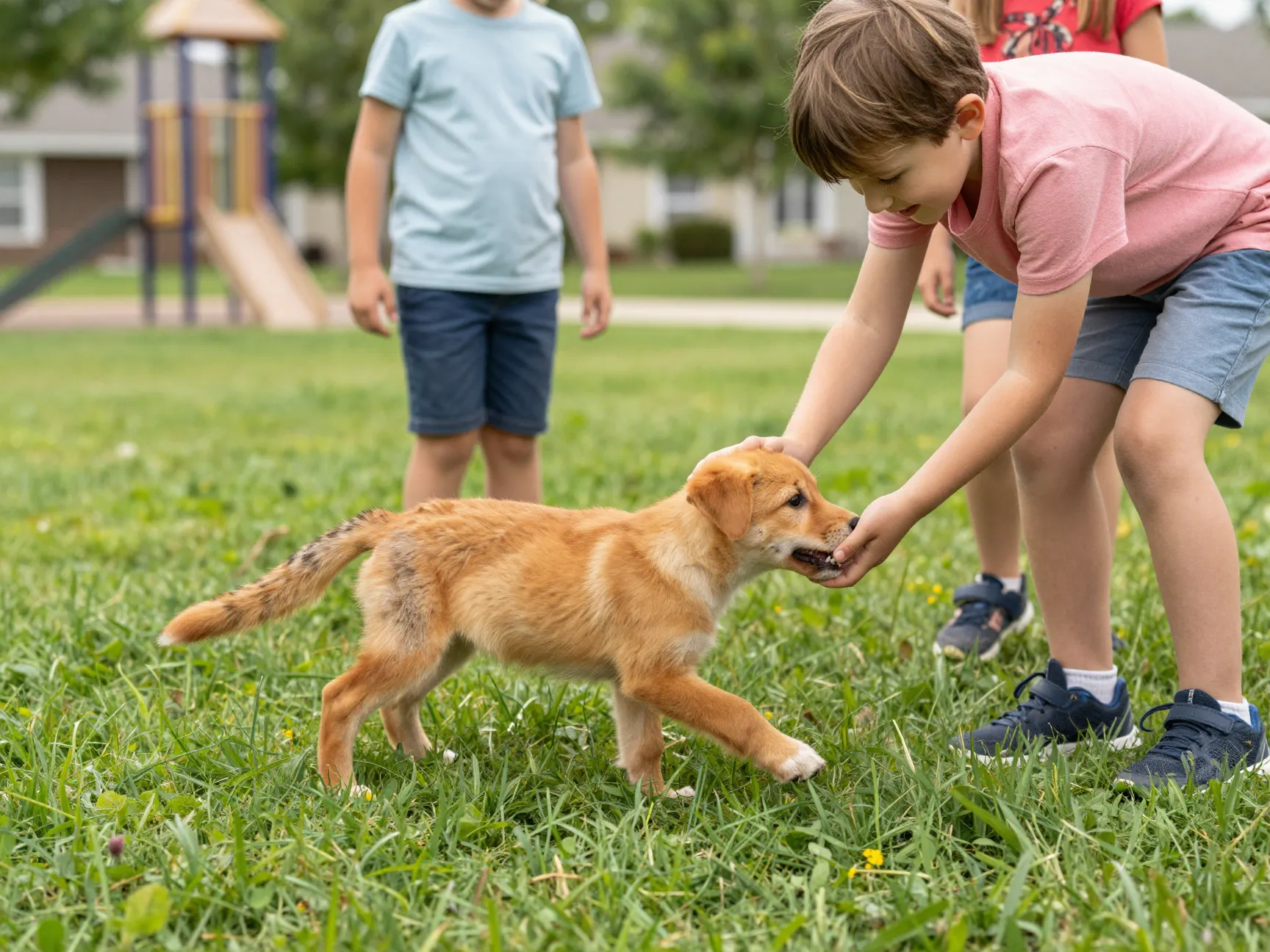
If there is one tip in this list of 8 essential tips for raising a happy & healthy fox red Labrador puppy that you must not overlook, it is this one. The socialization window — roughly 3 to 16 weeks of age — is a once-in-a-lifetime opportunity to shape how your dog perceives the world [1].
Your 8-week-old puppy needs frequent socialization along with close supervision during these critical early weeks [1]. Positive experiences during this period build confidence and reduce the risk of fear, anxiety, and aggression later in life.
Socialization checklist for your fox red Lab puppy:
- Introduce to different people — men, women, children, people wearing hats or uniforms
- Arrange playdates with friendly, fully vaccinated puppies or well-behaved adult dogs [3]
- Expose to different sounds — traffic, vacuum cleaners, thunderstorms (via recordings)
- Introduce to different surfaces — grass, gravel, tile, carpet
- Visit different environments — parks, pet-friendly stores, car rides
- Handle paws, ears, and mouth regularly to prepare for grooming and vet visits
💬 “Playdates with other friendly, fully vaccinated puppies or well-behaved adult dogs build proper social skills and promote positive behavior.” [3]
4. Implement Consistent Positive Reinforcement Training
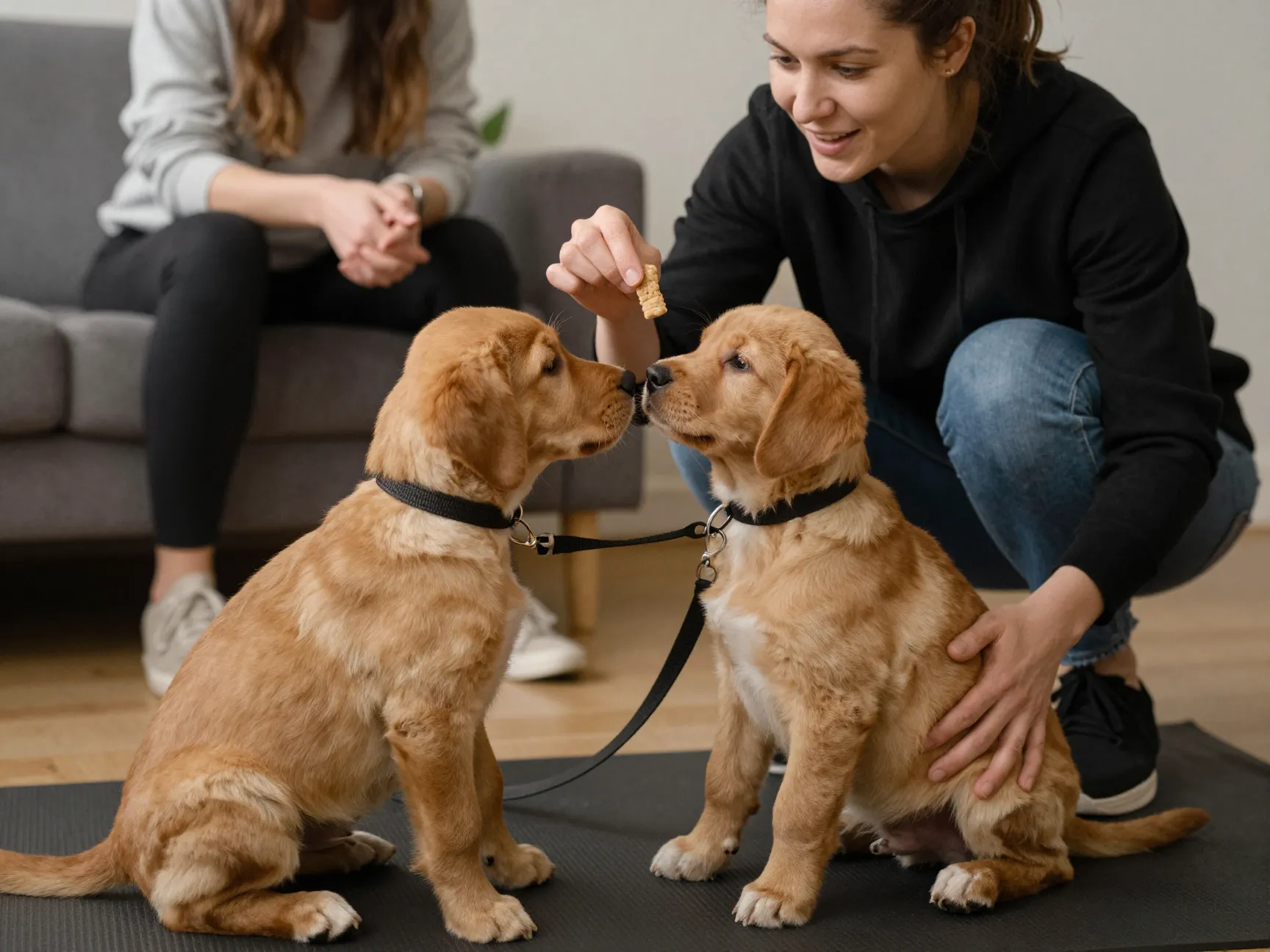
Fox red Labs are sensitive, intelligent dogs that are genuinely eager to please their owners [1]. This makes them highly responsive to positive reinforcement training — a method that rewards desired behaviors with treats, praise, or play rather than punishing unwanted ones.
Training milestones by age:
| Age | Training Focus |
|---|---|
| 8–10 weeks | Name recognition, sit, come, crate introduction |
| 10–12 weeks | Stay, down, leash introduction |
| 3–6 months | Loose-leash walking, leave it, drop it |
| 6–12 months | Impulse control, recall in distractions, basic manners |
Best practices for training your fox red Lab:
- Keep sessions short (5–10 minutes) and end on a positive note.
- Use high-value treats for new or difficult behaviors.
- Be consistent — everyone in the household should use the same commands and rules.
- Never use punishment-based methods — Labs can become shut-down or anxious when trained with fear or pain.
- Enroll in a puppy kindergarten class as soon as your vet clears it — this combines training with socialization [4].
Given their high energy levels and tendency to be boisterous, thorough training is especially important for fox red Labs [1]. A well-trained Lab is a joy to live with; an untrained one can be a handful.
5. Provide Age-Appropriate Exercise — Not Too Much, Not Too Little
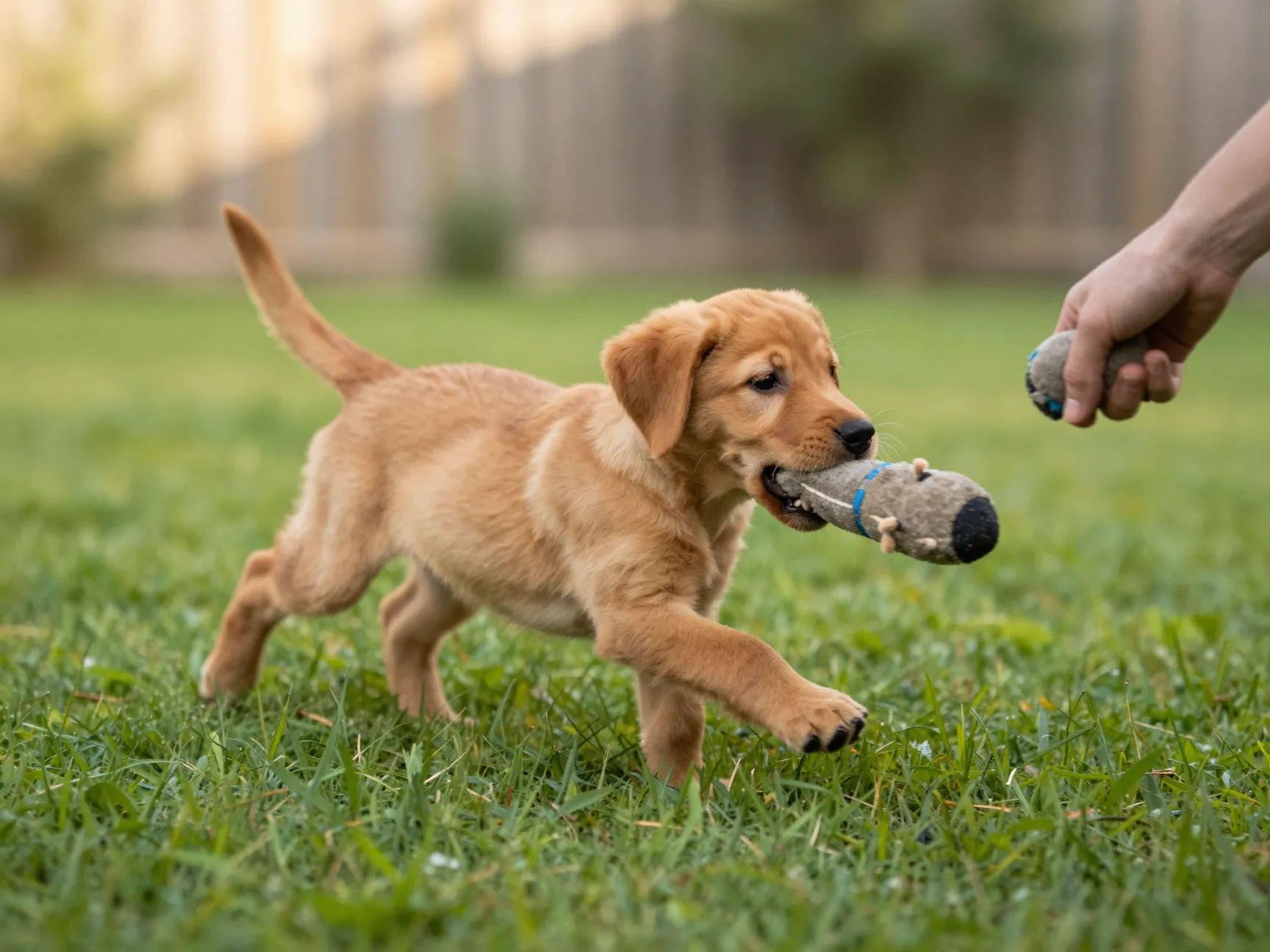
This is one of the most misunderstood aspects of raising a fox red Lab puppy. These dogs are energetic and love to move — but too much exercise too soon can cause serious, lasting damage to developing joints and growth plates.
Exercise guidelines by age:
- 8–12 weeks: Around 15–20 minutes of playtime spread throughout the day in safe, controlled environments [3]. Think gentle fetch, short walks on soft surfaces, and free play in the garden.
- 3–6 months: Gradually increase to 20–30 minutes per session, still on soft surfaces.
- 6–12 months: Moderate exercise — two walks per day, swimming (excellent low-impact option), and continued play.
- 12–18 months: Growth plates typically close between 12–18 months [3]. Only after this point should you introduce higher-impact activities like running on hard surfaces or agility training.
⚠️ Critical Warning: Avoid high-impact activities like excessive jumping or running on hard surfaces until growth plates close at 12–18 months. Ignoring this can lead to long-term musculoskeletal problems. [3]
Safe activities for young puppies:
- 🐾 Short leash walks on grass or dirt paths
- 🐾 Gentle fetch on soft ground
- 🐾 Supervised free play with other puppies
- 🐾 Swimming (with close supervision)
- 🐾 Gentle tug-of-war
6. Combine Physical Activity With Mental Stimulation
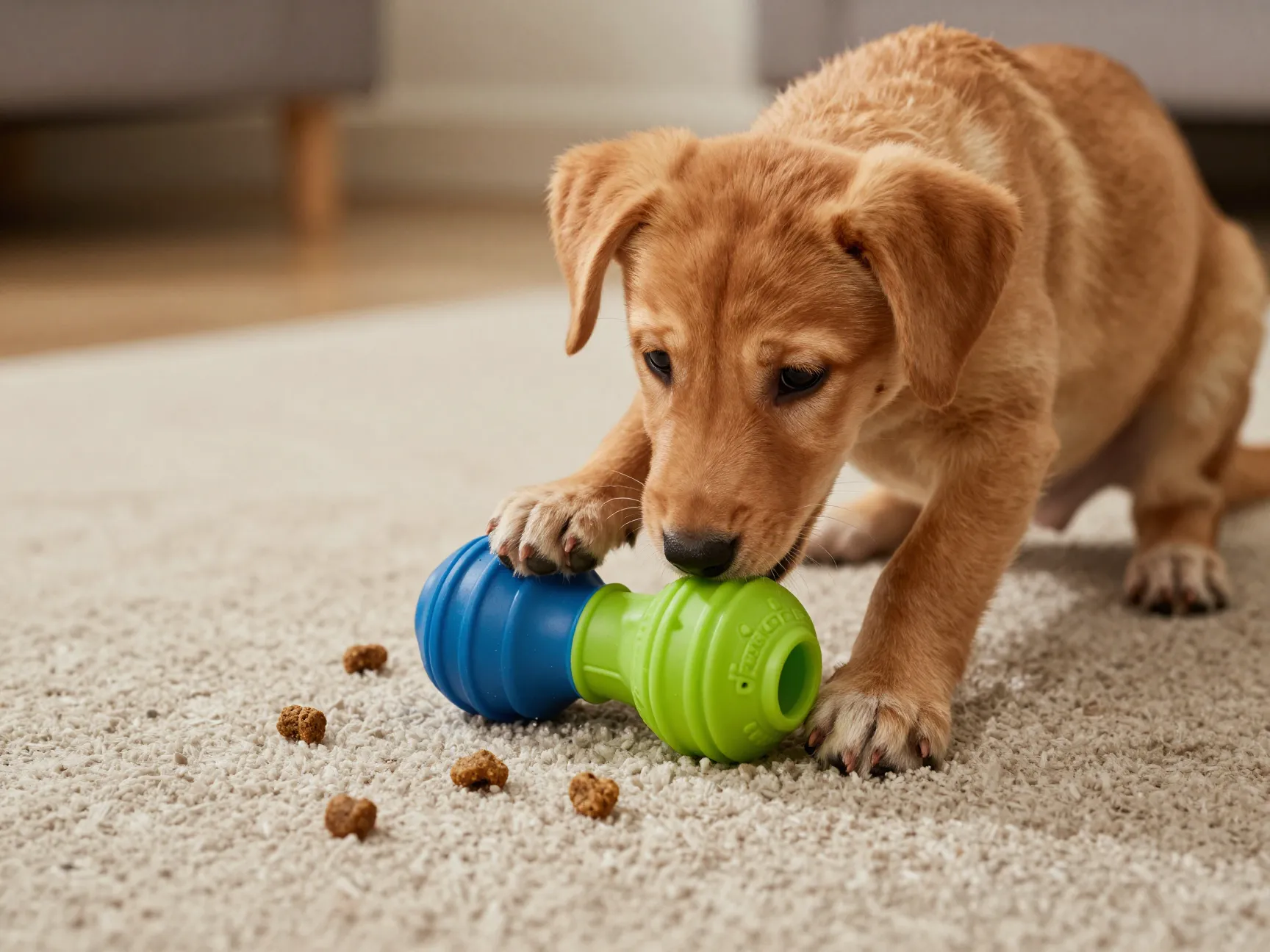
Physical exercise alone is not enough to keep a fox red Lab puppy satisfied. These dogs are highly intelligent, and a bored Lab is a destructive Lab. Mental stimulation is just as important as physical activity — and it is one of the most effective ways to tire out your puppy without putting stress on developing joints [3].
Top mental enrichment activities:
- Puzzle toys — food-dispensing toys that require problem-solving
- Sniff walks — let your puppy explore and sniff freely rather than walking at heel
- Obedience training sessions — short, focused training counts as mental work [3]
- Hide-and-seek games — hide treats or toys around the house or garden
- Interactive games — “which hand” games, name-that-toy, and basic trick training
- Kong-stuffing — freeze a Kong filled with puppy-safe food for extended engagement
💬 “Mental challenges are an effective way to tire out your puppy without overexerting them physically.” [3]
A good rule of thumb: one solid mental enrichment session can be worth 20–30 minutes of physical exercise in terms of how tired and settled your puppy feels afterward.
7. Establish Weekly Grooming Habits From the Start
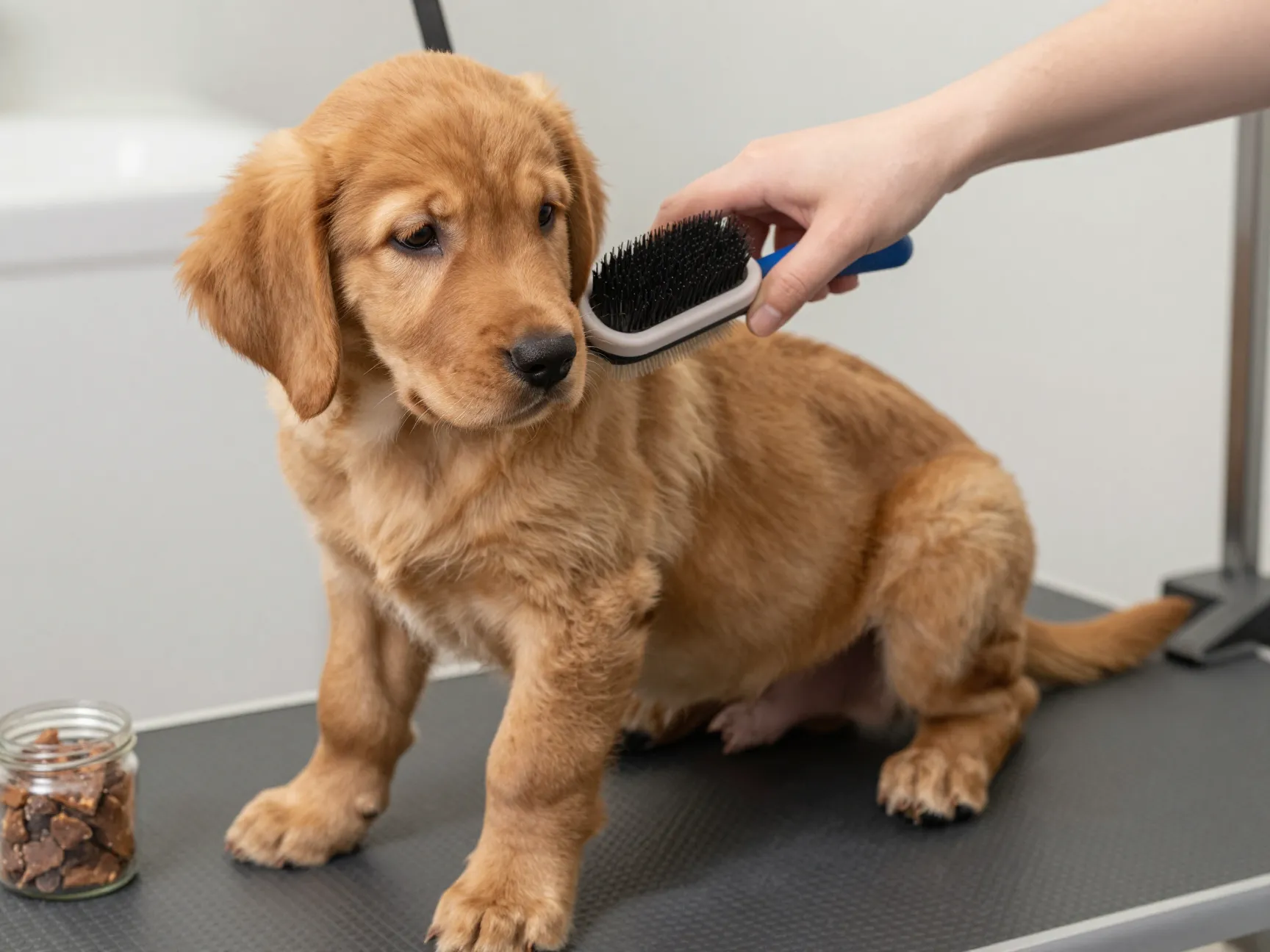
Fox red Labradors have a short, dense double coat that sheds — sometimes a lot. Starting a consistent grooming routine early does two important things: it keeps your dog clean and healthy, and it gets your puppy comfortable with being handled, which makes vet visits and grooming appointments much easier throughout their life.
Weekly grooming checklist:
- ✅ Brushing — Use a rubber curry brush or slicker brush 2–3 times per week to manage shedding and distribute natural oils.
- ✅ Nail trimming — Trim nails weekly to prevent overgrowth and discomfort [4]. Start with just one nail at a time if your puppy is nervous.
- ✅ Ear cleaning — Check and gently clean ears weekly to prevent moisture buildup and infection [4]. Labs love water, which increases ear infection risk.
- ✅ Teeth brushing — Brush teeth several times per week using dog-safe toothpaste [4]. Start with a finger brush to build tolerance.
- ✅ Bath time — Once a month (or as needed) using a gentle puppy shampoo.
Make grooming a positive experience:
- Pair each grooming activity with treats and calm praise.
- Start with very short sessions (1–2 minutes) and gradually increase duration.
- Never restrain your puppy forcefully — build trust slowly.
💡 Pro Tip: Make nail trimming, ear cleaning, and teeth brushing a weekly routine to establish good grooming habits early on. [4] Dogs who are groomed regularly from puppyhood are significantly easier to handle as adults.
8. Puppy-Proof Your Home and Provide Safe Chewing Outlets
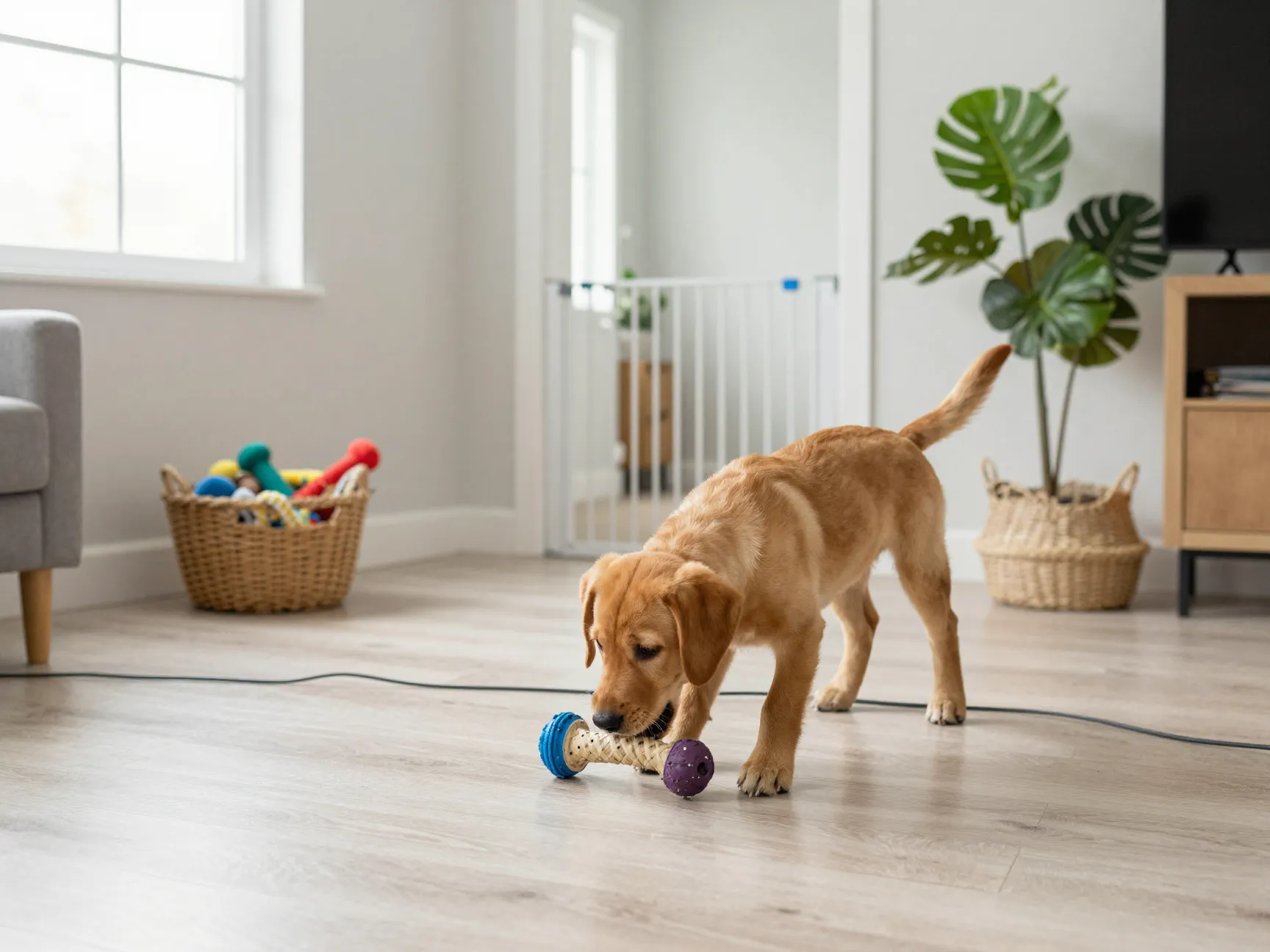
The final tip in our guide to the 8 essential tips for raising a happy & healthy fox red Labrador puppy is one that protects both your puppy and your belongings. Chewing is completely normal puppy behavior — it helps with teething, relieves stress, and is a natural way for puppies to explore their world. The key is redirecting chewing to appropriate outlets before your favorite shoes or furniture become casualties.
Puppy-proofing essentials:
- Remove or secure electrical cords, toxic plants, cleaning products, and small objects that could be swallowed.
- Use baby gates to limit access to unsupervised areas.
- Crate train your puppy — a crate is a safe, den-like space that prevents destructive behavior when you cannot supervise.
- Put items you don’t want chewed away and out of sight [4] — if your puppy cannot reach it, they cannot chew it.
- Stock up on chew toys as healthy alternatives [4] — rotate them regularly to maintain interest.
Best chew toys for fox red Lab puppies:
| Toy Type | Best For | Age Range |
|---|---|---|
| Rubber Kong (stuffed) | Teething, boredom | 8 weeks+ |
| Bully sticks | Natural chewing instinct | 10 weeks+ |
| Nylabone Puppy | Teething relief | 8 weeks+ |
| Rope toys | Interactive play | 10 weeks+ |
| Puzzle feeders | Mental stimulation + chewing | 8 weeks+ |
⚠️ Always supervise your puppy with any chew toy and replace items that become small enough to swallow.
Conclusion: Your Fox Red Lab Deserves the Best Start 🐾
Raising a fox red Labrador puppy is one of life’s most rewarding experiences — but it is also a genuine commitment that requires knowledge, consistency, and patience. By following these 8 essential tips for raising a happy & healthy fox red Labrador puppy, you are setting the foundation for a dog that is confident, healthy, well-behaved, and deeply bonded to you.
Here are your actionable next steps for 2026:
- Before buying: Request all health certifications from your breeder — hips, elbows, eyes, and PRA clearance [1][6].
- Week one home: Start crate training, establish a feeding schedule, and begin gentle handling for grooming [4].
- Weeks 2–8: Prioritize socialization above almost everything else — this window closes fast [1][3].
- Ongoing: Keep exercise age-appropriate, train with positive reinforcement daily, and schedule regular vet check-ups [3][4].
- Use the tracker above to stay on top of weekly care tasks as your puppy grows through each life stage.
The fox red Labrador is a truly magnificent dog — loyal, intelligent, energetic, and full of heart. Give them the right start, and they will reward you with a decade or more of unwavering companionship. 🧡
References
[1] Fox Red Labrador – https://www.thelabradorsite.com/fox-red-labrador/
[2] How To Care For A Red Fox Labrador Puppy – https://i-love-labradors.com/how-to-care-for-a-red-fox-labrador-puppy/
[3] How Much Exercise Should My Fox Red Labrador Puppy Be Getting – https://www.foxredlabradorsandfriends.co.uk/how-much-exercise-should-my-fox-red-labrador-puppy-be-getting/
[4] Train Labrador Retriever Puppy Milestone Timeline – https://www.akc.org/expert-advice/puppy-information/train-labrador-retriever-puppy-milestone-timeline/
[5] Watch – https://www.youtube.com/watch?v=6IQP3z1Qdqk
[6] Red Fox Lab Puppies Top 5 Things You Need To Know About This Breed – https://myredfoxlabs.com/red-fox-lab-puppies-top-5-things-you-need-to-know-about-this-breed/
[7] Watch – https://www.youtube.com/watch?v=k-UaoK4cPqE