
8 Essential Care Tips for Your New Rottweiler Dog Puppies
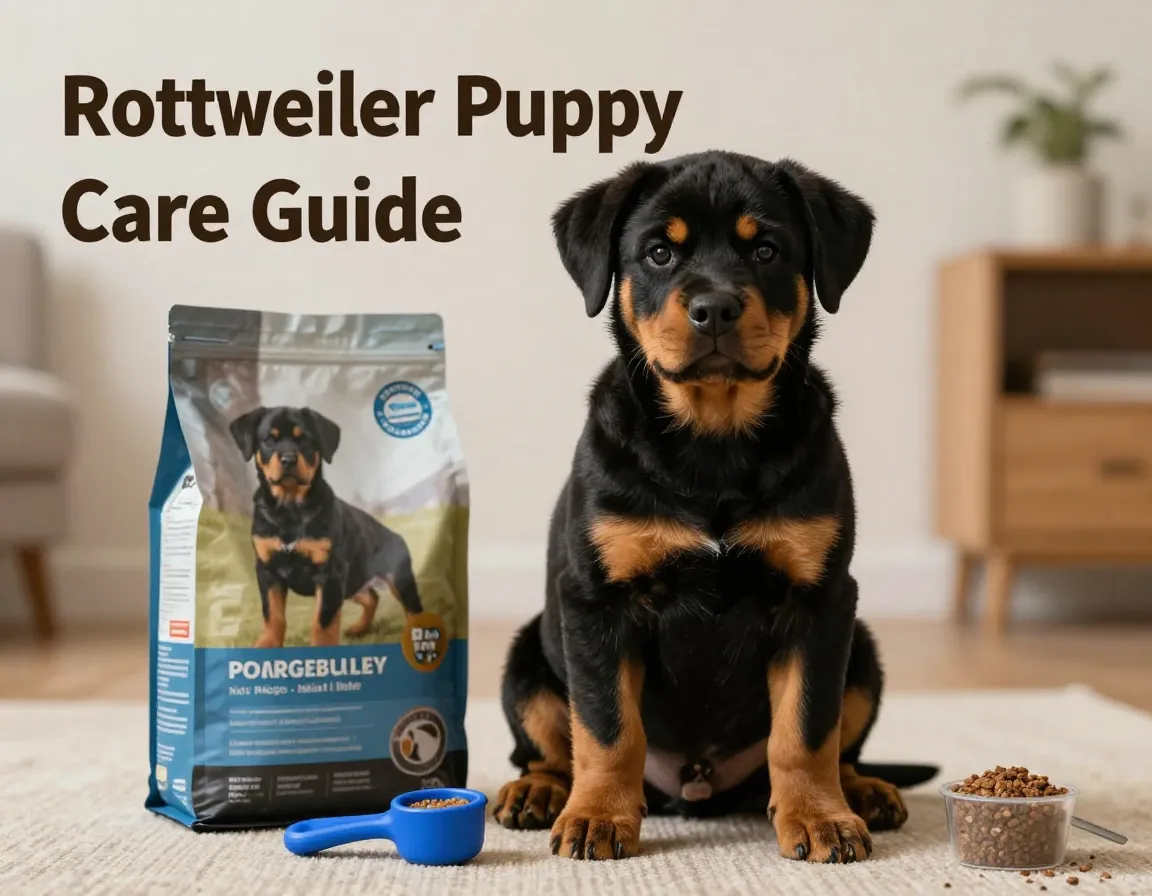
Bringing home a Rottweiler puppy is like welcoming a future gentle giant into your family—one that will grow from an adorable ball of fur into a loyal, powerful companion weighing up to 135 pounds. However, those first crucial months will determine whether your Rottweiler develops into a well-adjusted, healthy adult dog or faces behavioral and health challenges that could have been prevented. The 8 Essential Care Tips for Your New Rottweiler Dog Puppies outlined in this comprehensive guide will set both you and your new furry family member up for a lifetime of success, covering everything from specialized nutrition requirements to critical socialization windows that close forever once missed.
Key Takeaways
- Nutrition is critical: Rottweiler puppies require large-breed specific puppy food fed 3-4 times daily to support proper growth and prevent diet-related health issues
- Exercise must be controlled: Follow the 5-minute-per-month-of-age rule to avoid joint damage while ensuring adequate mental stimulation
- Early socialization is non-negotiable: The 6-7 week window with littermates and early human exposure shapes your Rottweiler’s temperament for life
- Professional training is essential: Rottweilers require more attention than many breeds and benefit significantly from structured obedience classes
- Health monitoring prevents problems: Regular vet checkups and awareness of breed-specific health concerns ensure early intervention when needed
Understanding Your Rottweiler Puppy’s Unique Needs
Rottweiler puppies aren’t just smaller versions of adult dogs—they’re rapidly developing animals with specific requirements that differ dramatically from other breeds. These powerful dogs were originally bred for herding cattle and pulling carts, which means they possess both incredible strength potential and strong protective instincts that must be properly channeled from an early age.
Breed-Specific Characteristics to Consider:
- Rapid growth rate requiring careful nutrition management
- High intelligence demanding mental stimulation
- Strong protective instincts needing early socialization
- Potential for joint problems if over-exercised too young
- Susceptibility to certain genetic health conditions
The foundation you build during the puppy months will directly impact your Rottweiler’s adult behavior, health, and quality of life. Unlike smaller breeds that might recover from early mistakes, Rottweilers’ size and strength make proper early care absolutely essential for everyone’s safety and happiness.
Essential Care Tips for Your New Rottweiler Dog Puppies: Nutrition and Feeding
1. Choose Large-Breed Specific Puppy Food
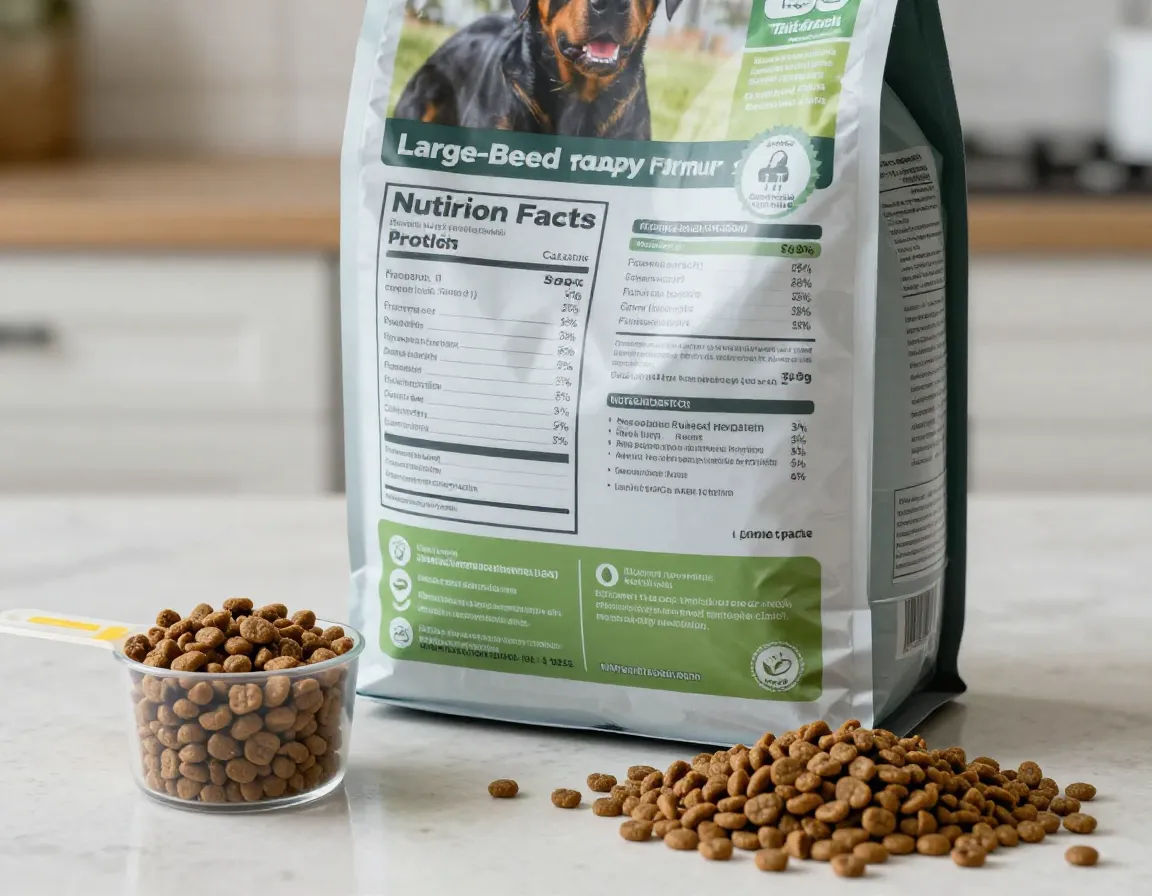
The most critical decision you’ll make for your Rottweiler puppy’s long-term health involves selecting the right nutrition foundation. Rottweiler puppies require large-breed formulated puppy food specifically designed for their rapid growth and development [1]. This isn’t just a marketing gimmick—the calcium and phosphorus ratios in large-breed formulas are carefully balanced to prevent developmental orthopedic diseases that can plague fast-growing breeds.
Key Nutritional Requirements:
- Protein content: 22-24% for optimal muscle development
- Fat content: 12-15% to support energy needs without excess weight gain
- Calcium levels: Controlled amounts (around 1.2%) to prevent skeletal problems
- Life-stage appropriate formulation with higher calcium content during growth periods [5]
“Rottweiler puppies are susceptible to diet-linked health problems, making proper nutrition critical during their development phase.” [4]
2. Establish a Consistent Feeding Schedule

Feed your Rottweiler puppy 3-4 times daily during the puppy stage to maintain stable energy levels and prevent hypoglycemia [1]. This frequent feeding schedule supports their high metabolism and prevents the blood sugar crashes that can occur when puppies go too long between meals.
Recommended Feeding Schedule:
- 8-12 weeks: 4 meals per day
- 3-6 months: 3 meals per day
- 6-12 months: 2-3 meals per day
- 12+ months: 2 meals per day
Portion Control Guidelines:
Follow the feeding guidelines on your chosen puppy food, but remember these are starting points. Monitor your puppy’s body condition and adjust portions based on their individual growth rate and activity level. You should be able to feel their ribs easily but not see them prominently.
3. Ensure Constant Access to Fresh Water
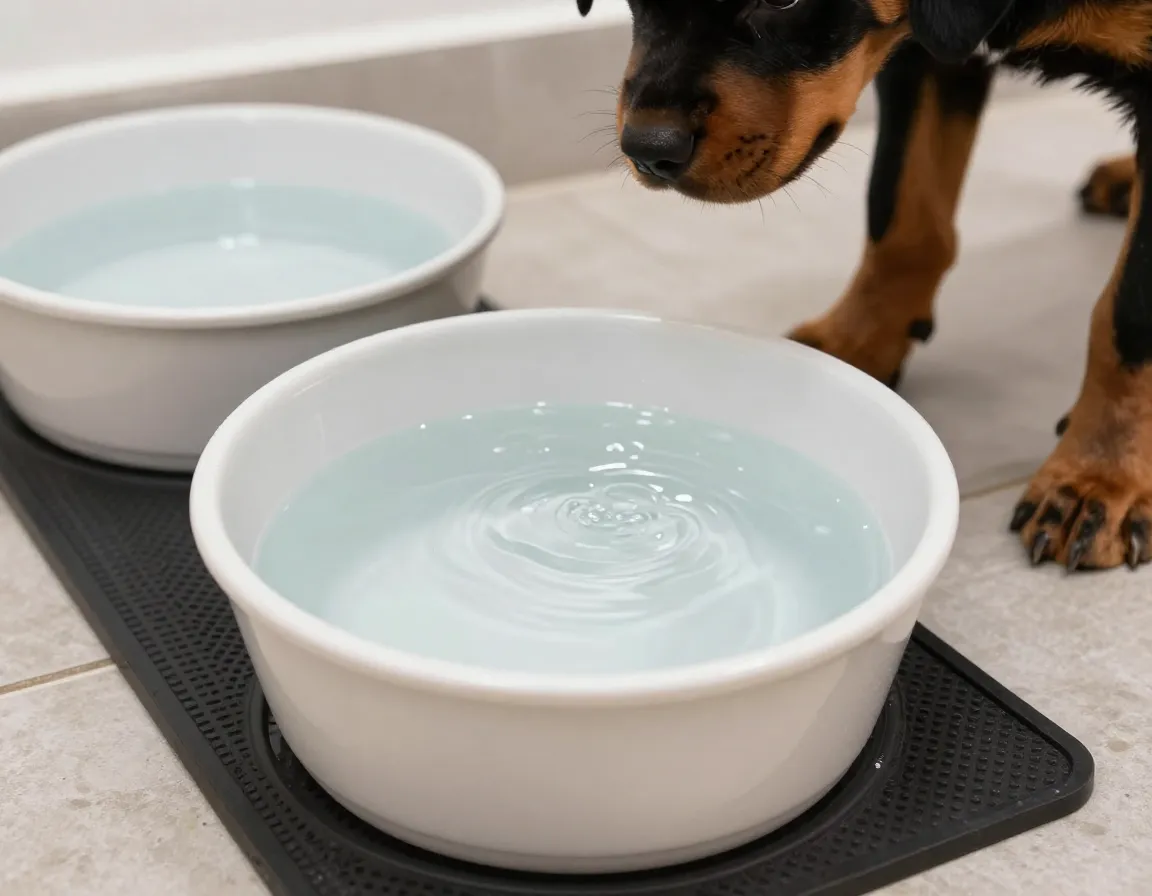
Hydration is absolutely essential for your growing Rottweiler puppy. Ensure constant access to fresh water throughout the day, with bowl placement in easily accessible locations [3]. Puppies have higher water requirements per pound of body weight than adult dogs, and Rottweiler puppies’ rapid growth increases these needs even further.
Water Management Tips:
- 🚰 Multiple water stations throughout your home
- 🧼 Daily bowl cleaning to prevent bacterial growth
- 💧 Fresh water twice daily minimum
- 📍 Strategic placement near feeding and play areas
- 🌡️ Room temperature water for optimal consumption
Essential Exercise and Mental Stimulation Guidelines
4. Follow Age-Appropriate Exercise Rules
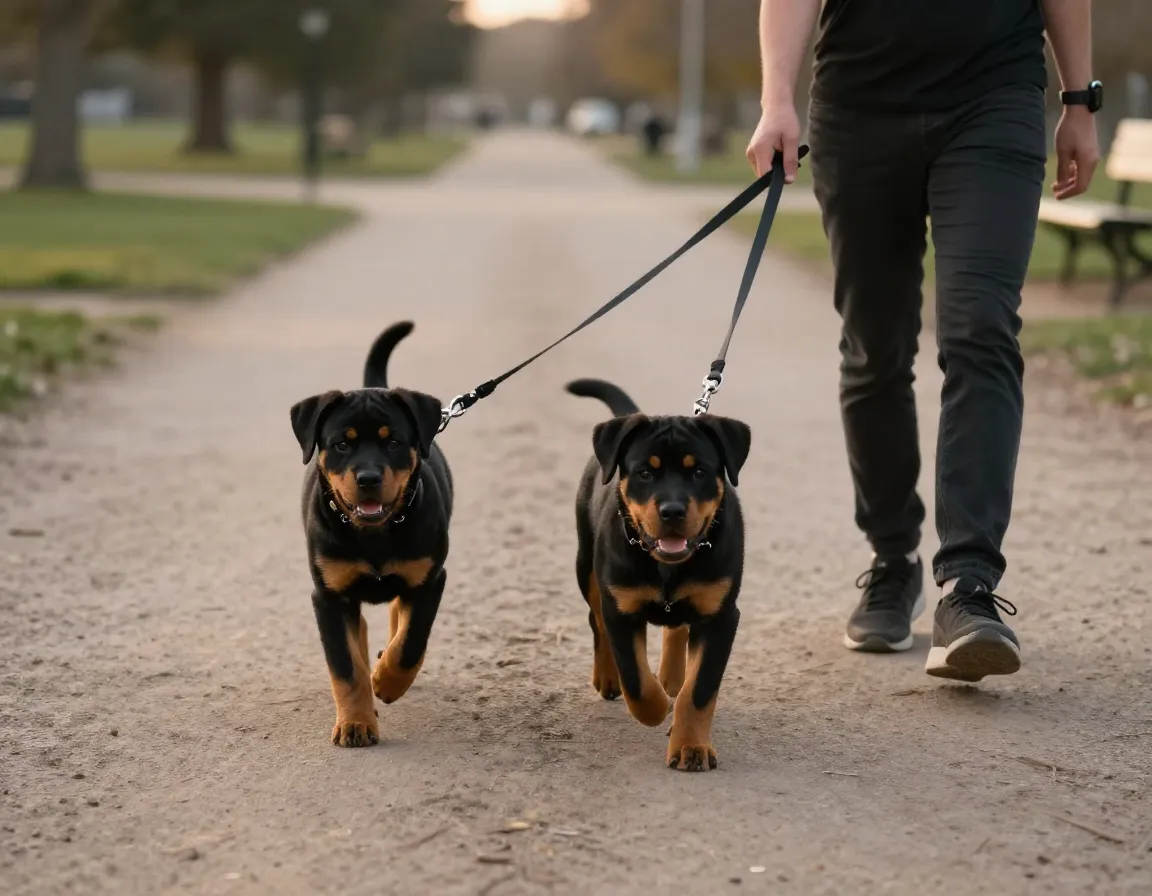
One of the biggest mistakes new Rottweiler owners make is over-exercising their puppies. Use the 5-minute-per-month-of-age guideline: provide five minutes of exercise for each month of their age, up to twice daily [1]. This means a 3-month-old puppy should get no more than 15 minutes of structured exercise twice per day.
Exercise Progression by Age:
| Age | Exercise Duration | Frequency | Activity Type |
|---|---|---|---|
| 8-12 weeks | 10-15 minutes | 2x daily | Gentle play, short walks |
| 3-4 months | 15-20 minutes | 2x daily | Supervised play, basic training |
| 5-6 months | 25-30 minutes | 2x daily | Longer walks, controlled play |
| 7-12 months | 35-60 minutes | 2x daily | Structured exercise, training |
Why This Matters:
Rottweiler puppies’ growth plates don’t close until 18-24 months of age. Excessive exercise during this critical period can cause permanent joint damage, hip dysplasia, and other orthopedic problems that will affect your dog for life.
5. Provide Mental Stimulation and Enrichment
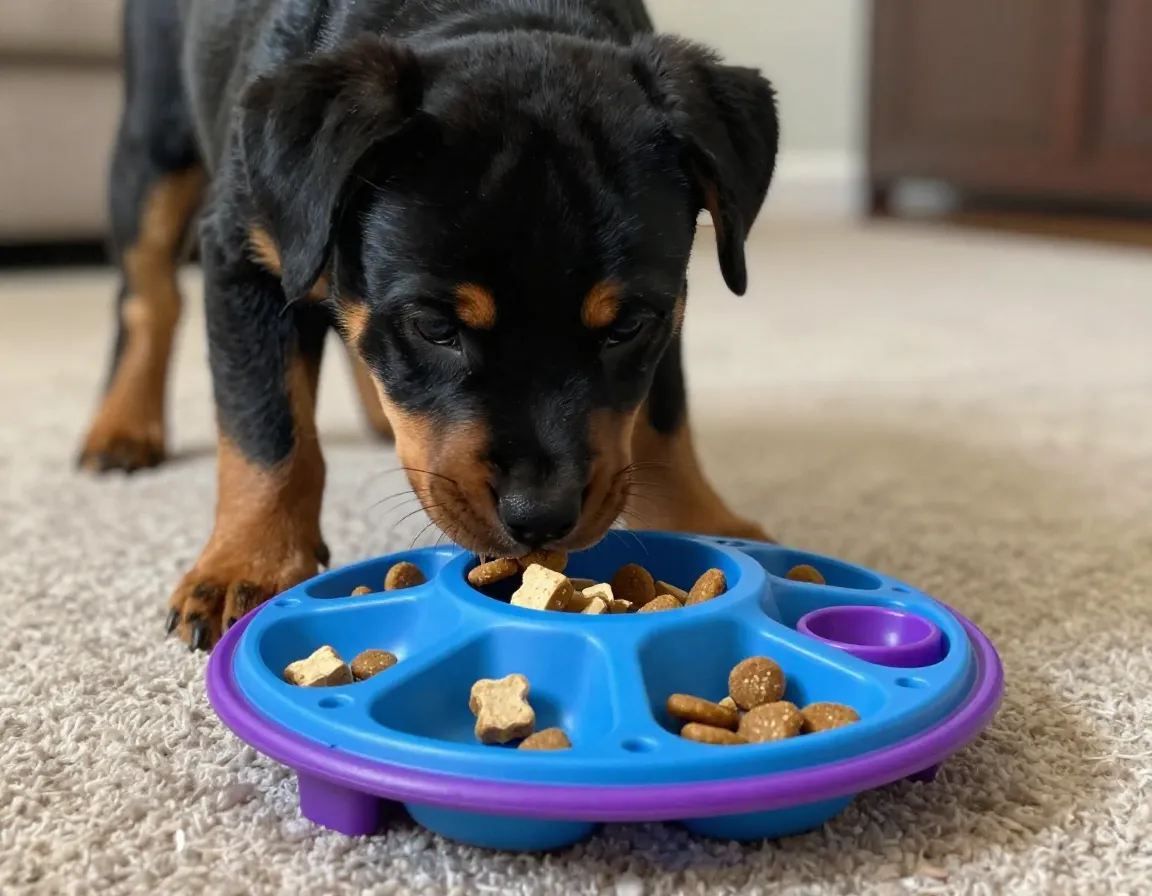
Daily walks at least twice per day are recommended for maintaining physical health [3], but mental stimulation is equally important. Include frequent play sessions and mentally stimulating toys to keep puppies engaged and prevent boredom [3]. A mentally tired Rottweiler puppy is often better behaved than a physically exhausted one.
Mental Stimulation Ideas:
- 🧩 Puzzle feeders to make mealtime challenging
- 🎾 Rotating toy selection to maintain novelty
- 🎯 Basic training sessions (5-10 minutes, multiple times daily)
- 👃 Scent games and hide-and-seek activities
- 🏠 Supervised exploration of new environments
Remember that puppies need plenty of exercise and mental stimulation—Rottweilers require more attention than many other breeds [5]. This isn’t a breed you can ignore for hours and expect good behavior.
Critical Socialization and Training Foundations
6. Respect Critical Socialization Periods

Puppies must stay with the breeder until at least 7 weeks old—early socialization with littermates during the sixth week is absolutely critical [2]. This period teaches bite inhibition, appropriate play behavior, and basic canine social skills that cannot be replicated later in life.
The Socialization Timeline:
- Weeks 3-5: Eyes and ears open, basic sensory development
- Week 6: Critical littermate interaction period
- Weeks 7-8: Optimal time for transition to new homes
- Weeks 8-16: Primary socialization window for human interaction
- Weeks 16-20: Secondary socialization period before fear periods begin
Daily handling starting at birth and visitor exposure around weeks 6-7 (including children) are essential for proper socialization [2]. If you’re getting your puppy from a reputable breeder, they should already be implementing these practices.
7. Implement Structured Training from Day One
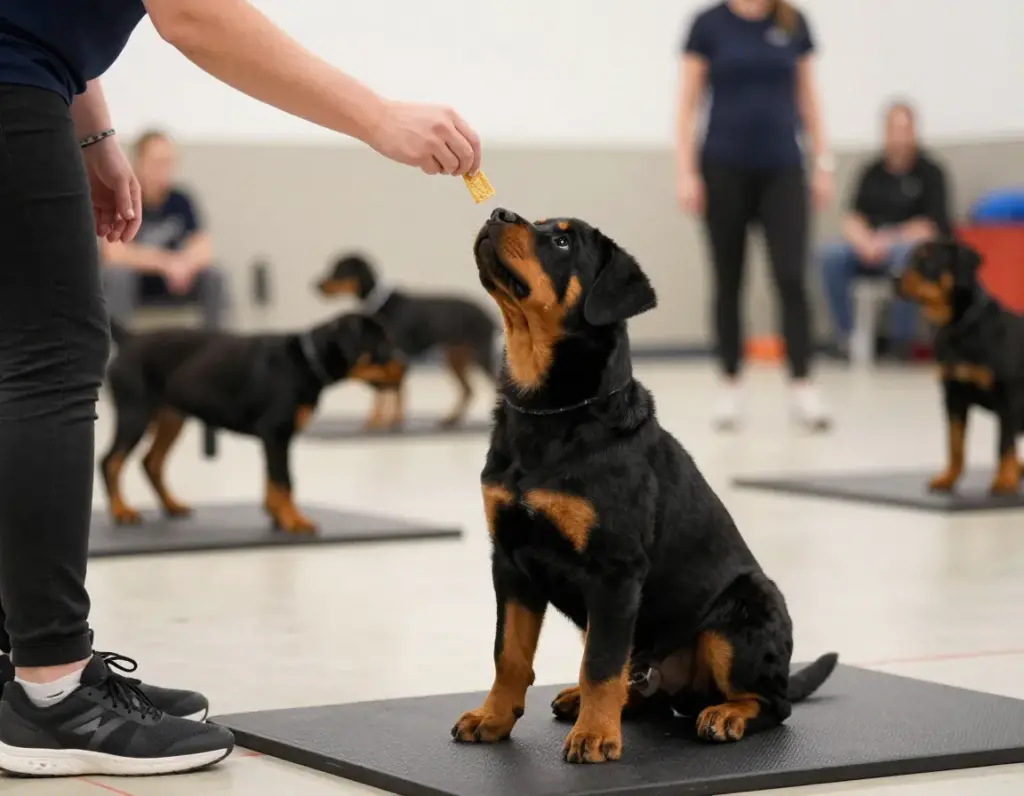
Enroll in obedience classes emphasizing basic commands and peer interaction under professional guidance [1]. Rottweilers are intelligent, strong-willed dogs that benefit enormously from consistent, positive training methods. Starting early prevents the development of problematic behaviors that become much harder to address in a 100+ pound adult dog.
Essential Commands to Master First:
- “Sit” – Foundation for all other commands
- “Stay” – Critical for safety and impulse control
- “Come” – Potentially life-saving recall command
- “Down” – Helps establish calm behavior
- “Leave it” – Prevents resource guarding and dangerous ingestion
Training Session Structure:
- ⏰ 5-10 minute sessions multiple times daily
- 🎁 High-value treats for motivation
- 🎯 Consistent commands from all family members
- 📈 Gradual difficulty increase as skills develop
- 🏆 Positive reinforcement focus
8. Monitor Health and Establish Veterinary Care
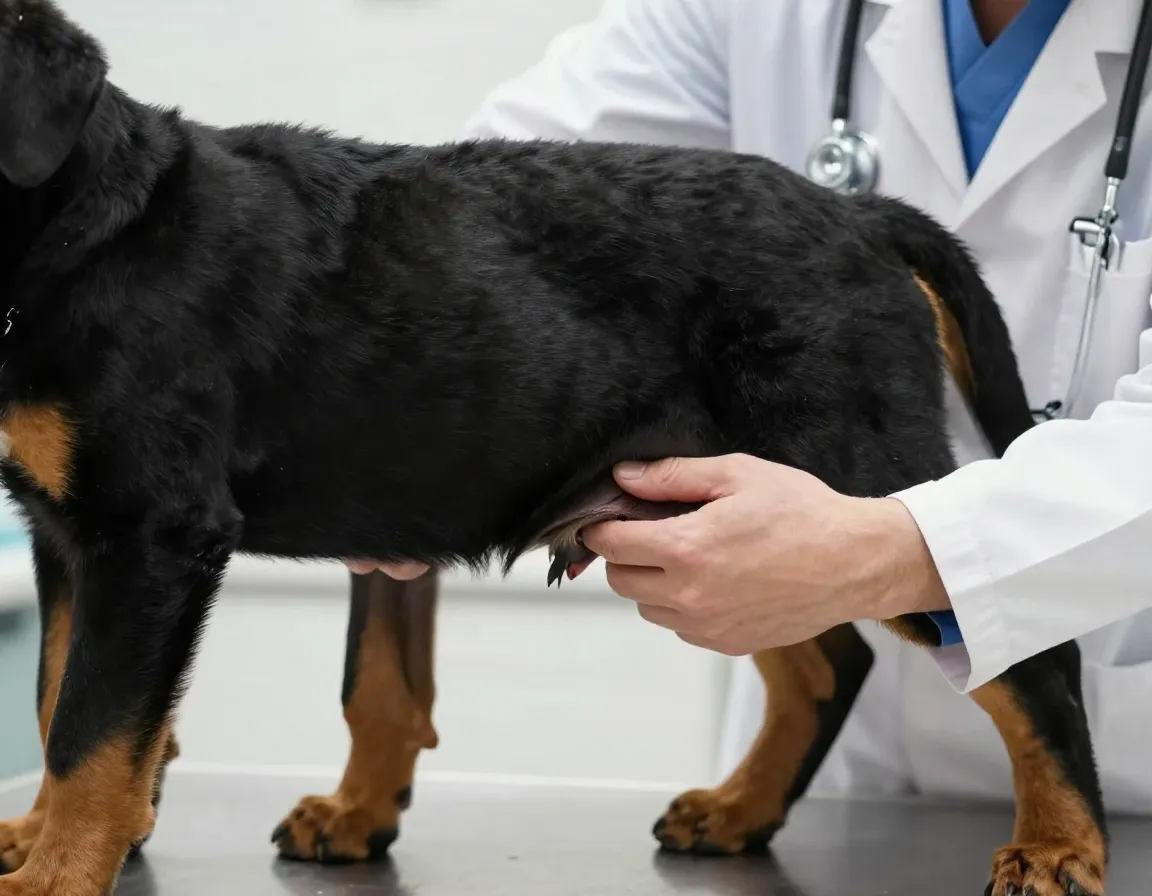
Regular veterinary care is essential for catching breed-specific health issues early. Rottweilers are prone to certain genetic conditions including hip dysplasia, elbow dysplasia, heart conditions, and eye problems [6]. Early detection and intervention can significantly improve outcomes and quality of life.
Essential Health Monitoring:
- Initial puppy exam within 48-72 hours of bringing home
- Vaccination series starting at 6-8 weeks
- Monthly weight checks to monitor growth rate
- Joint evaluation during growth phases
- Regular parasite prevention and screening
Breed-Specific Health Concerns to Watch:
- 🦴 Hip and elbow dysplasia – Monitor for limping or reluctance to move
- ❤️ Heart conditions – Watch for exercise intolerance or breathing issues
- 👁️ Eye problems – Regular ophthalmologic exams recommended
- 🧠 Neurological issues – Be aware of coordination or behavioral changes
- 🦴 Osteosarcoma – Bone cancer risk increases with age
Creating a Health Timeline:
Establish a relationship with a veterinarian experienced with large breeds. Many health problems are easier and less expensive to address when caught early, and some conditions like hip dysplasia benefit from early lifestyle modifications.
Setting Up Your Home Environment
Creating Safe Spaces for Growth
Your Rottweiler puppy needs designated safe spaces where they can rest, eat, and feel secure. Crate training provides this foundation while also helping with housebreaking and preventing destructive behavior when unsupervised.
Essential Puppy-Proofing Steps:
- 🔌 Secure electrical cords and outlets
- 🧽 Remove small objects that could be swallowed
- 🚪 Install baby gates to control access
- 🗑️ Secure garbage cans and toxic substances
- 👟 Protect shoes and clothing from teething damage
Temperature and Comfort Considerations
Rottweiler puppies are more sensitive to temperature extremes than adults. Provide comfortable bedding, appropriate temperature control, and protection from drafts. Their thick double coat will develop over time, but young puppies need extra warmth and comfort.
Building Positive Relationships
Family Integration Strategies
Rottweilers are naturally protective, which makes early positive associations with family members crucial. Each family member should participate in feeding, training, and care activities to establish themselves as trusted leaders rather than individuals to be protected from.
Family Training Consistency:
- 📋 Same commands from all family members
- 🎯 Consistent rules about furniture, feeding, and boundaries
- 👨👩👧👦 Supervised interactions with children
- 🐕 Shared responsibility for daily care tasks
Preparing for Adolescence
Rottweiler adolescence (roughly 6-18 months) can be challenging as your puppy tests boundaries and experiences hormonal changes. The foundation you build during the first few months will determine how smoothly you navigate this period.
Adolescent Preparation Strategies:
- 💪 Consistent training throughout growth phases
- 🎯 Clear boundaries established early
- 🏃♂️ Increased exercise as growth plates allow
- 🧠 Advanced mental challenges to prevent boredom
- 👨⚕️ Spay/neuter discussions with your veterinarian
Conclusion
Successfully raising a Rottweiler puppy requires dedication, consistency, and a thorough understanding of their unique needs. The 8 Essential Care Tips for Your New Rottweiler Dog Puppies covered in this guide—from specialized nutrition and controlled exercise to critical socialization and health monitoring—form the foundation for raising a well-adjusted, healthy adult Rottweiler.
Your Next Steps:
- Schedule a veterinary consultation before bringing your puppy home
- Research and purchase large-breed puppy food and feeding supplies
- Locate puppy socialization classes in your area
- Puppy-proof your home environment thoroughly
- Establish a consistent daily routine for feeding, exercise, and training
Remember that the investment you make in proper puppy care during these first crucial months will pay dividends throughout your Rottweiler’s 8-10 year lifespan. These gentle giants have the potential to become incredible family companions, but only with the proper foundation of care, training, and socialization.
The bond you’ll develop with your Rottweiler puppy through consistent, loving care will create a loyal companion who will protect and cherish your family for years to come. Start implementing these essential care tips immediately, and don’t hesitate to seek professional guidance when needed—your future adult Rottweiler’s behavior and health depend on the choices you make today.
References
[1] 3 Essential Practices For Caring For Rottweiler Puppies – https://jetpetresort.com/blog/pet-wellness-grooming-tips/3-essential-practices-for-caring-for-rottweiler-puppies/
[2] How To Train A Rottweiler Training Your Rottie Puppy – https://www.akc.org/expert-advice/dog-breeds/how-to-train-a-rottweiler-training-your-rottie-puppy/
[3] Rottweiler Breed Guide – https://vetslovepets.com.au/blogs/dog/rottweiler-breed-guide
[4] Essential Rottweiler Supplies – https://www.dogster.com/lifestyle/essential-rottweiler-supplies
[5] Rottweiler Owners Guide – https://www.greencrossvets.com.au/pet-library/dogs/breed-guides/rottweiler-owners-guide/
[6] Rottweilers – https://www.hpanimalhospital.com/services/dogs/breeds/rottweilers
[7] Rottweiler Dog Breed – https://www.pawlicy.com/blog/rottweiler-dog-breed/