
7 Ways to Ensure a Stress-Free Cat Pet Boarding Experience
When vacation plans or unexpected travel arise, finding quality care for beloved feline companions becomes a top priority for cat owners. Unlike their canine counterparts, cats are particularly sensitive to environmental changes, making the boarding experience potentially stressful without proper preparation and facility selection. The 7 Ways to Ensure a Stress-Free Cat Pet Boarding Experience can transform what might be an anxiety-inducing situation into a comfortable, even enjoyable time for cats while their owners are away.
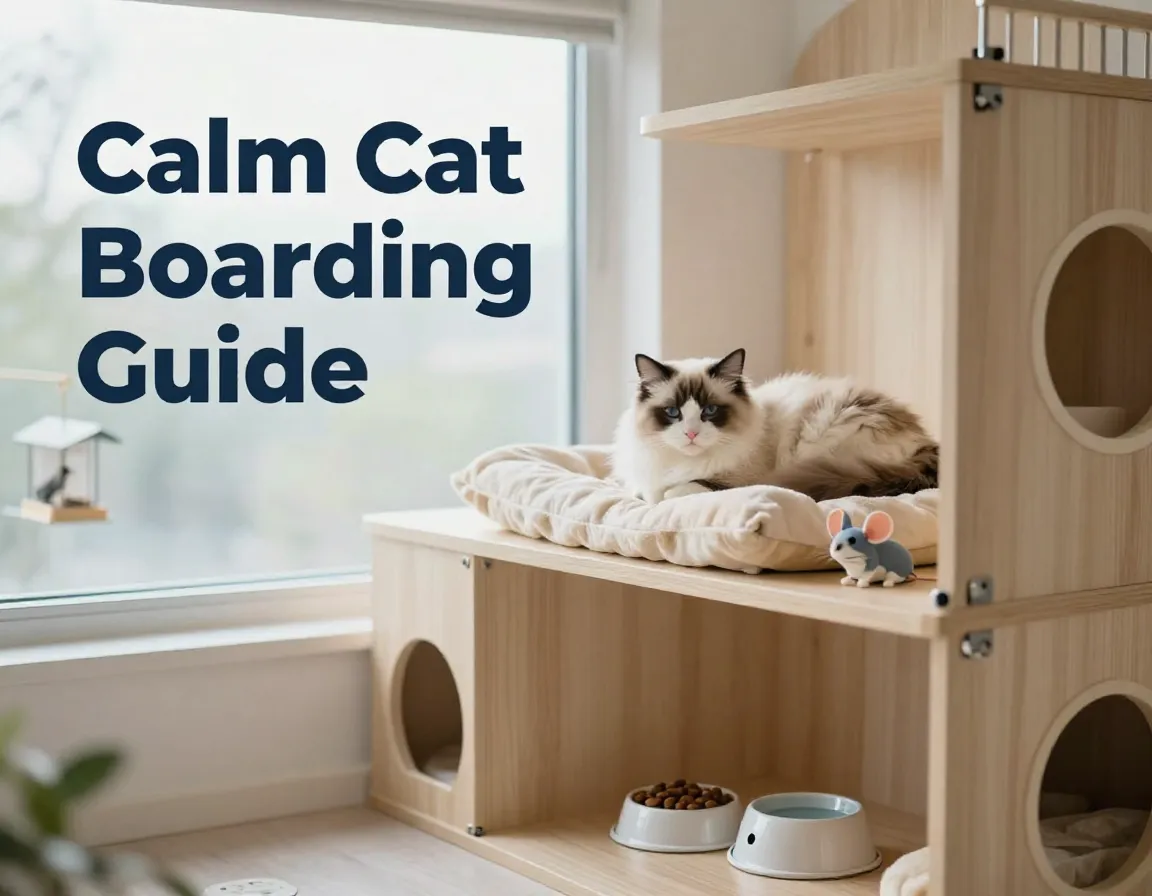
Modern cat boarding facilities have evolved significantly from the basic kennel setups of the past. Today’s best practices focus on creating environments that respect feline psychology and natural behaviors. Understanding these approaches and implementing the right strategies can make all the difference between a traumatic separation and a peaceful boarding experience that leaves both cats and owners feeling confident and relaxed.
Key Takeaways
- Choose facilities with cat-specific design features including individual enclosures, vertical spaces, and separation from dog boarding areas to minimize stress triggers
- Prepare familiar comfort items such as favorite blankets, toys, and regular food to create psychological security during the transition
- Research staff training and handling practices to ensure gentle, feline-friendly care that respects each cat’s individual personality and comfort level
- Plan ahead with proper preparation including health records, detailed care instructions, and gradual acclimation when possible
- Look for environmental enrichment features like hiding spots, climbing opportunities, and calming aids such as pheromone diffusers
Understanding Modern Cat Boarding Facilities
The Evolution of Feline-Focused Care
The pet boarding industry has undergone a remarkable transformation in recent years, with facilities recognizing that cats require fundamentally different care approaches than dogs. Modern cat boarding facilities now prioritize species-specific design elements that address the unique psychological and physical needs of felines [1].
Contemporary boarding establishments understand that cats are naturally territorial creatures who thrive on routine and environmental predictability. This knowledge has led to the development of specialized cat boarding areas that are completely separate from dog facilities, protecting sensitive feline guests from the stress-inducing sounds, scents, and energy levels associated with canine boarding [1].
Key Features of Quality Cat Boarding
Professional cat boarding facilities in 2026 incorporate several essential design elements that directly contribute to stress reduction:
🏠 Individual Enclosures and Privacy
Each cat receives their own private space, eliminating the territorial stress that can occur with shared accommodations. These individual enclosures are designed with adequate space for movement, eating, sleeping, and litter box placement [1].
🔇 Noise Reduction Technology
Quality facilities install quiet-close hinges on cage doors and incorporate acoustic panels throughout the boarding areas to minimize sudden loud noises that can trigger feline anxiety responses [2][4].
🪟 Visual Enrichment and Natural Light
Windows positioned at appropriate heights provide cats with views of outdoor wildlife and natural scenery, offering reliable mental stimulation and environmental enrichment during their stay [1][2][4].
1. Select Facilities with Cat-Specific Design Features
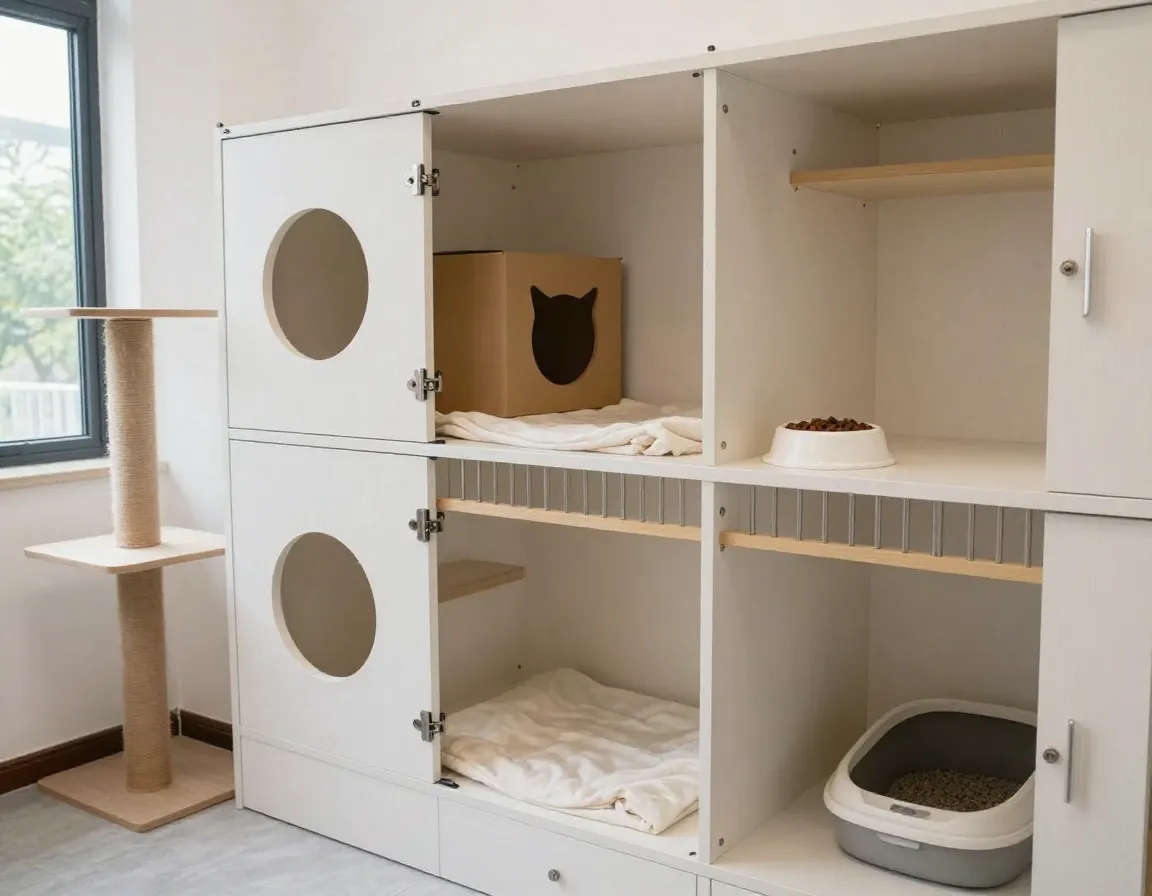
The foundation of any stress-free cat pet boarding experience begins with choosing a facility that understands feline psychology and incorporates appropriate design elements. Not all boarding facilities are created equal, and the physical environment plays a crucial role in determining whether a cat will feel secure or anxious during their stay.
Vertical Spaces and Climbing Opportunities
Cats are natural climbers who feel most secure when they can observe their environment from elevated positions. Quality boarding facilities provide elevated platform beds and vertical spaces that allow cats to perch and survey their surroundings [1][2][4]. This vertical territory is essential for psychological comfort, as it enables cats to engage in their natural behaviors even while away from home.
Look for facilities that offer:
- Multi-level enclosures with platforms at different heights
- Climbing trees or cat towers within individual spaces
- Elevated feeding stations that allow cats to eat in comfortable positions
- High perching areas near windows for optimal viewing opportunities
Hiding Spots and Refuge Areas
When cats feel stressed or overwhelmed, their instinct is to find a safe hiding place where they can retreat and observe without being seen. Progressive boarding facilities recognize this need and provide purpose-built hiding opportunities within each enclosure [2][4].
Effective hiding solutions include:
- Cardboard boxes that can be replaced regularly for hygiene
- Paper bags for cats who prefer crinkly hiding spots
- Purpose-built cave-style beds that provide enclosed comfort
- Blanket-covered areas that create den-like environments
These hiding spots are not just comfort features—they’re essential stress-management tools that allow cats to self-regulate their anxiety levels throughout their boarding stay.
Environmental Separation from High-Traffic Areas
Professional cat boarding facilities understand the importance of creating quiet zones that are separated from busy reception areas, grooming stations, and other high-activity spaces [3]. This separation ensures that cats can rest and recover without constant exposure to unfamiliar sounds, scents, and activity levels.
Quality facilities will have:
- Dedicated cat-only areas away from main foot traffic
- Sound barriers between boarding areas and operational spaces
- Separate entrances for cat boarding when possible
- Controlled access that limits unnecessary disturbances
2. Prioritize Facilities with Professional Staff Training
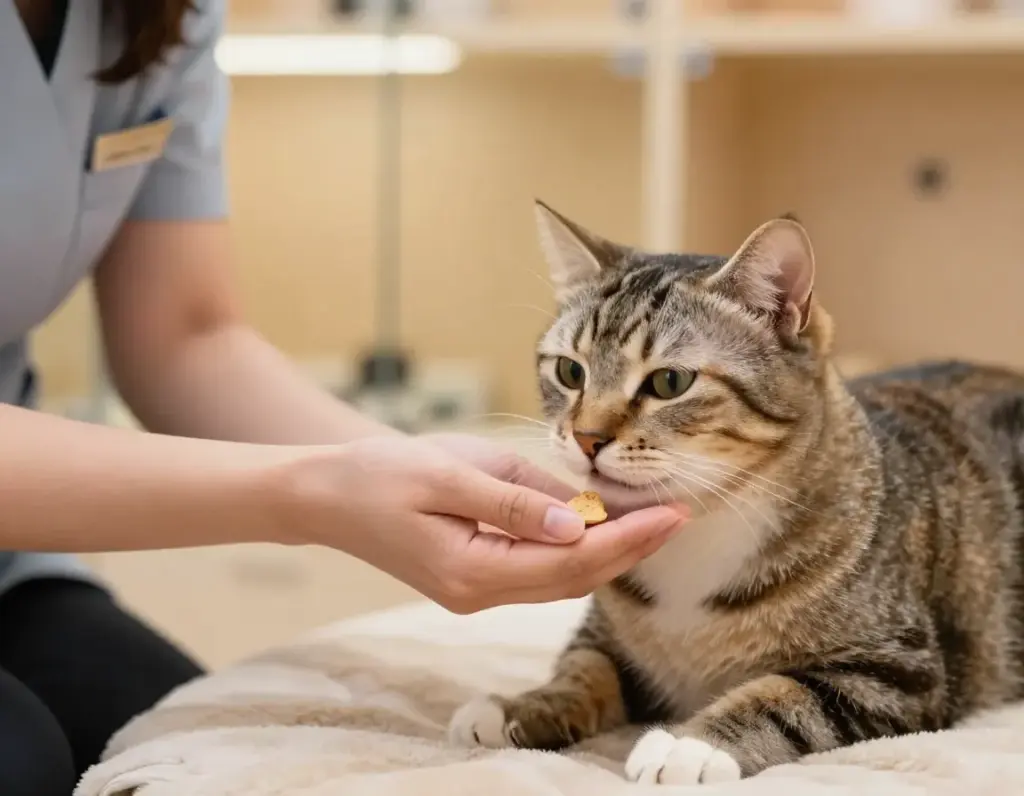
The quality of care provided by boarding facility staff can make or break a cat’s boarding experience. Professional staff training in feline behavior and stress recognition is essential for creating the positive, low-stress environment that cats need to thrive during their stay [1].
Stress Recognition and Response
Well-trained boarding staff can quickly identify signs of feline stress and respond appropriately to help cats feel more comfortable. Common stress indicators that professional staff should recognize include:
Behavioral Signs:
- Excessive hiding or withdrawal
- Reduced appetite or refusal to eat
- Increased vocalization or unusual silence
- Changes in litter box usage
- Excessive grooming or complete lack of grooming
Physical Signs:
- Rapid breathing or panting
- Dilated pupils
- Excessive shedding
- Trembling or shaking
- Aggressive or defensive postures
Low-Stress Handling Techniques
Professional boarding staff should be trained in feline-friendly handling techniques that respect cats’ body language and comfort levels [1][5]. These gentle approaches help create positive associations with the boarding experience rather than adding to stress levels.
Key handling principles include:
- Reading feline body language before attempting interaction
- Using soothing, calm voices during all interactions
- Avoiding sudden movements that might startle nervous cats
- Providing treats and rewards to create positive associations
- Respecting individual comfort levels rather than forcing interactions
Individualized Attention Approaches
Unlike dog boarding, which often focuses on group activities and socialization, cat boarding requires individualized attention based on each cat’s personality and comfort level [1]. Professional staff should tailor their interaction style to match each cat’s needs:
For Social Cats:
- Gentle petting and interactive play sessions
- Talking and engaging during feeding times
- Providing extra attention and companionship
For Reserved or Shy Cats:
- Quiet companionship without forced interaction
- Allowing cats to approach on their own terms
- Providing comfort through presence rather than direct contact
3. Ensure Proper Environmental Enrichment and Comfort Features
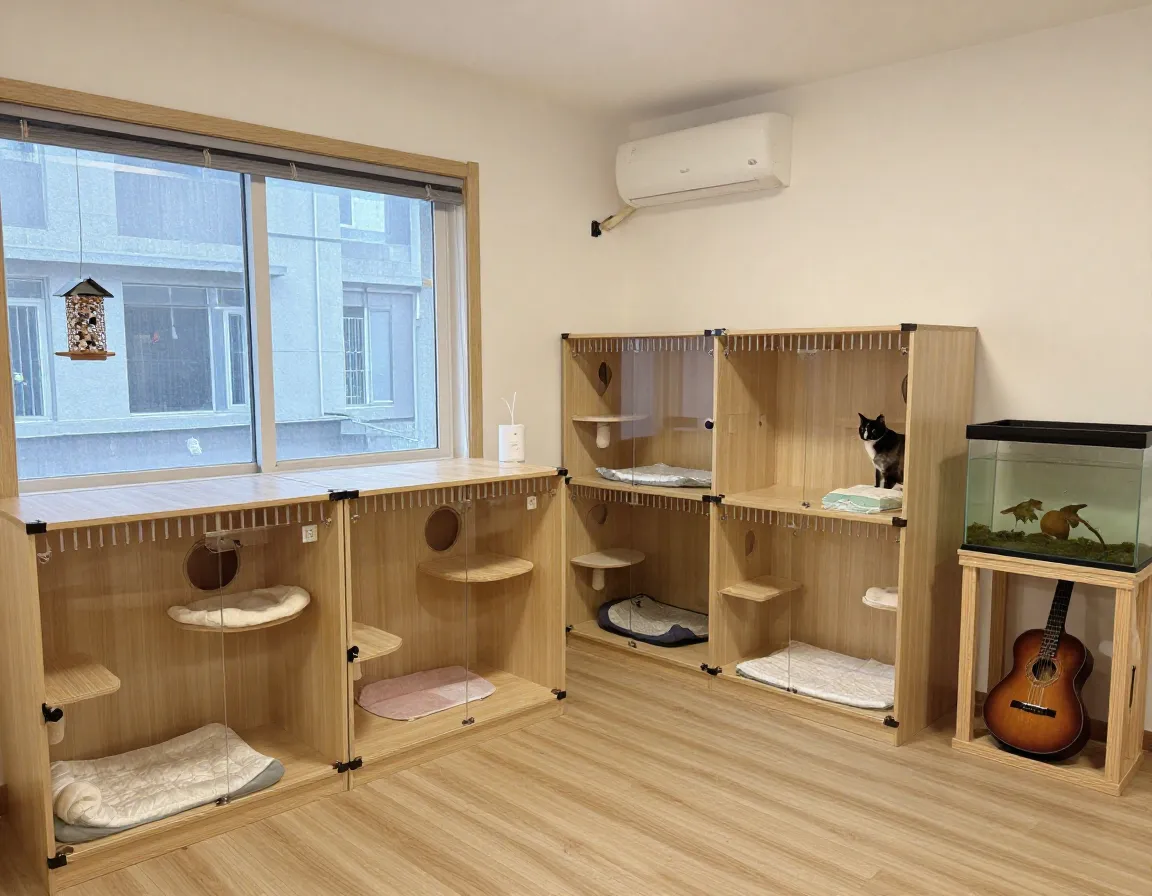
Creating a stress-free cat pet boarding experience requires more than just basic accommodation—it demands thoughtful environmental enrichment that supports feline psychological well-being throughout the boarding period.
Pheromone Diffusers and Calming Aids
Modern boarding facilities increasingly utilize pet-safe pheromone products that mimic natural feline facial pheromones to create a calming environment [1][3]. These synthetic pheromones signal safety and familiarity to cats, helping to reduce anxiety levels in unfamiliar surroundings.
Effective calming aids include:
- Feliway diffusers placed strategically throughout boarding areas
- Pheromone-infused bedding or blankets
- Calming music designed specifically for feline relaxation
- Aromatherapy options that are safe for cats
Climate Control and Comfort
Cats are sensitive to temperature fluctuations and environmental conditions. Quality boarding facilities maintain optimal climate control to ensure physical comfort throughout the stay:
Temperature Management:
- Consistent temperature ranges between 65-75°F
- Adequate ventilation without drafts
- Humidity control to prevent respiratory discomfort
- Individual climate zones when possible
Lighting Considerations:
- Natural light exposure during daytime hours
- Dimmed lighting options for rest periods
- Avoiding harsh fluorescent lighting that can cause stress
- Night lighting that allows for safe movement without disrupting sleep
Interactive Elements and Mental Stimulation
Even during short boarding stays, cats benefit from mental stimulation and interactive elements that prevent boredom and maintain psychological well-being [1]. Progressive facilities provide:
Puzzle Feeders and Food Enrichment:
- Slow-feeding bowls that encourage natural eating behaviors
- Puzzle toys that dispense treats throughout the day
- Multiple feeding stations to encourage movement
- Varied textures and feeding experiences
Visual and Auditory Enrichment:
- Bird feeders positioned outside windows for wildlife viewing
- Fish tanks or nature videos for visual stimulation
- Classical music or nature sounds for auditory comfort
- Rotating toys and enrichment items to maintain novelty
4. Maintain Consistent Routines and Schedules
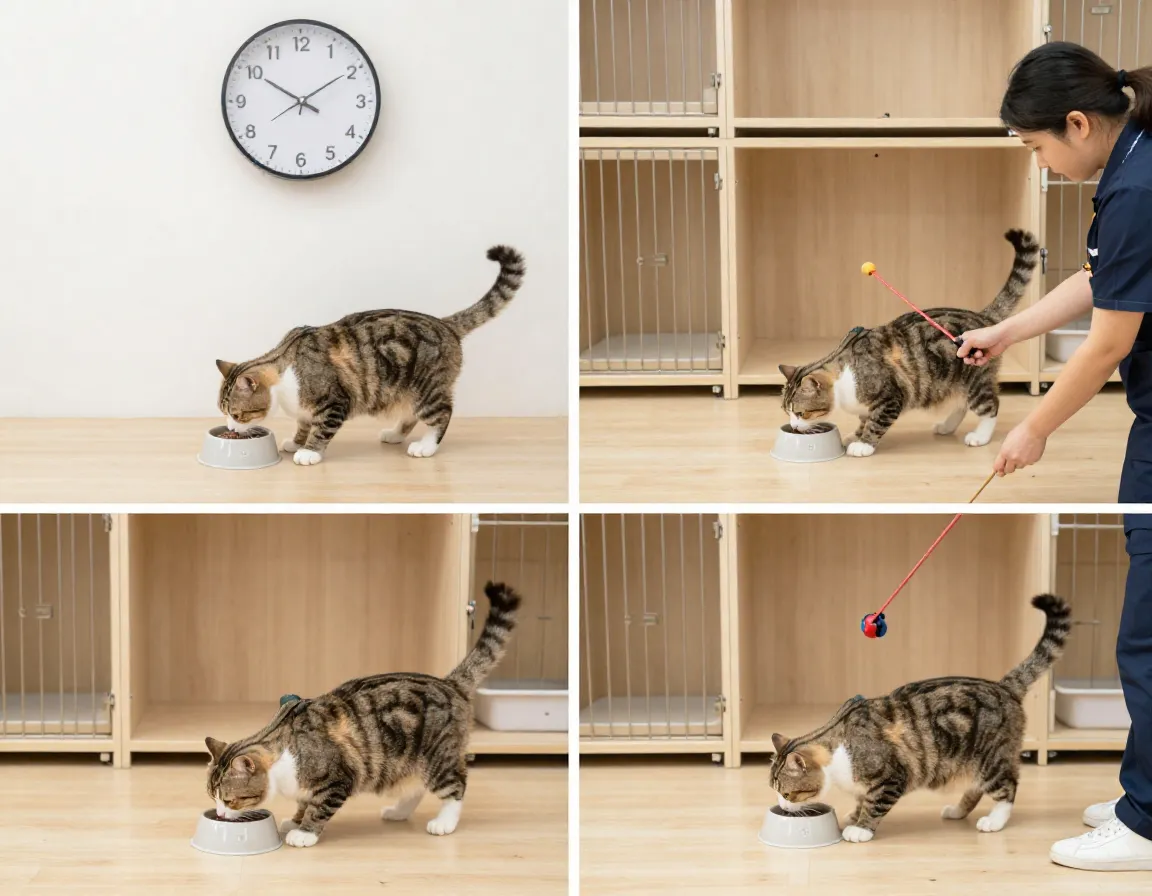
Cats are creatures of habit who derive significant comfort from predictable routines and schedules. Maintaining consistent daily patterns during boarding helps reduce anxiety by preserving the familiar structure that cats depend on for psychological security [1][6].
Feeding Schedule Consistency
One of the most important aspects of routine maintenance involves preserving familiar feeding patterns throughout the boarding experience. Disruptions to eating schedules can cause digestive upset and increased stress levels in sensitive cats.
Best practices for feeding routine maintenance include:
Timing Consistency:
- Maintaining the cat’s home feeding schedule as closely as possible
- Providing meals at the same times each day
- Allowing adequate time between meals for proper digestion
- Avoiding rushed or irregular feeding patterns
Food Familiarity:
- Using the cat’s regular food brand and formula when provided
- Gradually transitioning to facility food only if necessary
- Monitoring appetite and adjusting portions as needed
- Providing fresh water at consistent intervals
Daily Activity Patterns
Beyond feeding schedules, cats benefit from consistent daily activity patterns that mirror their natural rhythms and home routines [1][6]. Professional boarding facilities work to establish predictable patterns that cats can rely on throughout their stay.
Morning Routines:
- Gentle wake-up interactions at consistent times
- Fresh food and water provision
- Litter box cleaning and maintenance
- Brief health and comfort checks
Afternoon Activities:
- Playtime or interaction sessions for social cats
- Quiet companionship for reserved personalities
- Environmental enrichment rotation
- Grooming assistance if needed
Evening Wind-Down:
- Final feeding for cats on multiple meal schedules
- Comfort checks and settling assistance
- Dimmed lighting to encourage rest
- Minimal disturbances during sleep hours
Socialization and Interaction Schedules
Professional boarding staff understand that individualized socialization schedules are crucial for maintaining each cat’s emotional well-being during their stay [1]. These schedules should be tailored to match each cat’s personality and comfort level with human interaction.
For Highly Social Cats:
- Multiple daily interaction sessions
- Extended playtime and attention periods
- Gentle grooming and petting sessions
- Engaging conversation and companionship
For Moderately Social Cats:
- Regular but brief interaction sessions
- Respectful attention during feeding times
- Optional play sessions based on interest level
- Comfortable presence without forced interaction
For Shy or Anxious Cats:
- Minimal but consistent presence
- Quiet companionship during care tasks
- Gradual trust-building over longer stays
- Respect for personal space and boundaries
5. Prepare Familiar Comfort Items from Home
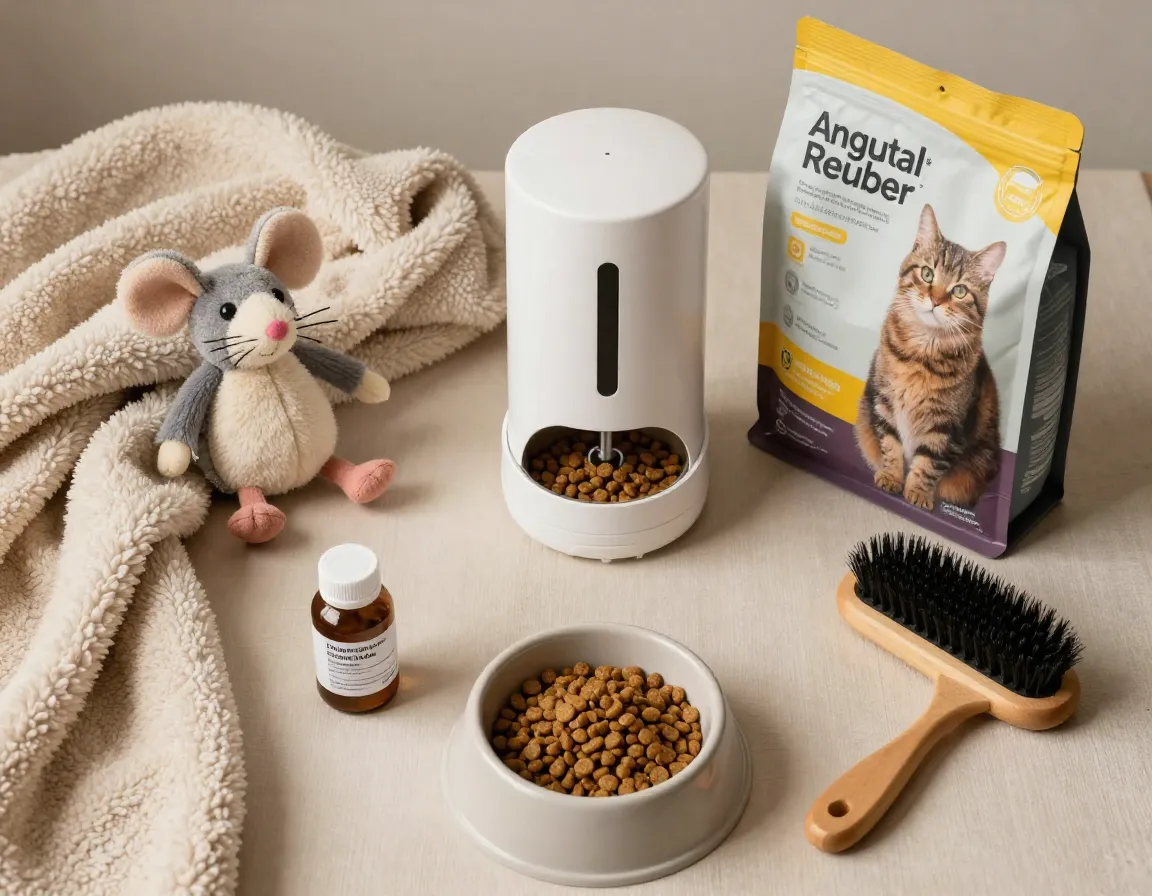
One of the most effective strategies for ensuring a stress-free cat pet boarding experience involves bringing familiar items from home that provide psychological comfort and help ease the transition to a new environment [1][8]. These comfort items serve as anchors of familiarity in an otherwise unfamiliar setting.
Essential Comfort Items to Pack
Favorite Blankets and Bedding:
The scent of home carried on familiar blankets and bedding can provide tremendous comfort to cats during boarding stays. These items should be:
- Recently used to carry the strongest familiar scents
- Machine washable in case of accidents during the stay
- Appropriately sized for the boarding enclosure
- Free from loose threads or small parts that could pose safety risks
Beloved Toys and Entertainment:
Familiar toys help maintain normal play patterns and provide comfort during stressful moments. Ideal boarding toys include:
- Favorite interactive toys that encourage mental stimulation
- Comfort objects like stuffed animals or soft toys
- Puzzle toys that can provide entertainment during quiet hours
- Catnip toys for cats who respond positively to catnip
Food and Feeding Accessories
Regular Food Supply:
Bringing the cat’s regular food helps prevent digestive upset and maintains familiar eating experiences [1][8]. Pack:
- Enough food for the entire stay plus a few extra days
- Clearly labeled containers with feeding instructions
- Special dietary supplements if regularly used
- Favorite treats for comfort and positive associations
Familiar Feeding Dishes:
Using the cat’s regular food and water bowls can encourage normal eating behaviors:
- Non-slip food bowls that won’t slide around during meals
- Preferred water dishes including fountains if the cat is accustomed to them
- Elevated feeders if the cat normally uses them at home
- Separate dishes for wet and dry food if applicable
Personal Care Items
Grooming Tools:
For cats who require regular grooming or have specific grooming needs:
- Regular brushes or combs used at home
- Nail clippers if regular nail maintenance is needed
- Special shampoos for cats with skin sensitivities
- Grooming wipes for quick clean-ups between full grooming sessions
Medical and Comfort Accessories:
- Prescription medications with detailed administration instructions
- Comfort items like special pillows or heating pads (if facility-approved)
- Calming aids that the cat is already accustomed to using
- Emergency contact information for the regular veterinarian
6. Communicate Detailed Care Instructions and Preferences
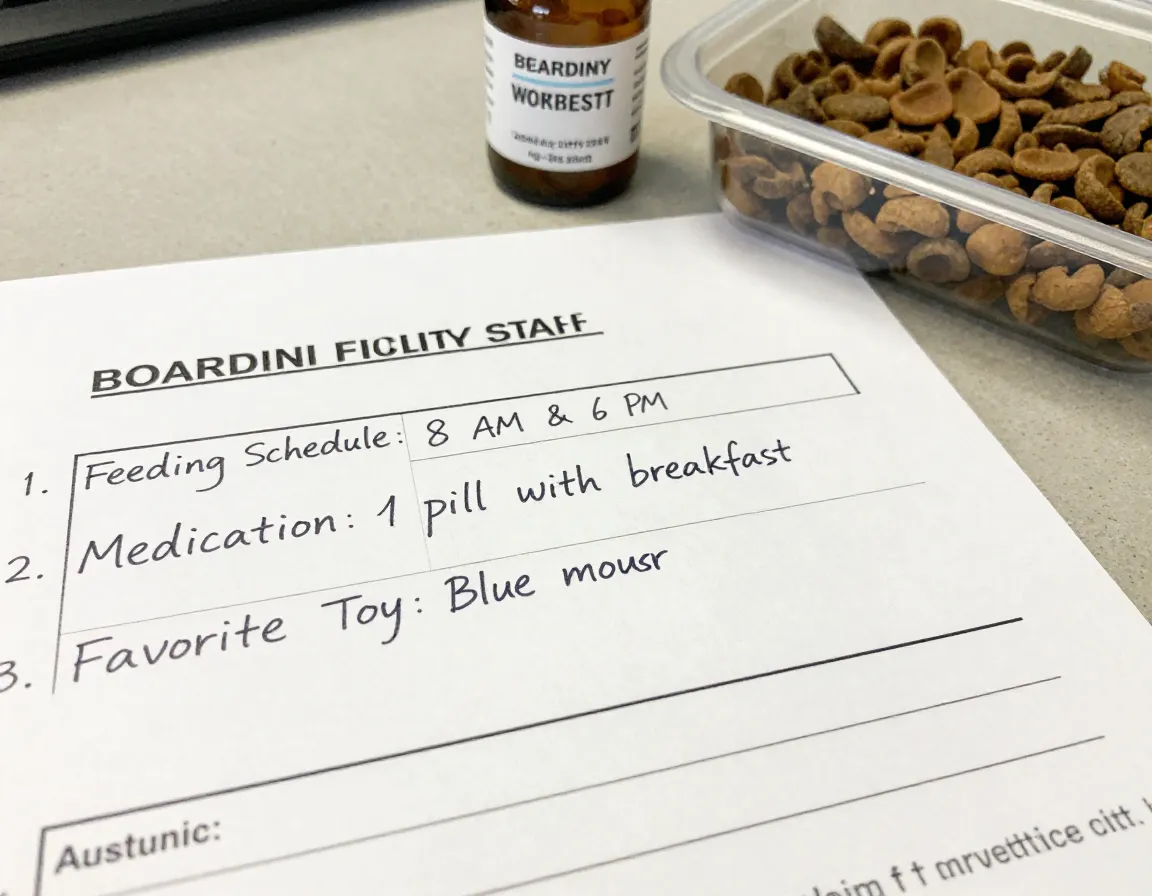
Clear, comprehensive communication between cat owners and boarding facility staff is essential for maintaining consistency and ensuring that each cat’s individual needs are met throughout their stay. Detailed care instructions help staff provide personalized attention that mirrors the cat’s home routine [1][8].
Creating Comprehensive Care Documentation
Daily Routine Information:
Provide detailed information about the cat’s normal daily patterns to help staff maintain familiar schedules:
| Routine Element | Details to Include |
|---|---|
| Feeding Schedule | Exact meal times, portion sizes, food preferences |
| Play Patterns | Favorite toys, preferred play times, energy levels |
| Sleep Habits | Preferred sleeping locations, nighttime routines |
| Litter Preferences | Litter type, box cleaning frequency, location preferences |
| Social Interaction | Comfort level with strangers, preferred interaction styles |
Health and Medical Information:
Complete health documentation ensures that staff can monitor the cat’s well-being and respond appropriately to any concerns:
- Current vaccination records and health certificates
- Medication schedules with precise dosing instructions
- Known allergies or food sensitivities
- Behavioral quirks that might indicate health issues
- Emergency veterinary contact information
Personality and Behavior Profiles
Individual Personality Traits:
Help boarding staff understand the cat’s unique personality to provide appropriate care:
Social Preferences:
- Comfort level with new people and environments
- Preferred types of interaction (petting, playing, talking)
- Signs of stress or anxiety specific to the individual cat
- Effective calming techniques that work at home
Behavioral Patterns:
- Normal activity levels and energy patterns
- Typical responses to stress or change
- Favorite hiding spots or comfort positions
- Any behavioral quirks that staff should expect
Special Needs and Accommodations
Medical Considerations:
For cats with ongoing health conditions or special medical needs:
- Detailed medication instructions including timing and administration methods
- Dietary restrictions or special feeding requirements
- Mobility limitations that might affect enclosure setup
- Monitoring requirements for chronic conditions
Environmental Preferences:
- Temperature sensitivities that might require special accommodation
- Noise sensitivities that could affect enclosure placement
- Lighting preferences for cats with vision issues
- Space requirements for cats who need extra room or specific arrangements
7. Plan Ahead with Proper Preparation and Research
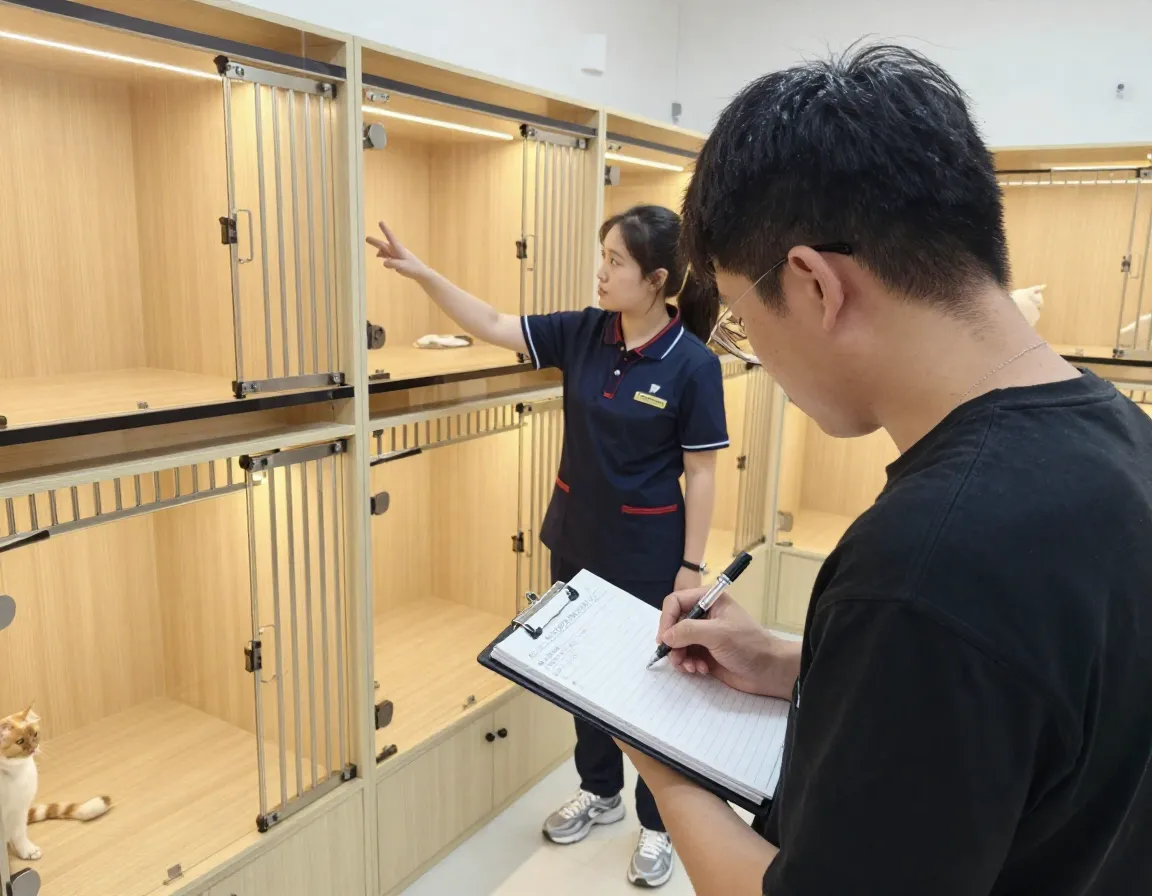
The final element in ensuring a stress-free cat pet boarding experience involves thorough advance planning and research to select the best possible facility and prepare both cat and owner for a successful boarding experience [7][8].
Facility Research and Selection Criteria
Comprehensive Facility Evaluation:
Invest time in researching and visiting potential boarding facilities well before the actual boarding dates:
Physical Facility Assessment:
- Tour the cat boarding areas during operational hours to observe daily routines
- Evaluate cleanliness standards and overall facility maintenance
- Assess noise levels and environmental stressors
- Review safety protocols and emergency procedures
Staff Qualifications and Training:
- Inquire about staff training in feline behavior and care
- Ask about staff-to-cat ratios during different shifts
- Discuss emergency protocols and after-hours care procedures
- Review staff experience with cats similar to your pet’s personality type
Advanced Booking and Preparation Timeline
Booking Timeline Recommendations:
8-12 Weeks Before Travel:
- Research and visit potential boarding facilities
- Schedule facility tours and ask detailed questions
- Make reservations, especially during peak travel seasons
- Begin gradual acclimation if the cat is particularly sensitive
4-6 Weeks Before Travel:
- Schedule any required veterinary appointments
- Update vaccinations and health certificates
- Begin collecting familiar comfort items
- Create detailed care instruction documentation
1-2 Weeks Before Travel:
- Confirm boarding reservations and special requirements
- Pack comfort items and prepare food supplies
- Review emergency contact information
- Conduct final health check with veterinarian if needed
Day of Boarding:
- Arrive during less busy hours when possible
- Allow extra time for check-in and settling
- Provide final care instructions and emergency contacts
- Maintain calm, positive energy during drop-off
Post-Boarding Considerations
Pickup and Transition Home:
- Schedule pickup during quieter facility hours when possible
- Allow adjustment time for the cat to readjust to home environment
- Monitor behavior for several days after return
- Provide extra comfort and familiar routines during the transition period
Follow-Up and Future Planning:
- Evaluate the boarding experience and note any areas for improvement
- Maintain relationships with quality boarding facilities for future needs
- Update care instructions based on lessons learned from the boarding experience
- Consider regular short stays to maintain familiarity with quality facilities
Conclusion
Creating a stress-free cat pet boarding experience requires careful attention to facility selection, environmental design, staff training, and thorough preparation. The seven strategies outlined in this guide provide a comprehensive framework for ensuring that cats receive the specialized care they need while their owners are away.
The key to success lies in understanding that cats have unique psychological and physical needs that differ significantly from other pets. Modern boarding facilities that incorporate cat-specific design features, employ professionally trained staff, and maintain consistent routines create environments where cats can feel secure and comfortable even in unfamiliar surroundings.
Take Action for Your Cat’s Next Boarding Experience:
- Start your facility research early to allow time for thorough evaluation and selection
- Visit potential facilities in person to assess their cat-specific features and staff expertise
- Prepare comprehensive care documentation that helps staff provide personalized attention
- Gather familiar comfort items that will help ease your cat’s transition to boarding
- Maintain open communication with boarding staff throughout your cat’s stay
By implementing these 7 Ways to Ensure a Stress-Free Cat Pet Boarding Experience, cat owners can travel with confidence knowing their feline companions are receiving expert care in environments designed specifically for their well-being. The investment in quality boarding facilities and proper preparation pays dividends in reduced stress for both cats and their owners, creating positive experiences that make future boarding stays easier and more comfortable for everyone involved.
Remember that every cat is unique, and the most successful boarding experiences are those that recognize and accommodate individual personality traits, preferences, and needs. With proper planning and the right facility partnership, boarding can become a stress-free experience that allows cats to thrive even when separated from their beloved owners.
References
[1] Cat Boarding How Modern Facilities Reduce Stress And Keep Cats Happy – https://www.countrycreekvets.com/cat-boarding-how-modern-facilities-reduce-stress-and-keep-cats-happy
[2] Reducing Stress Fear Design Tips For Cat Boarding – https://www.dvm360.com/view/reducing-stress–fear-design-tips-for-cat-boarding
[3] Creating A Stress Free Environment In Pet Facilities – https://www.revelationpets.com/blog/creating-a-stress-free-environment-in-pet-facilities
[4] Top 5 Ways Manage Patient Stress During Boarding Or Hospitalization – https://www.cliniciansbrief.com/article/top-5-ways-manage-patient-stress-during-boarding-or-hospitalization
[5] 7 Feline Friendly Handling Tips To Reduce Your Cats Stress – https://justcatsclinic.com/7-feline-friendly-handling-tips-to-reduce-your-cats-stress/
[6] Understanding Cat Boarding Does Your Cat Need It – https://catclinicofjc.com/understanding-cat-boarding-does-your-cat-need-it/
[7] Preparing Your Pet For Boarding A Stress Free Guide – https://petponderosa.com/2025/04/preparing-your-pet-for-boarding-a-stress-free-guide/
[8] Reducing Cat Anxiety During Boarding – https://valleypethotel.com/reducing-cat-anxiety-during-boarding/