6 Training Challenges (And Solutions) For Your King Charles Cavalier Spaniel
Picture this: your adorable Cavalier King Charles Spaniel gazes at you with those soulful eyes, then promptly ignores your “sit” command and bounds off to chase a butterfly. Sound familiar? While these gentle, affectionate dogs make wonderful companions, they come with their own unique set of training hurdles that can leave even experienced dog owners scratching their heads.

Understanding the 6 training challenges (and solutions) for your King Charles Cavalier Spaniel is crucial for developing a well-behaved, happy companion. These sweet-natured dogs possess an independent streak that, combined with their sensitive temperament, requires a specialized approach to training that differs significantly from other breeds.
Key Takeaways
- Cavaliers are sensitive dogs that respond poorly to harsh training methods and require gentle, positive reinforcement techniques
- Short, consistent training sessions of 5-10 minutes, 2-3 times daily work best for their attention span and learning style
- Patience and consistency are essential as Cavaliers may view commands as optional suggestions rather than mandatory instructions
- Daily routines and gradual training progression help these intelligent but easily distracted dogs focus better during learning sessions
- Early intervention with common issues like separation anxiety, excessive barking, and jumping prevents these behaviors from becoming ingrained habits
Understanding Your Cavalier’s Training Mindset
Before diving into specific challenges, it’s important to understand what makes Cavalier King Charles Spaniels unique learners. These dogs were bred as companion animals for royalty, which means they’re naturally social but also somewhat independent-minded. They often view training commands as suggestions rather than requirements [2], making consistency absolutely critical for success.
Cavaliers are also incredibly sensitive dogs that respond poorly to harsh training methods [5]. Their gentle nature means they can become anxious or shut down entirely if training becomes too intense or punitive. This sensitivity, while sometimes challenging, also makes them incredibly responsive to positive reinforcement when approached correctly.
The 6 Most Common Training Challenges for Cavalier King Charles Spaniels
1. Attention-Seeking Barking 🗣️
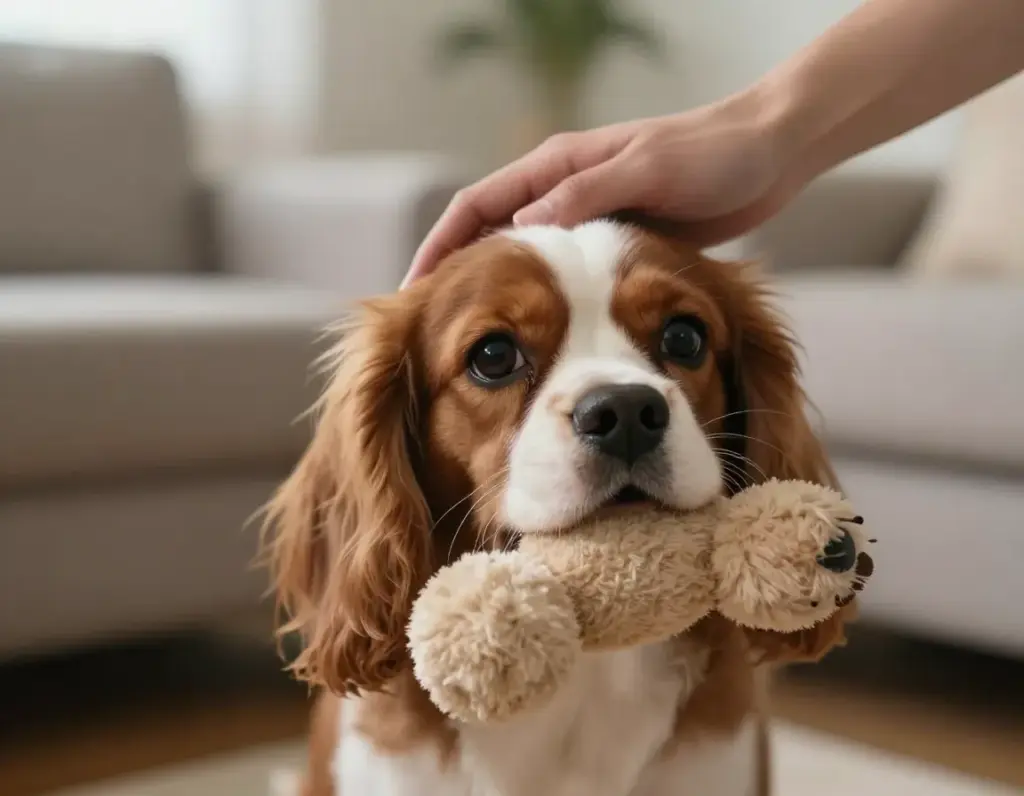
The Challenge: Cavaliers are social butterflies who crave interaction with their humans. When they feel ignored or want attention, they often resort to persistent barking that can quickly become a disruptive habit.
Why It Happens: This breed’s history as lap dogs means they’re hardwired to seek constant companionship. When left alone or feeling overlooked, barking becomes their primary communication tool to reconnect with their family.
The Solution: The key to addressing attention-seeking barking lies in redirecting attention and rewarding quiet behavior [1]. Here’s how to implement this effectively:
- Ignore the barking completely – don’t look at, talk to, or touch your Cavalier when they bark for attention
- Wait for a quiet moment – even a 2-3 second pause in barking
- Immediately reward the silence with praise, treats, or attention
- Teach the “quiet” command by saying “quiet” during a pause in barking, then rewarding
- Provide alternative attention-seeking behaviors like bringing a toy or sitting politely
“Consistency is critical – if you give in to barking even once, you’re teaching your Cavalier that persistence pays off.”
Training Schedule: Practice quiet commands for 5-10 minutes twice daily, gradually increasing the duration of silence required before rewarding.
2. Excited Jumping on People 🐕
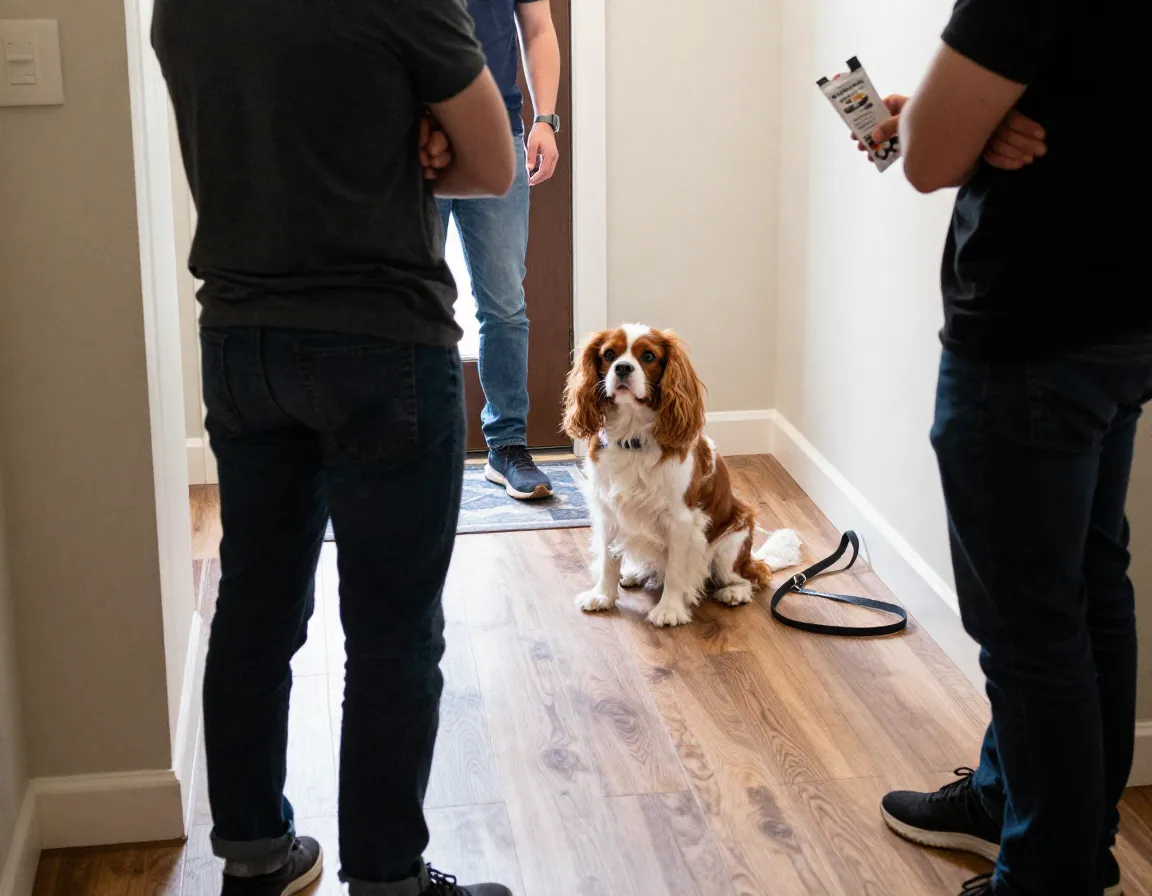
The Challenge: Cavaliers are naturally enthusiastic greeters who express their joy through jumping. While cute in puppies, this behavior becomes problematic as they mature, especially around children or elderly visitors.
Why It Happens: Jumping is a natural canine greeting behavior that gets inadvertently reinforced when people pet or acknowledge the dog while they’re jumping.
The Solution: The most effective approach involves turning away and rewarding calm behavior [1]. Here’s the step-by-step process:
For Family Members:
- Turn your back immediately when your Cavalier jumps
- Cross your arms and avoid eye contact – don’t push them down or say “no”
- Wait for four paws on the floor – even for just a moment
- Immediately turn back and reward with attention, treats, or petting
- Practice the “sit” greeting – only give attention when sitting
For Visitors:
- Prepare guests in advance with instructions on the turn-away technique
- Keep treats by the door for visitors to reward calm greetings
- Practice with willing friends before expecting success with unexpected visitors
- Use a leash indoors during the training phase to manage jumping
Training Timeline: Most Cavaliers show improvement within 2-3 weeks of consistent practice, with full mastery taking 4-6 weeks.
3. Destructive Chewing Due to Boredom 🦴
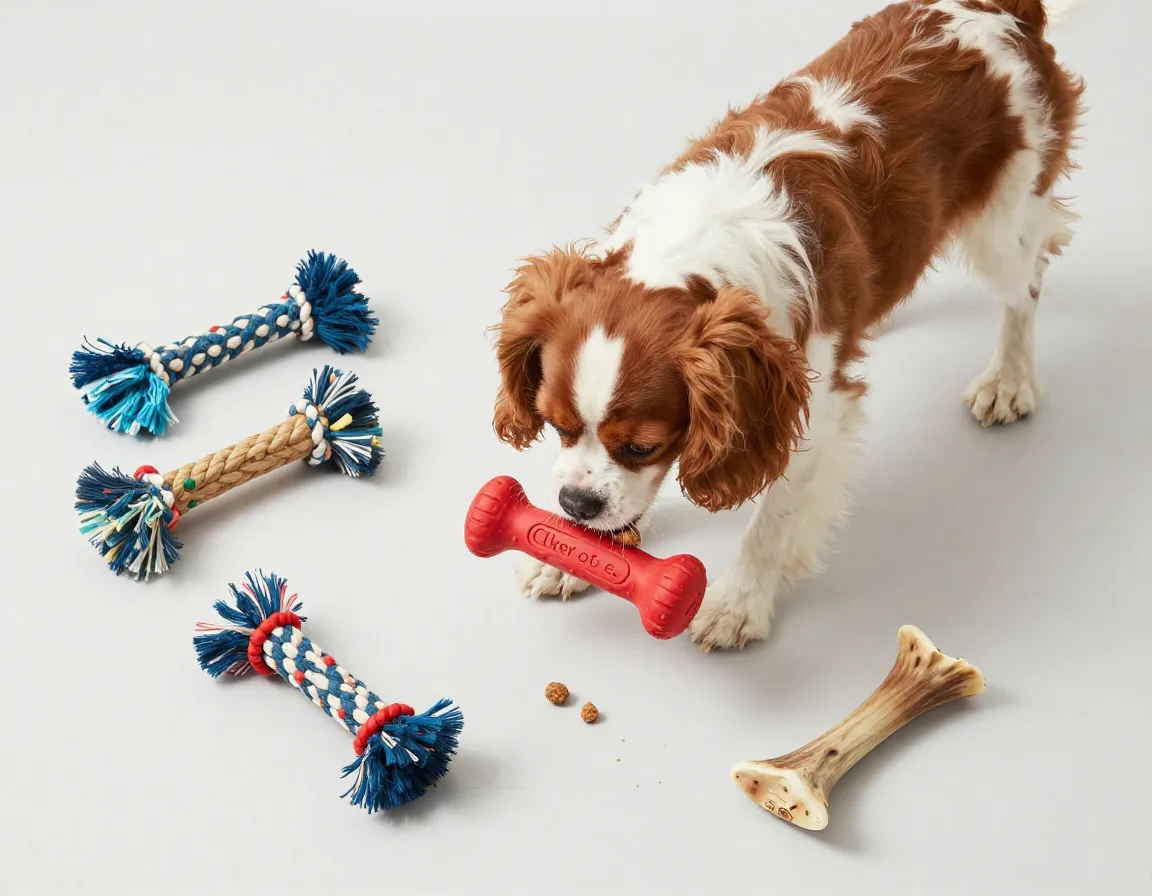
The Challenge: Cavaliers are intelligent dogs that need mental and physical stimulation. When bored, they often turn to destructive chewing, targeting furniture, shoes, or household items.
Why It Happens: Boredom and insufficient exercise [1] are the primary culprits. Cavaliers need at least 30 minutes of daily exercise [6] plus mental stimulation to prevent destructive behaviors.
The Solution: A multi-pronged approach addressing both prevention and redirection works best:
Exercise Requirements:
- Morning walk: 15-20 minutes of brisk walking
- Evening play session: 10-15 minutes of fetch or interactive games
- Mental stimulation: Puzzle toys, training sessions, or nose work
Chew Management:
- Provide appropriate chew toys – rotate them weekly to maintain interest
- Kong toys stuffed with treats for extended chewing sessions
- Puppy-proof your space by removing tempting items
- Redirect immediately when you catch inappropriate chewing
- Praise enthusiastically when they chew appropriate items
Recommended Chew Toys:
| Toy Type | Best For | Duration |
|---|---|---|
| Kong Classic | Mental stimulation | 20-30 minutes |
| Rope toys | Dental health | 10-15 minutes |
| Puzzle feeders | Mealtime enrichment | 15-20 minutes |
| Antlers | Long-lasting chewing | 30+ minutes |
4. Separation Anxiety and Fear of Being Alone 😰
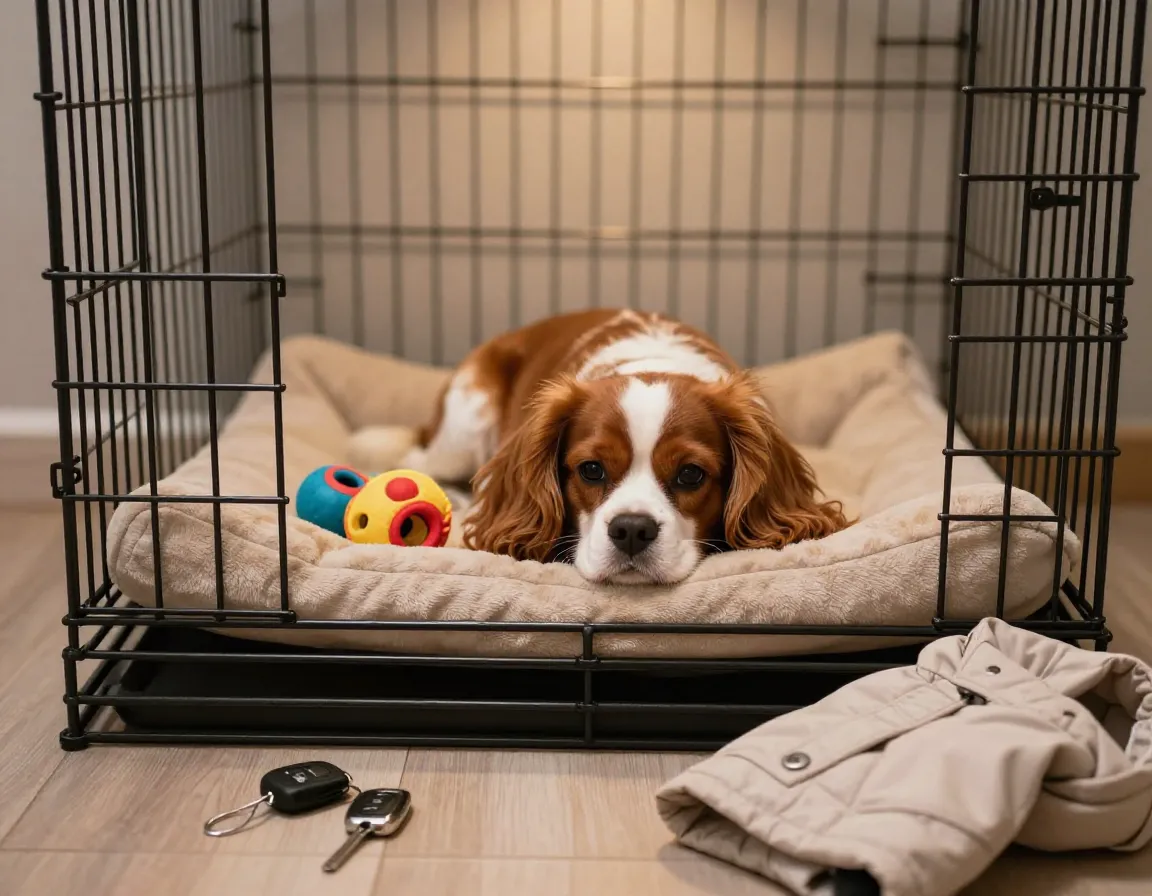
The Challenge: Cavaliers are velcro dogs that form intense bonds with their families. This attachment often leads to separation anxiety, manifesting as destructive behavior, excessive barking, or house soiling when left alone.
Why It Happens: Their breeding as constant companions means many Cavaliers never learned to be comfortable alone. Fear of being alone [1] can develop quickly if not addressed early.
The Solution: Gradually increasing alone time through crate training [1] provides the most effective long-term solution:
Crate Training Protocol:
- Start with 5-minute departures while you’re home
- Gradually increase to 15 minutes, then 30 minutes
- Practice actual departures – grab keys, put on coat, then return
- Never make departures emotional – keep greetings and goodbyes calm
- Provide special “alone time” toys that only come out when you leave
Weekly Progression Schedule:
- Week 1: 5-15 minute departures
- Week 2: 15-45 minute departures
- Week 3: 1-2 hour departures
- Week 4: 3-4 hour departures
Additional Strategies:
- Create positive alone associations with special treats or puzzle toys
- Establish a departure routine that signals calm, not anxiety
- Consider calming aids like pheromone diffusers or anxiety wraps
- Exercise before departures to encourage rest while alone
5. Ignoring Commands and Selective Hearing 👂
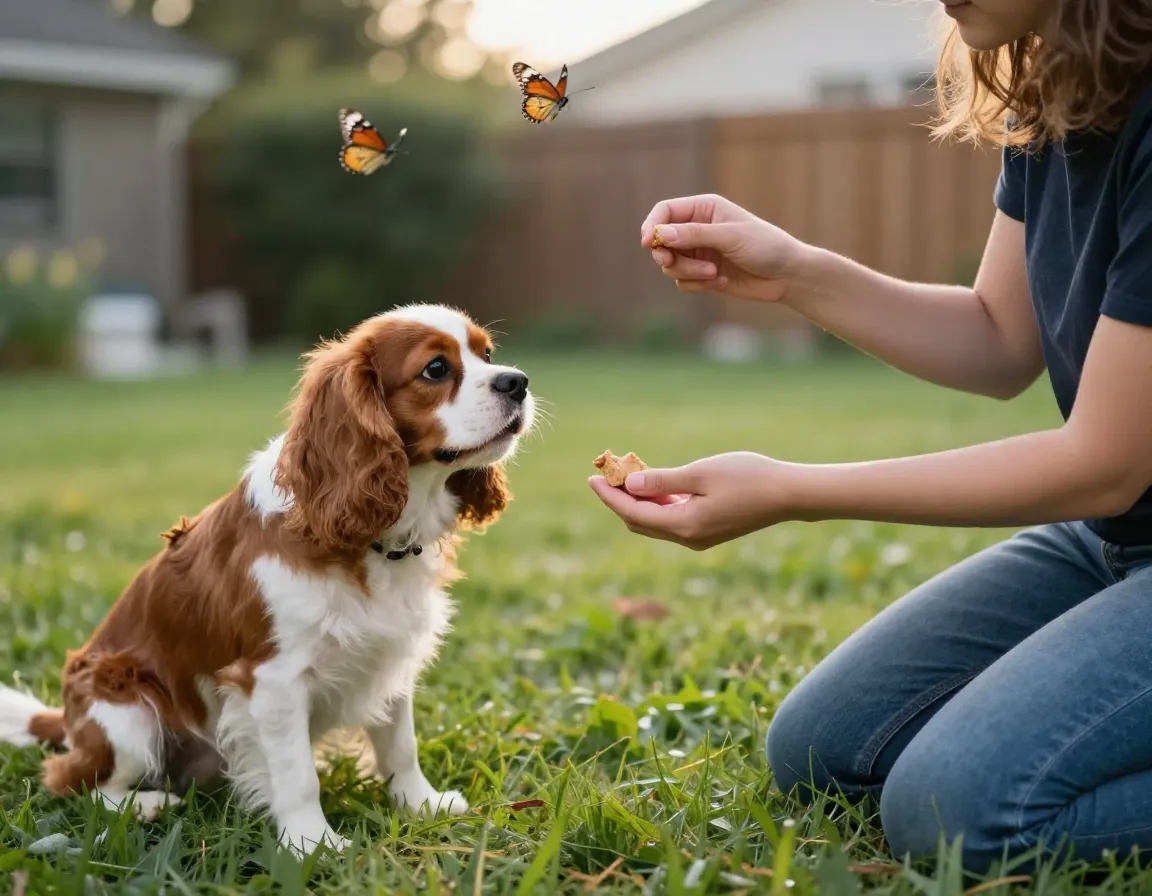
The Challenge: Many Cavalier owners report that their dogs seem to develop “selective hearing,” viewing commands as optional [2] rather than mandatory instructions.
Why It Happens: Cavaliers are intelligent enough to make choices about when compliance benefits them. Without consistent training systems that go beyond treat-based methods alone [2], they learn to ignore commands when something more interesting captures their attention.
The Solution: Establishing clear expectations and consistent consequences addresses this challenge:
Command Training Protocol:
- Use the same command words – don’t vary between “come,” “come here,” and “get over here”
- Give commands only once – repeating teaches them to ignore the first attempt
- Always follow through – if you give a command, ensure compliance
- Practice in low-distraction environments first, then gradually add challenges
- Use the “nothing in life is free” approach – commands must be followed before receiving anything desired
Essential Commands Priority List:
- Sit – foundation for all other training
- Stay – crucial for safety and impulse control
- Come – potentially life-saving recall command
- Down – helps with relaxation and submission
- Leave it – prevents unwanted behaviors
Training Session Structure:
- 5-10 minutes per session [1][5]
- 2-3 sessions daily [1][5]
- End on a successful note to maintain motivation
- Use high-value treats during initial learning phases
6. Excitability and Stubbornness in Distracting Environments 🎾
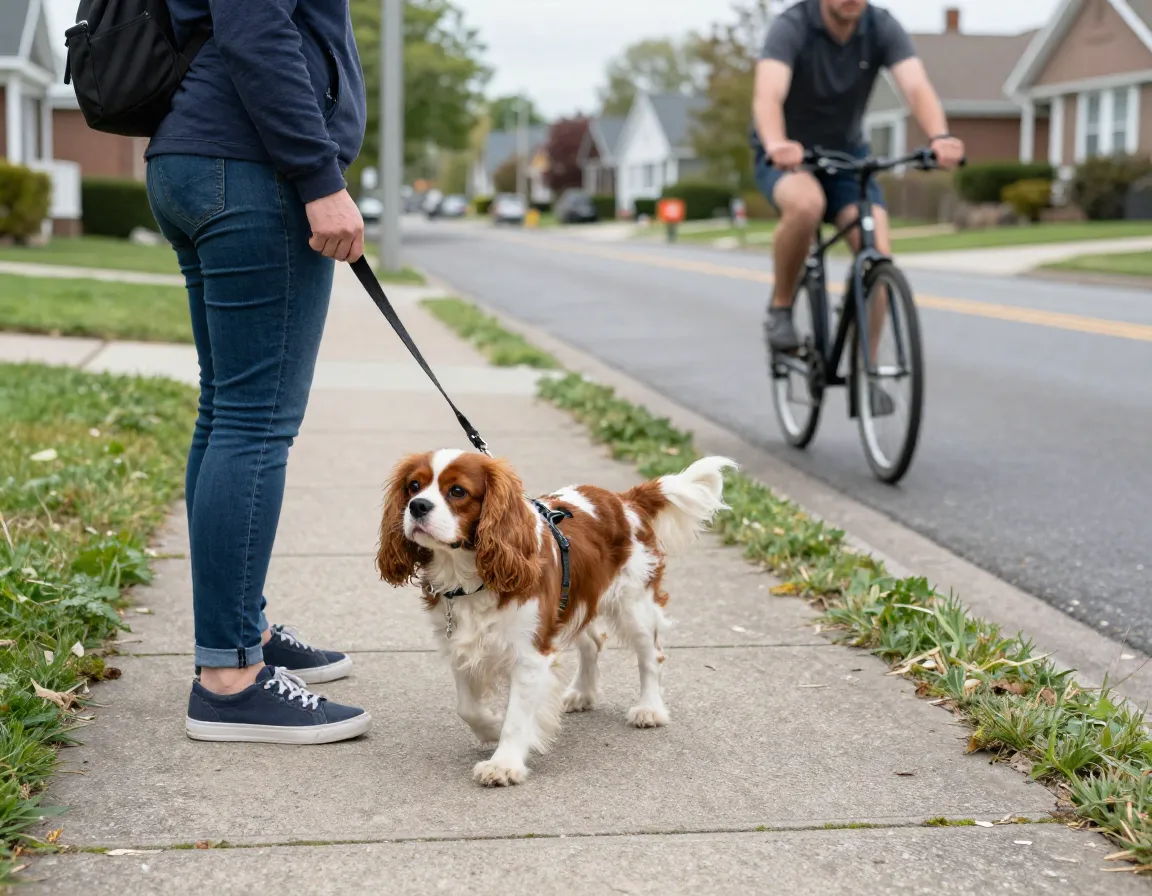
The Challenge: Cavaliers can become overly excited and stubborn when distracted by something “more fun” [2] than training. This makes real-world application of commands particularly challenging.
Why It Happens: Their hunting heritage means they’re naturally drawn to moving objects, other animals, and interesting smells. Without clear training that teaches them to listen even when distracted [2], they’ll choose excitement over obedience every time.
The Solution: Building focus and impulse control through progressive training environments:
Environment Progression:
- Indoor training with minimal distractions
- Backyard practice with familiar distractions
- Front yard training with moderate distractions
- Neighborhood walks with significant distractions
- Dog parks or busy areas with maximum distractions
Focus-Building Exercises:
- “Watch me” command – teaches attention on cue
- Impulse control games – waiting for permission before eating or playing
- “Find it” games – channeling their natural hunting instincts into training
- Leash walking in reinforcement zones [4] before adding external distractions
Managing Excitability:
- Practice calm greetings with family members multiple times daily
- Require sitting before receiving anything exciting (meals, toys, walks)
- Use “settle” commands during high-energy moments
- Reward calm behavior more frequently than excited behavior
Essential Training Principles for Success with Your Cavalier
Timing and Consistency Are Everything ⏰
Establish daily routines [3] to help your Cavalier focus better during training sessions. Dogs thrive on predictability, and Cavaliers especially benefit from knowing what to expect. Set specific times for training, meals, walks, and play to create a framework that supports learning.
Patience Pays Off 🧘♀️
Remember that different puppies learn at different paces [3], and this remains true throughout their lives. Some Cavaliers master commands quickly, while others need weeks of consistent practice. Avoid comparing your dog to others and focus on steady progress rather than perfection.
Positive Reinforcement Only 🎉
Cavaliers are sensitive dogs [5] that shut down under pressure. Use praise, treats, toys, and attention as rewards, never punishment or intimidation. This breed responds beautifully to encouragement but poorly to correction-based training methods.
Creating Your Cavalier Training Action Plan
Week 1-2: Foundation Building
- Establish daily routine with consistent meal, walk, and training times
- Begin basic commands (sit, stay, come) in quiet indoor environment
- Start crate training if addressing separation anxiety
- Implement attention-seeking solutions for barking and jumping
Week 3-4: Skill Development
- Add distractions gradually to command training
- Extend training sessions to 10-15 minutes if attention allows
- Practice real-world applications of commands during walks
- Increase alone time progressively for separation anxiety work
Week 5-8: Real-World Application
- Test commands in challenging environments like parks or busy streets
- Refine impulse control around exciting distractions
- Maintain consistency even when progress seems slow
- Celebrate successes and adjust techniques as needed
Conclusion
Successfully navigating the 6 training challenges (and solutions) for your King Charles Cavalier Spaniel requires understanding their unique personality traits and adapting your approach accordingly. These sensitive, intelligent dogs respond best to patient, positive training methods that respect their gentle nature while establishing clear expectations.
The key to success lies in consistency, short training sessions, and recognizing that Cavaliers need time to process and accept new rules. Whether you’re addressing attention-seeking barking, excited jumping, destructive chewing, separation anxiety, selective hearing, or excitability issues, remember that every small step forward is progress worth celebrating.
Your next steps should include:
- Choose one challenge to focus on first rather than attempting to address everything simultaneously
- Set up a daily training schedule with 5-10 minute sessions twice daily
- Gather necessary supplies like appropriate chew toys, high-value treats, and training tools
- Establish consistent household rules that everyone follows
- Track your progress to stay motivated during slower learning periods
With patience, consistency, and the right approach, your Cavalier King Charles Spaniel can become the well-behaved, delightful companion you’ve always envisioned. Remember that training is an ongoing process, not a destination, and the bond you build through positive training experiences will last a lifetime.
References
[1] Cavalier King Charles Spaniel Training Guide – https://petageinhumanyearscalculator.com/blog/cavalier-king-charles-spaniel-training-guide/
[2] Cavalier King Charles Spaniel Training – https://www.bestmatedogtraining.co.nz/cavalier-king-charles-spaniel-training
[3] Training Cavalier King Charles Spaniel Puppies – https://www.offleashk9training.com/training-cavalier-king-charles-spaniel-puppies/
[4] How To Train A King Charles Cavalier Puppy Everything You Need – https://zigzag.dog/en-us/blog/puppy-training/how-to-train-a-king-charles-cavalier-puppy-everything-you-need/
[5] Cavalier King Charles Spaniel Breed Guide – https://vetslovepets.com.au/blogs/dog/cavalier-king-charles-spaniel-breed-guide
[6] petcarerx – https://www.petcarerx.com/article/training-for-a-cavalier-king-charles-spaniel/507